


Despite the increasingly fractious state of the world, governments and civil society have come together to pass important laws and resolutions to tackle human rights harms, following protests and petitions from activists and campaigners.
The past six months has seen justice for human rights defenders around the world who have been subjected to baseless prosecutions and imprisoned. Meanwhile authorities are responding positively to our campaigning on police abuses, accountability for violations and the right to freedom of expression and peaceful assembly.
Here’s a roundup of what can be achieved when we stand together in solidarity.
January
Global
More human rights groups, civil society organizations and academic institutions will now be able to take part in negotiations on a future Convention on Crimes against Humanity. This comes after the Preparatory Committee, which is driving the process, decided to expand participation in negotiations for the world’s first ever international treaty on the issue. Its decision will help to ensure that the survivors’ voices and experiences are represented in this historic process – in line with Amnesty International’s own recommendations, which we set out in a joint statement with partners, and in an oral statement at the opening debate.
Greece
In January, human rights defender Sean Binder and 23 others connected to a Search and Rescue NGO were acquitted in Greece after years on trial. Amnesty International has been campaigning in support of Sean’s case since 2018.
Luxembourg
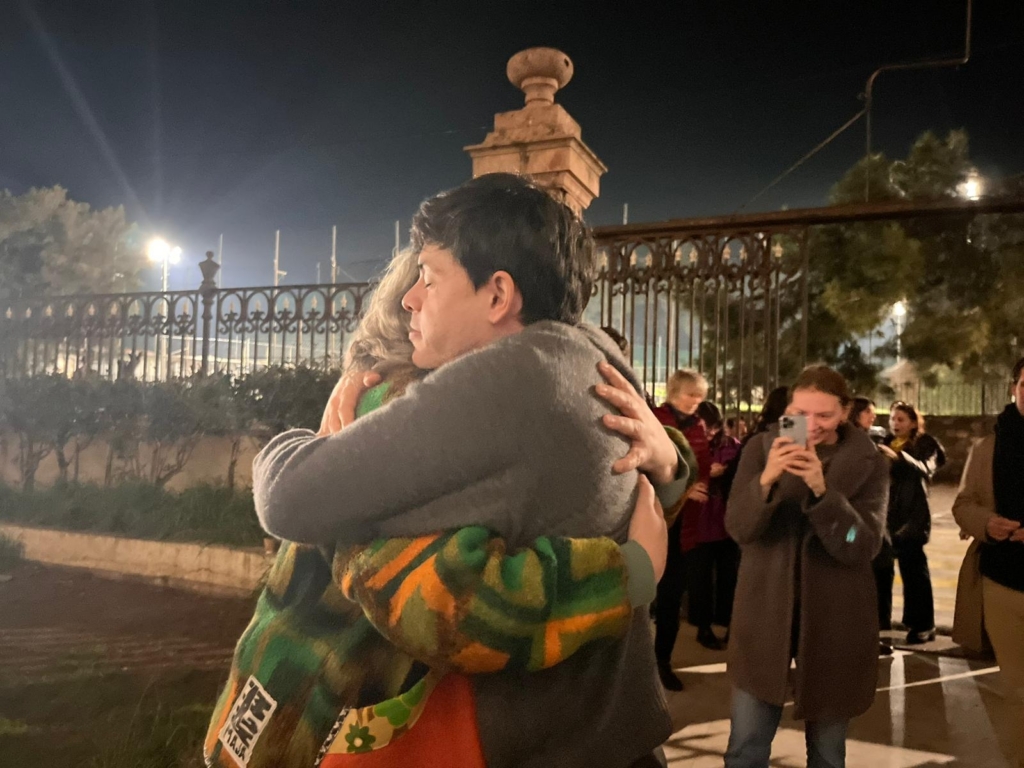
Minister of the Interior Léon Gloden decided to withdraw a draft bill to regulate demonstrations in Luxembourg through inspections, permit requirements, and potential penalties for organizers and participants.
Amnesty International Luxembourg campaigned for several months and submitted multiple opinions to parliamentary consultation on the draft bill in an effort to address its shortcomings.
Türkiye
Eleven members of the Istanbul Bar Association’s executive committee were acquitted on 9 January, after facing charges for “spreading terrorist propaganda” and “publicly disseminating misleading information”.
The 11 had been on trial over a statement issued by the Bar Association on 21 December 2024 about the killing of two journalists in northern Syria and the arrest of journalists and lawyers at a related peaceful protest in Istanbul the day before.
Amnesty International, together with human rights and legal organizations, had issued public statements and an amicus curiae brief in support of the Bar Association’s leadership.
Venezuela
Human rights defenders who had been arbitrarily detained in Venezuela were released between January and May 2026. They included Javier Tarazona, Rocío San Miguel, Kennedy Tejeda, Carlos Julio Rojas and Eduardo Torres, Darío Estrada, Rosa Chirinos, and Yevhenii Trush.
Amnesty International campaigned for their release and will continue calling for the immediate release of people arbitrarily detained – including for political reasons – in Venezuela.
February
Brazil
Eight years after the murder of human rights defender Marielle Franco and her driver Anderson Gomes in Rio de Janeiro, and the attempted murder of Fernanda Chaves, a press officer working for Marielle, those responsible for orchestrating these crimes have finally been convicted.
The conviction is a major step forward in the fight against political violence and impunity in Brazil. It is also a testament to the persistence of Marielle’s family, social movements and civil society organizations, such as Amnesty International, in demanding truth and justice over the years.
Amnesty International Brazil is continuing to call for broader measures to prevent political violence and ensure effective protection for human rights defenders, especially Black leaders, women and those who challenge entrenched systems of inequality and discrimination.

Central African Republic
On 11 February, Amnesty International revealed that the Special Criminal Court (SCC) of the Central African Republic was at risk of closing due to lack of funding, potentially depriving thousands of victims and survivors of war crimes and crimes against humanity, justice and reparations.
The SCC, a UN-backed hybrid court, relies entirely on voluntary contributions from states and international organizations. It suffered significant budget cuts in 2025, notably due to the withdrawal of funding from the United States.
On 16 February, the spokesperson of the Central African government reacted to Amnesty’s statement, affirming that the government is working to mobilize funding to allow the SCC to continue its mission, while the UN peacekeeping mission is multiplying efforts to mobilize funds as well.
Ecuador
Following Amnesty International’s report on enforced disappearances in Ecuador last year and fierce campaigning by the organization and its partners, victims’ families have finally started accessing truth, justice, and reparations through three separate rulings.
Notably, Ecuador’s highest court ordered reparations for the families of four Black children, forcibly disappeared in Guayaquil. As part of this ruling, the Ministry of Defence was ordered to publicly apologize to the families, while the National Assembly agreed to reform the law on enforced disappearances to prevent these crimes from recurring.
Ronnie Medina, the father of one of the forcibly disappeared children, said: “Let’s unite to ensure that no other family in Ecuador ever goes through this.”
Europe
With support from Amnesty International, in collaboration with teams across Europe, the European Citizens’ My Voice, My Choice campaign collected more than 1.2 million signatures demanding that the European Commission set up a new funding mechanism to expand abortion access in Europe. The initiative was also backed by the majority of MEPs in December 2025.
In a groundbreaking move, the Commission in February 2026 decided to allow EU member states to draw on already allocated funds for social services to support travel and access to abortion care. This will enable people from countries with near-total abortion bans or restrictive abortion laws to access this essential healthcare service abroad.
Nigeria
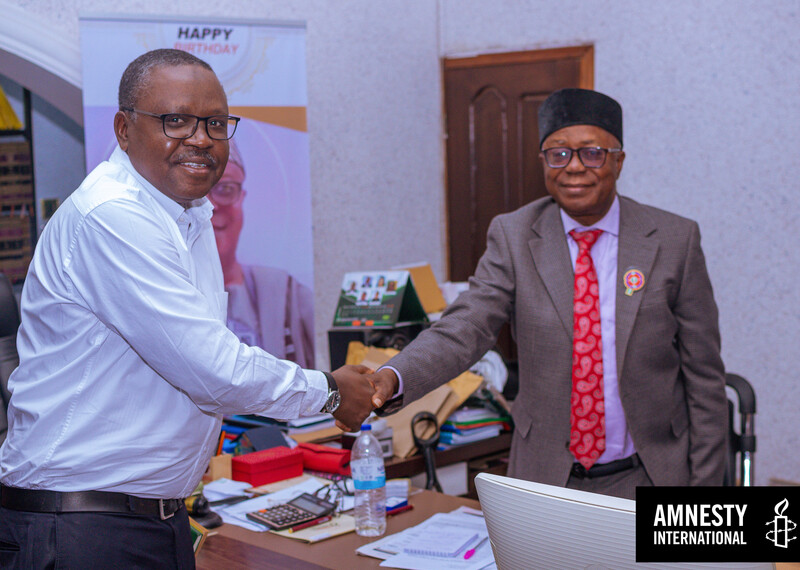
Adamu Oseni (aka Hussaini Oseni) was released on 18 February 2026 after years of campaigning by Amnesty International Nigeria. Oseni had been sentenced to life imprisonment by the Ondo State High Court, for possessing a phone linked to an armed robbery, despite evidence he was not involved in the crime.
After Amnesty International Nigeria submitted a pardon request on his behalf in 2024, his sentence was reduced to 20 years before he was finally released.
Oseni has since expressed his deep gratitude to Amnesty for helping to secure his freedom, recognizing Amnesty’s intervention and support.
March
Finland
With the support of Amnesty International Finland, a petition calling for the introduction of a third, non-binary legal gender marker in Finland gained 50,000 signatures, which means it can now be presented to the new parliament in 2027.
The “Olemme olemassa” (“We Exist”) initiative seeks to ensure that individuals can define their own gender through a self-declaration process that respects personal autonomy. If adopted by the parliament, the proposal would allow people to live beyond the male–female binary, granting legal visibility and equal rights protection to non-binary individuals.
Luxembourg
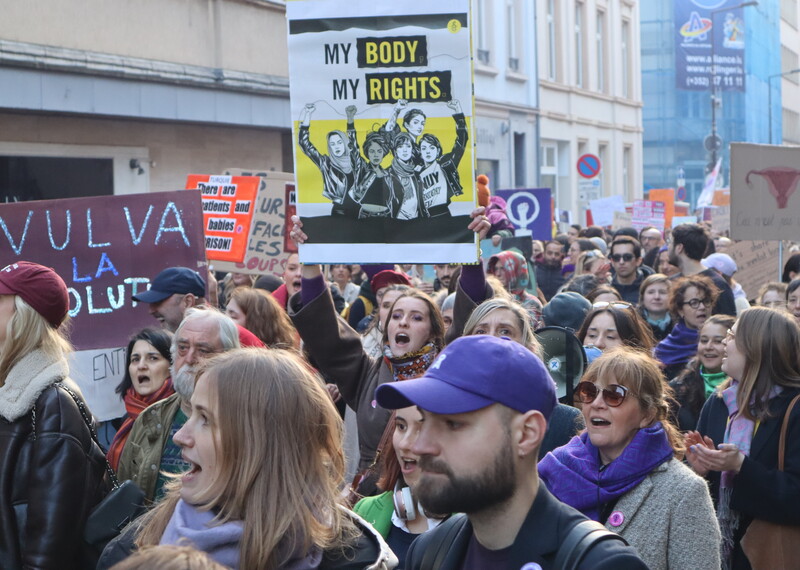
On 3 March, an overwhelming majority of members of parliament voted in favour of enshrining abortion rights in the Constitution. Amnesty International Luxembourg submitted a statement of support, which was referenced several times during the debates, and participated in rallies in support of the proposal.
Luxembourg is now the second country in the world, after France, to enshrine the right to abortion in its constitution.
USA
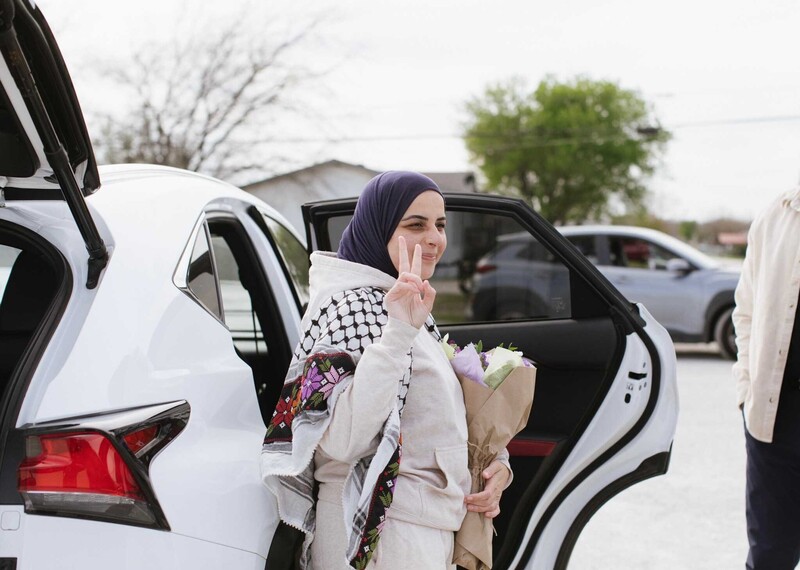
After one year in ICE detention, Leqaa Kordia was released on 16 March, following sustained advocacy from Amnesty International USA and its supporters nationally and around the world. Leqaa, who had been in the process of securing legal residency in the USA, was detained after peacefully protesting for the human rights of Palestinians. Members of Amnesty International sent more than 60,000 letters to the Department of Homeland Security demanding her freedom.
Her release allowed her to return home to New Jersey and reunite with her family and loved ones before Eid. Amnesty will continue monitoring her case until she receives the justice she deserves. Going forward, the Department of Homeland Security should drop her immigration case and allow her to continue to seek permanent residency to remain in the USA. Her case is emblematic of the need to dismantle the USA’s mass detention and deportation machine, and to defend the rights to freedom of expression and assembly in the face of rising authoritarian practices in the country.
Upon her release, Leqaa’s cousin, Hamzah Abushaban, said: “Today we celebrate freedom. Tomorrow, we will continue to fight for justice. Not only for Leqaa, but for all unjustly detained.”
April
Brazil
Following sustained campaigning from Amnesty International, justice was finally achieved in the case of quilombola leader and human rights defender, Maria Bernadete Pacífico (also known as Mother Bernadete), who was killed in Brazil three years ago.
In April, a jury in Salvador convicted Marílio dos Santos and Arielson da Conceição dos Santos for their parts in planning and perpetrating the killing.
The convictions represent a significant advance in the fight against impunity for attacks on human rights defenders in the country.
Côte d’Ivoire
In October 2025, hundreds of people were arrested, including several pregnant women, during opposition protests which took place afew days before the presidential election.
Amnesty International released a statement, denouncing the imprisonment of the protesters, highlighting the case of three pregnant women who were detained even though they didn’t participate in the protest.
Although the Ministry of Justice reacted strongly against Amnesty’s statement in the media, the Appeal Court of Abidjan ordered the provisional release of two of the women in April. The third one was provisionally released on 20 May. Amnesty International will continue to advocate for the release of all persons detained arbitrarily and for charges against them to be dropped.
Ethiopia
Million Beyene, a journalist and managing editor at Addis Standard, was abducted from the newsroom in on 15 April, by three men wearing plain clothes. It is believed he was targeted because of his work as a journalist. Amnesty International launched an Urgent Action on 27 April and he was released to his family on 28 April.
I am deeply grateful for all your support and efforts on my behalf. It truly means a lot to me.
Million Beyene
Upon his release, he said: ”I am currently receiving medical treatment and doing my best to recover. The experience has been difficult, and I am still coping with its impact, but I remain strong. I am deeply grateful for all your support and efforts on my behalf. It truly means a lot to me.”
Finland
The Finnish authorities abandoned a pilot project aimed at using algorithms to detect benefit fraud and misuse, following constructive dialogue with Amnesty International Finland on the use of artificial intelligence and human rights standards.
Amnesty International has investigated similar use of algorithms in Denmark, the Netherlands, Sweden and France. These investigations revealed that the use of AI systems in these countries does not meet human rights standards. Algorithms used to detect benefit fraud disproportionately target marginalized groups with surveillance, fuelling discrimination and deepening inequality.
Haiti
On 30 April, the European Parliament adopted a resolution on the escalating trafficking and exploitation of children by armed gangs in Haiti. The resolution incorporated several key recommendations submitted by Amnesty International in a short briefing to the parliament ahead of an urgent debate on the issue.
The resolution, which recognizes exploited children as victims, includes strengthening protection and reintegration programmes, supporting survivors and Haitian organizations, advancing justice, halting deportations to Haiti, and curbing illicit flows of arms and financing.
Philippines
The International Criminal Court (ICC) confirmed all crimes against humanity charges against former Philippines President Rodrigo Duterte, paving the way for full trial proceedings. It was a historic moment for victims and international justice, sending a clear message that those who are alleged to have committed widespread and systematic murder as a crime against humanity will one day find themselves in the dock, facing trial.
One woman whose husband was killed during Duterte’s so-called “war on drugs” told Amnesty International of her elation at hearing of Duterte’s arrest in 2025. “When I heard the news. I jumped for joy. I was screaming in the kitchen, ‘Yes, yes, yes!’,” she said.
There was a further positive step in May when an ICC arrest warrant was issued for former Philippines police chief Ronald ‘Bato’ dela Rosa, one of Duterte’s key allies during the “war on drugs”. Philippines authorities say they plan to arrest Dela Rosa, but he remains free after going into hiding.
Syria
On 26 April, Syrian authorities launched an in-absentia trial of Bashar al‑Assad and Maher al‑Assad, as well as detained former security official Atif Najib, who will be tried in person, for crimes committed against the Syrian people.
The trial marks an important step in the government’s commitment to pursue accountability but is marred by the absence of Bashar al-Assad and other key defendants. Amnesty International will continue to advocate for the accused to face court, and the consequences of their actions, in person.
May
Argentina
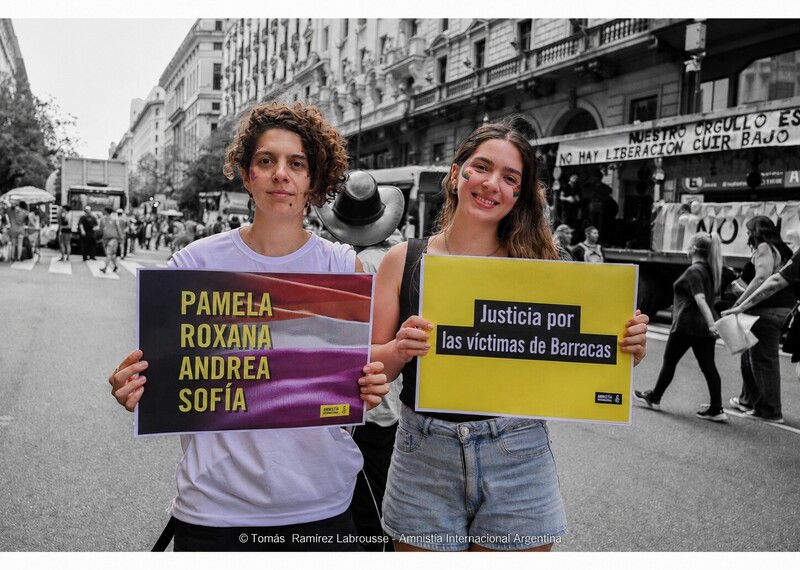
The trial began of the alleged attackers of two lesbian couples who were fatally assaulted in Buenos Aires’ Barracas neighbourhood in May 2024. The attack resulted in the deaths of Andrea Amarante, Pamela Cobbas and Roxana Figueroa, while Sofía Castro Riglos survived and continues to seek justice and reparations.
Amnesty International Argentina, which has supported the victims and their families throughout the process, welcomed the opening of the trial as a crucial step toward accountability. The case has become emblematic of the need to address violence motivated by prejudice and discrimination against LGBTI+ people. Amnesty has also provided legal submissions highlighting the state’s obligations under international human rights standards to investigate and prosecute such crimes.
Belgium
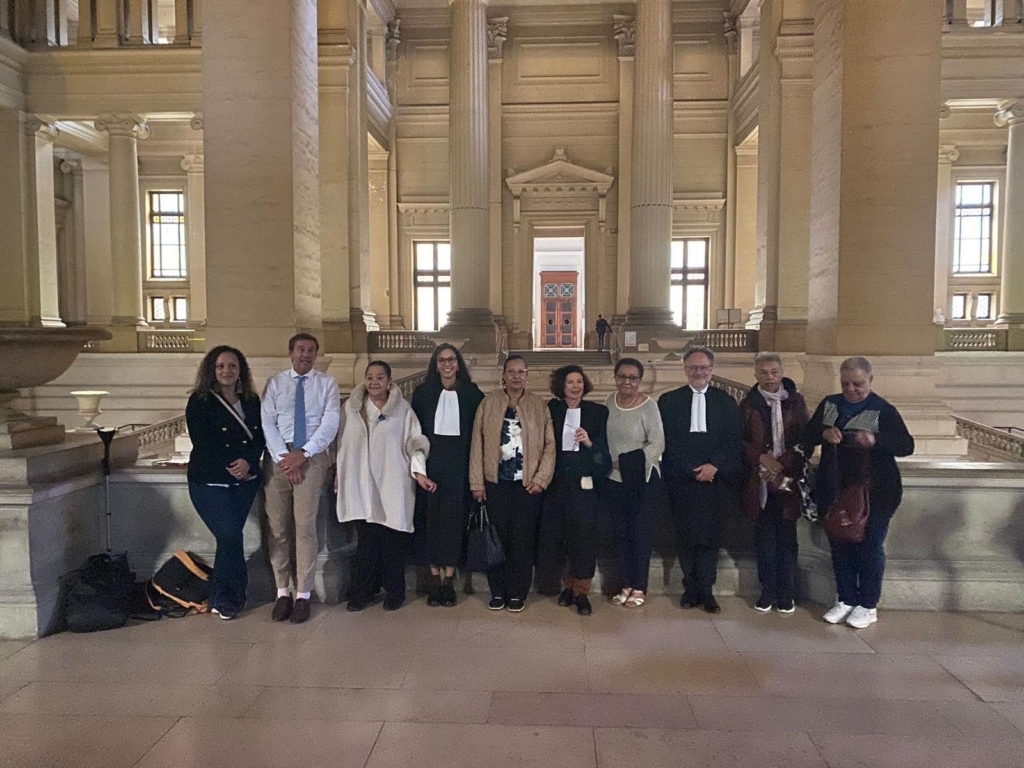
In May, the Belgian State failed in its appeal against a historic judgment issued by the Brussels Court of Appeal on 2 December 2024, which recognized Belgium’s responsibility for the abduction and systematic racial segregation of Métis children under Belgian colonial rule – acts the Court qualified as crimes against humanity.
In its ruling, the Court of Cassation confirmed Belgium’s accountability for colonial-era crimes against humanity and the right of victims to reparation.
Amnesty International, together with African Futures Lab and Amnesty International Belgium (Francophone) will continue to campaign for justice on behalf of the Métis people to ensure they get the reparations they deserve.
Brazil
In May 2026, Brazil’s Federal Regional Court of the 3rd Region rejected both appeals filed by actor Juan Darthés against his conviction for sexual violence against actress and activist Thelma Fardin. This decision represents another significant step forward in a historic case that has become a regional symbol of the fight against impunity for gender-based violence.
“After years of struggle, this decision is a firm step toward a justice system that listens, recognizes gender-based violence, and sends a powerful message to girls and women across Latin America,” said Thelma Fardin.

Global
The United Nations General Assembly adopted, by an overwhelming majority, a historic resolution on climate accountability which recognizes that states have legal duties to address the human rights crisis caused by climate change as set forth in the International Court of Justice’s (ICJ) 2025 Advisory Opinion.
Spearheaded by the island nation of Vanuatu, and supported by Amnesty International, this new UN resolution, reminds us of the powerful impact of people, including civil society and grassroots movements, working together for a common purpose.
Libya
In May, years of documenting human rights violations in Libya yielded a measure of hope for accountability. Khaled El Hishri, a senior member of the notorious militia Deterrence Apparatus for Combating Terrorism and Organized Crime (DACTO), also known as al-Radaa, appeared before the International Criminal Court (ICC) on charges of war crimes and crimes against humanity.
Amnesty International has long documented horrific violations committed with total impunity at the Mitiga prison in Tripoli, under the control of DACTO. This has included torture and other ill-treatment, unlawful killings, enforced disappearances, and other crimes under international law and serious human rights violations.
Norway
A Norwegian court rejected Greece’s request to extradite Tommy Olsen, founder of the NGO Aegean Boat Report, who is wanted on criminal charges connected to his work documenting human rights violations against refugees and migrants at Europe’s borders. Following his initial arrest in Norway, Amnesty launched an Urgent Action calling on Norway to reject his extradition and stating that the charges against him were not supported by evidence and were an abuse of anti-smuggling legislation.
“This case was never only about me personally, it was about whether documenting human rights violations and standing in solidarity with people on the move can be treated as a crime in Europe.
Tommy Olsen
“This case was never only about me personally, it was about whether documenting human rights violations and standing in solidarity with people on the move can be treated as a crime in Europe,” said Tommy. “I am deeply grateful to Amnesty International and everyone who took action in support of me during this process.”
Olsen still faces criminal proceedings against him in Greece and is subject to a European arrest warrant. Amnesty International will continue to campaign against the criminalization of solidarity with refugees and migrants.
South Africa
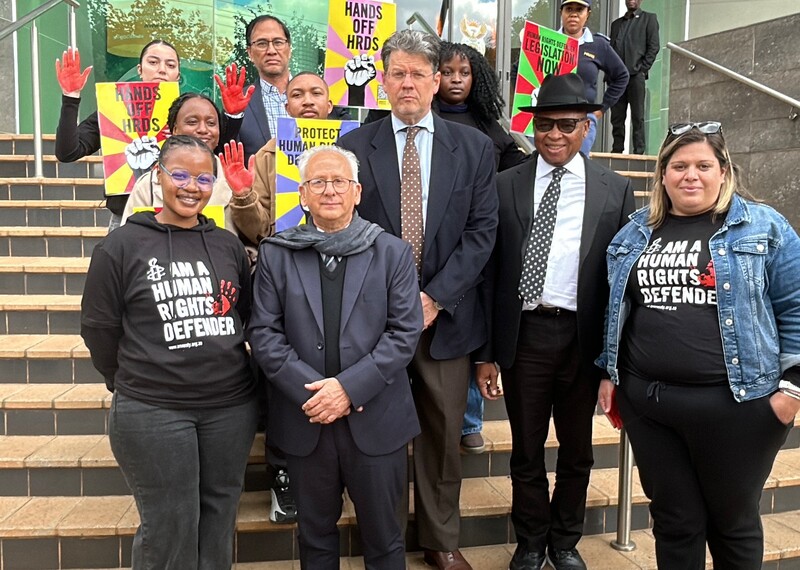
Amnesty International South Africa’s silent demonstration calling for the protection of human rights defenders, and for the police to investigate the killing and harassment of defenders, caught the attention of the authorities.
Acting Police Minister Firoz Cachalia, his Deputy Cassel Mathale and Deputy Justice Minister Andries Nel publicly showed support for Amnesty’s campaign. Deputy Minister Nel has formally committed to meet with Amnesty International to discuss the need for legislation on human rights defenders.
Nigeria
Amnesty International’s research and public campaigning helped bring national attention to allegations of human rights violations at Tiger Base, an anti-kidnapping and armed robbery police unit in Owerri, Imo State, Nigeria. The #EndTigerBase campaign led to direct engagement with the Inspector General of Police and the Imo State Police Command, as well as access to the unit’s facility and high-level discussions on accountability and reform.
Notably, authorities announced the discontinuation of the Tiger Base operational identity, the establishment of a new unit structure, and disciplinary actions against some officers implicated in violations. Amnesty International will continue to monitor the situation and call out police abuses.

Türkiye
Defne Güzel, the chair of the 17 May Association and an LGBTI+ rights activist, was acquitted following criminal proceedings brought against her over content shared on the association’s website and social media accounts. Authorities had argued that the posts were outside the association’s legitimate purpose and violated broadly defined provisions of the criminal code relating to moral and social development.
Amnesty International launched an Urgent Action on behalf of Güzel, who faced the risk of a prison sentence of between one and three years and a fine if found guilty.

June
Global
The UN Special Rapporteur on Torture published her Recommendations for a Torture-Free Trade Treaty, a powerful addition to the global call for a treaty made by survivors of torture and the civil society Torture-Free Trade Network, in which Amnesty International is a core founding member.
Building on the Special Rapporteur’s 2023 study on the global trade in law enforcement equipment, which Amnesty contributed to, the Recommendations provide UN expert guidance on what a treaty could look like in practice and steps states should take to make it a reality. It will be a crucial advocacy resource for this ongoing campaign.
Global
On 26 June the European Committee of Social Rights published its unanimous decision in a collective complaint brought by Amnesty International and Médecins du Monde International against Sweden. The Committee found that Sweden had breached the European Social Charter by failing to uphold the right to healthcare without discrimination, and for systematically violating vulnerable EU migrants’ access to healthcare on equal terms.
The complaint documented 129 cases demonstrating how Sweden routinely denied vulnerable migrants, many of them Roma, access to healthcare and charged them the full cost of care. As a result, many individuals from this group refrained from seeking necessary medical treatment, exposing them to serious risks to their health and lives. This landmark decision should be a guiding principle not only for Sweden, but for all EU countries in how they should guarantee access to health care and treatment for everybody regardless of their circumstances.