

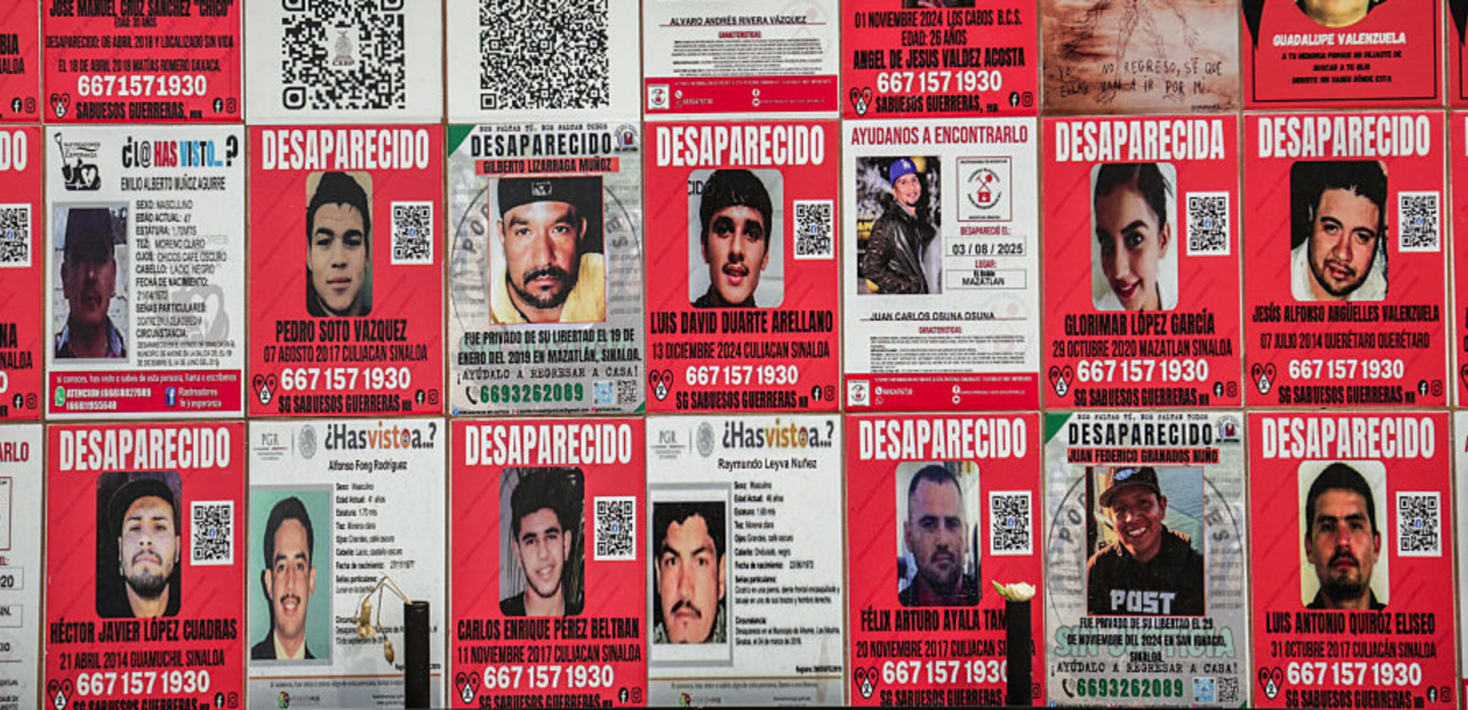


Women searcher collectives, who are planning a peaceful protest to coincide with the opening match of the 2026 FIFA World Cup at the Mexico City Stadium, must be protected and heard, said Amnesty International ahead of the tournament’s curtain-raiser on 11 June.
Thousands of people are expected to attend a march in the country’s capital which has been organized by women in honour of their disappeared loved ones – many of whom were forcibly recruited into drug cartels or murdered for resisting. Amnesty International will be observers at the protest and interviewees will be available.
As of 25 May 2026, the National Registry had recorded 134,460 missing persons in Mexico. With little support from authorities, women seeking truth, justice and remedy have been forced to search for their loved ones themselves, filling the gaps left when those in power look the other way. Now, the women, whose slogan is ‘Don’t play with our pain’, are calling for justice for their loved ones, better safety and for the authorities to accept support from other countries to assist with their search.
“As tens of millions of people around the world prepare to tune into what FIFA is calling ‘the greatest opening ceremony on earth’, thousands of brave women in Mexico will use the opportunity to take to the streets and remind the world that their loved ones are still missing and that their search for them continues,” said Edith Olivares Ferreto, Executive Director of Amnesty International Mexico.
Although the march has been given the green light by authorities, women searchers are attacked, vilified, discredited and even criminalized every day for defending human rights in Mexico.
This is a crisis on staggering scale — there are more disappeared and missing people in Mexico than will attend the opening match
Edith Olivares Ferreto, Executive Director of Amnesty International Mexico
of this World Cup.
“This is a crisis on staggering scale — there are more disappeared and missing people in Mexico than will attend the opening match of this World Cup. It is time for the Mexican authorities to listen to these women, who deserve truth, remedy and justice,” Edith Olivares Ferreto said. “Amnesty International calls on authorities across all states in Mexico to fully respect the right to peaceful protest and to refrain from any actions that could result in the repression of demonstrations. We will be closely monitoring the development of mobilizations throughout the country.”
Risks to protestors in Mexico, including women searchers, is one of the key human rights threats associated with the 2026 FIFA World Cup, highlighted by Amnesty International in a report on 30 March. In addition to repression of peaceful protests in all three host countries, the organization highlighted abusive and deadly US immigration policies, which have resulted in a surge of unlawful arrests, mass detentions and deportations. In Canada, people experiencing homelessness are at risk of being subject to street sweeps in the host cities of Toronto and Vancouver.
Yet despite repeated calls from Amnesty International, fans groups and other human rights organizations, FIFA and host country authorities have so far failed to provide public guarantees that World Cup events and gatherings will not be targeted for immigration enforcement, or that peaceful protests will be permitted inside and outside of venues. FIFA has still not responded to a letter from Amnesty International asking for such guarantees and seeking clarity about what flags and banners would be prohibited within FIFA venues.
“It’s not just extortionate ticket prices that will keep many people from fully enjoying this World Cup, so will the failure of FIFA and host countries to provide assurances that they will respect the rights of fans and local communities,” Edith Olivares Ferreto said. “Football cannot ‘unite the world’ while mass deportations continue to devastate families and spread fear and division, or while people are prevented from expressing themselves freely.”