


The US government is breaching international human rights standards by moving ahead with a series of new lithium mines across Nevada without the Free, Prior and Informed Consent (FPIC) of affected Indigenous Peoples, threatening their culture, health, water and environment, Amnesty International said in a new research briefing out today.
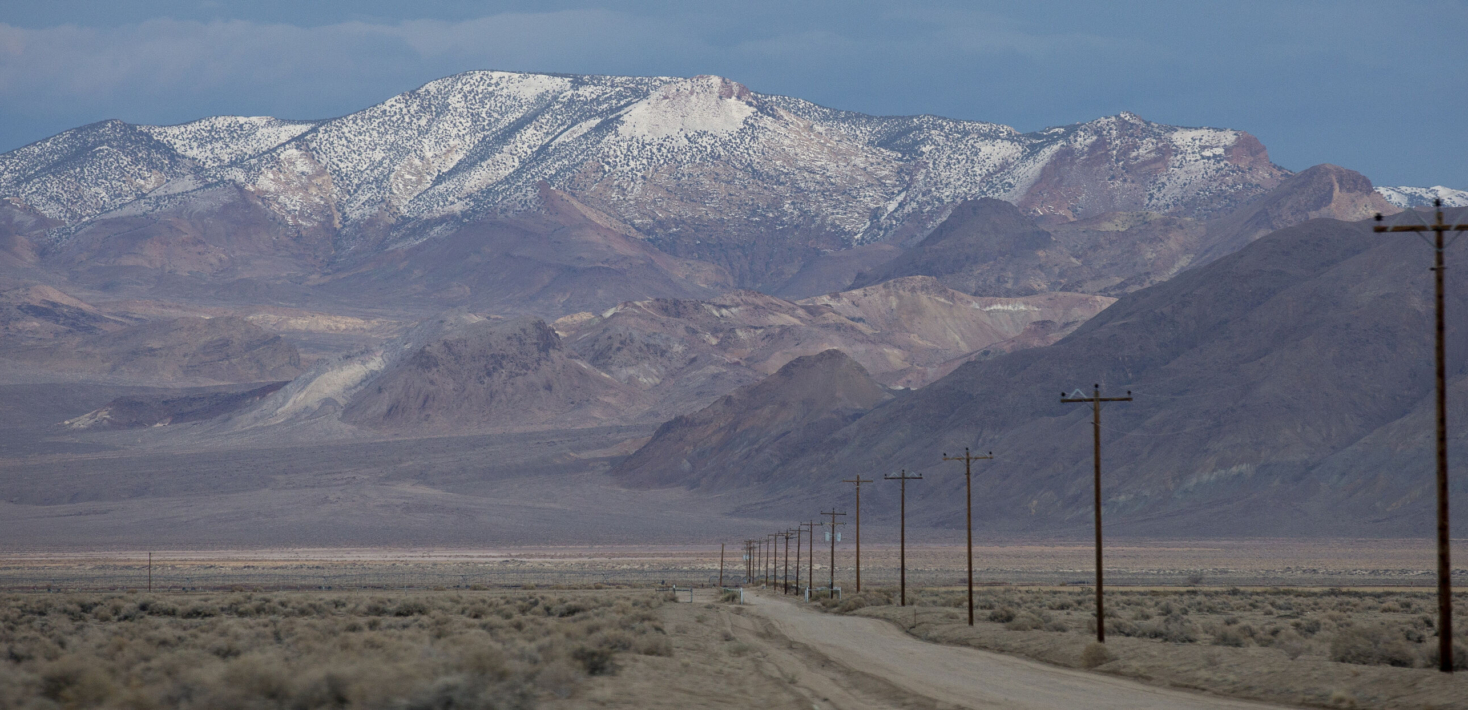
As global demand for lithium surges, driven by the energy transition and rapid expansion of AI-related data centres, Nevada has become a key extraction hub, holding around 85% of the United States of America’s known lithium reserves. “We’re here to protect Mother Earth: Indigenous Rights and Nevada’s Lithium Boom” focuses on three massive lithium mining projects in Nevada: the Thacker Pass Lithium Mine, which is already under construction; the Nevada North Lithium Project; and the Rhyolite Ridge Lithium Project.
The new research reveals how Indigenous Peoples’ consent was never sought or obtained for these mines, which affect their ancestral lands, and lay bare an extractive-sector business model that systematically prioritizes speed, scale and profit at the expense of Indigenous Peoples’ rights and the environment.
“In the race for so-called critical minerals, the current Trump administration is accelerating mining permits while weakening environmental oversight, fast-tracking extraction at the expense of human rights and environmental protections. It reflects political and industry priorities rather than what societies genuinely need. As the lithium boom continues, it’s time for the rights of Indigenous Peoples to be prioritized,” said Alysha Khambay, Amnesty International’s Business and Human Rights researcher.
“Amnesty International’s research shows that mining linked to the energy transition is already driving severe human rights abuses, from the Democratic Republic of Congo to the Philippines – from violations of the right to self-determination to restrictions on ancestral lands, forced displacement and the loss of livelihoods, and pollution that causes significant health harms. This is a global tragedy. Foreign mining companies must respect international human rights standards wherever they operate and irrespective of insufficient domestic laws.”
“We were railroaded”
Amnesty International spoke to 20 Indigenous Peoples and Tribal members and conducted in-depth interviews with 11 individuals impacted by the proposed projects. Many said they felt railroaded by the US government.
Shelley Harjo, a member of the Fort McDermitt Paiute and Shoshone Tribe – impacted by the Thacker Pass mine – said: “Consent does not apply here. There was never any genuine consent given by the community. We were just railroaded. Our Tribe is financially impoverished, I feel we were taken advantage of – our being so naïve to what was really happening at the time.”
The mine is going to destroy our homelands, our way of living.
Shelley Harjo
For Dorece Sam Antonio, a direct descendent of Ox Sam – one of the three survivors of the 1865 Thacker Pass massacre – and a leading figure in the 2023 Indigenous-led prayer camp opposing the mine, it’s a huge blow for her community and ancestors.
“The company shouldn’t be there,” said Dorece. “Those are my ancestors out there, that’s why we tried to protect that land.”
Shelley Harjo said: “The mine is going to destroy our homelands, our way of living. I honestly don’t feel our Tribe’s ready for what’s to come. The fact we and generations of our descendants are being sacrificed for green energy – why does it have to be to the detriment of Indigenous People? We are people, we matter, just as much as anybody else.”
Consent was never sought
The US classifies much of the land where lithium projects are advancing as public – a designation rooted in a long history of settler-colonial land dispossession. Under international human rights standards however, much of these lands belong to the Indigenous Peoples who have traditionally owned, occupied or otherwise used them. Their rights, including the right to self-determination and to FPIC, must be fully respected in all decisions affecting their territories and ways of life.
“For all three mining projects, consent was never sought, nor was it an objective of the engagement that did take place,” said Alysha Khambay. “As these projects advance without FPIC, the United States is breaching international human rights standards and continuing the same patterns of dispossession that Indigenous Peoples have faced for generations.”
Mining activities must not harm human rights
While only one lithium mine in Nevada is currently operational, the scale and pace of planned expansion is worrying. As of September 2024, more than 23,500 active lithium claims had been registered across the state – which means measures need to be put in place to protect the rights of Indigenous Peoples immediately.
It’s deeply worrying that the US government has failed to respect Indigenous Peoples’ right to give or withhold consent.
Alysha Khambay, Amnesty International’s Business and Human Rights researcher
“Many of the lithium deposits being targeted for development are located on the ancestral lands of Indigenous Peoples – lands that are significant to their cultural identity, spirituality and livelihoods. As demand accelerates for green energy and AI data-centre infrastructure, fast-tracking extractive projects without respect for Indigenous rights is entrenching historical harms,” said Alysha Khambay.
“It’s deeply worrying that the US government has failed to respect Indigenous Peoples’ right to give or withhold consent and is instead accelerating mining projects that further undermine human rights protections. Lithium extraction and processing in Nevada’s arid high desert environment threaten water sources and biodiversity, undermining rights to water, health, culture, and a clean, healthy and sustainable environment.”
Federal and state laws must be urgently reformed
Amnesty International is calling for the US government to urgently reform federal and state laws to require free, prior and informed consent before approving any project affecting ancestral Indigenous lands. Companies sourcing and developing lucrative lithium projects must show they respect Indigenous Peoples’ right to FPIC, which is a cornerstone of the right to self-determination.
In response to Amnesty International, the Australian and Canadian companies developing two of the mines – Ioneer and Lithium Americas – emphasized that the projects are on federal public land and that FPIC is not required under US law, pointing to government-led consultation processes and their own engagement. However, international standards make it clear that companies must respect the higher standard where domestic requirements are weaker.
Lithium Americas also said it had entered into a Community Benefits Agreement with one of the several Indigenous Tribes affected by Thacker Pass mine, but interviewees – including former Tribal Council members – told Amnesty International the agreement was highly one-sided in favour of the company, offering few meaningful benefits despite the mine’s potentially devastating environmental and cultural impacts. Amnesty International stressed that such agreements do not replace the requirement to obtain Indigenous Peoples’ FPIC.
Lithium America’s home state, Canada, has enshrined the UN Declaration on the Rights of Indigenous Peoples (UNDRIP) into domestic and provincial law in British Columbia where the company is registered. UNDRIP outlines the requirement for FPIC in the context of economic development that could affect the rights of Indigenous Peoples. Lithium Americas and other Canadian companies pursuing lithium or other mineral claims in Nevada therefore must respect these rights.
“All states have a duty to ensure that companies registered on their shores respect human rights overseas,” said Ketty Nivyabandi, Secretary General of Amnesty International Canada’s English-speaking section.
“Among states, the US isn’t solely responsible for the human rights violations connected to the approval of these mines without the free, prior and informed consent of the affected Indigenous Nations. As two of the biggest players in the global mining industry, Canada and Australia have a vital role to play to ensure the energy transition doesn’t trample over the rights and the lives of Indigenous Peoples around the world.”
Companies are expected to respect international human rights standards wherever they operate. By advancing projects without FPIC, they contribute to serious human rights abuses and increase legal, reputational and financial risks. The companies named in Amnesty International’s report should halt further activity until genuine FPIC is obtained. Amnesty International calls on these companies and their investors to o ensure that no project proceeds without FPIC.