


Tunisian authorities have intensified their crackdown on non-governmental organizations (NGOs) through court-ordered suspensions and threats of dissolution, judicial and administrative harassment on the pretext of combating “suspicious” foreign funding and protecting “national interests,” Amnesty International said today.
Over the past two years, authorities have increasingly targeted organizations working on human rights, migration, anti-racism, election monitoring, corruption, media freedom and social justice. What began with intimidation, arbitrary restrictions, asset freezes, and politically motivated criminal prosecutions targeting staff or board members has now evolved into attempts to use judicial means to eliminate NGOs altogether.
NGOs operating in Tunisia face an increasingly hostile environment in which legal and judicial mechanisms are being weaponized to suppress independent voices and undermine freedom of expression and peaceful assembly.
Sara Hashash, Deputy Regional Director for the Middle East and North Africa at Amnesty International.
“NGOs operating in Tunisia face an increasingly hostile environment in which legal and judicial mechanisms are being weaponized to suppress independent voices and undermine freedom of expression and peaceful assembly. This extends to the threat of being dissolved for defending rights and freedoms,” said Sara Hashash, Deputy Regional Director for the Middle East and North Africa at Amnesty International.
“Tunisia’s vibrant civil society was one of the most important achievements of the 2011 revolution, facilitated by Decree Law 88 on Associations. Yet today, the authorities are shrinking civic space, silencing dissent and undermining rule of law safeguards.
“International human rights law is clear that restrictions on freedom of association must be lawful, necessary, proportionate, and strictly limited to legitimate aims in a democratic society. The use of administrative and judicial measures to suspend, criminalize, or dissolve organizations for their legitimate human rights and civic work fundamentally undermines Tunisia’s obligations.”
Escalating restrictions on civil society
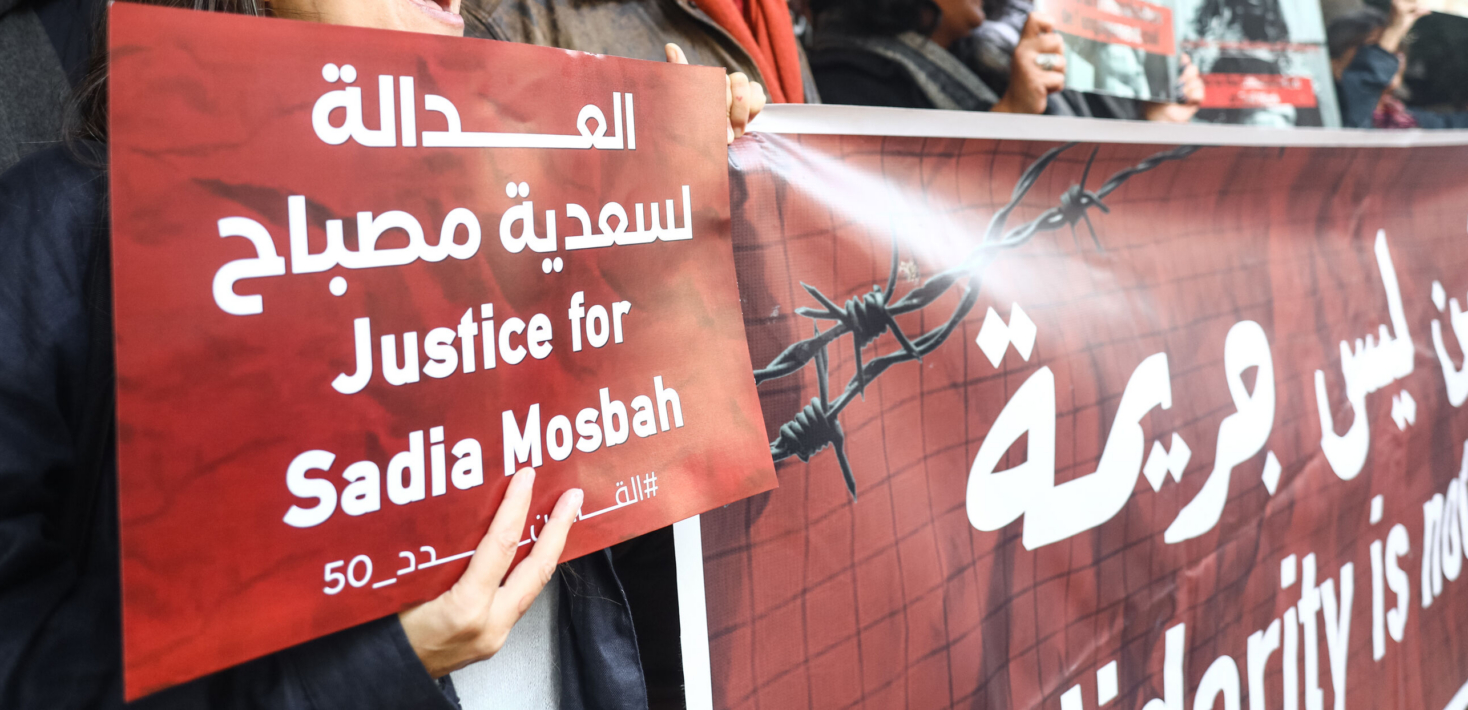
Over the past year, courts have issued 30-day suspension orders against at least 25 organizations. They include: Nobel Peace Prize laureate, the Tunisian League for the Defence of Human Rights (LTDH), the oldest human rights organization in Africa; Lawyers Without Borders (known by its French acronym ASF), which has operated in Tunisia since 2012; anti-racism association Mnemty, whose president Saadia Mosbah remains in arbitrary detention; ATFD, Aswat Nissa, Nawaat, ICJ, LTDH, and OMCT among other organizations
Bassem Trifi, president of LTDH, told Amnesty: “We consider the suspension to be a political decision disguised as a judicial one as it comes within a context of restricting of civic space and targeting the independent organizations that are fighting for human rights in Tunisia. Beyond targeting human rights organizations, it is human rights and freedoms that are being severely undermined, especially the rights to freedom of expression association and assembly.”
Despite challenging the suspension orders in court, all the NGOs lost their appeal – and now face the threat of being dissolved.
In the case of Al Khatt, the organization behind the independent investigative media outlet, Inkyfada, after receiving a 30-day suspension order last July, they appealed the order in court and lost the case. In April the government petitioned for their dissolution which can only be ordered by a court. Dissolution proceedings opened on 11 May and the session was adjourned to 1 June.
ASF’s 30-day suspension order issued on 5 May 2026 has already had a direct impact on individuals who do not have the means to access legal aid. The Tunisian association Calam, one of ASF’s partners, published a statement saying it is unable to provide legal support for victims of gender-based violence as long as ASF is suspended.
Travel bans and smear campaigns
On 19 April 2026, the treasurer of the Tunisian Forum for Social Economic and Cultural Rights (FTDES) was arbitrarily prevented from leaving the country to attend an overseas event on migration issues. He had been previously summoned for questioning on two occasions by the National Unit for the Investigation of Complex Financial Crimes. Since then, the police have issued further summons for other FTDES staff members.
The interrogations are part of an ongoing investigation into the Forum’s activities, funding sources, and financial management. Despite complying with the summons and answering investigators’ questions, FTDES’s treasurer continues to be subject to a travel ban without a judicial order.
NGOs receiving foreign funding have been increasingly vilified or subject to smear campaigns since 2023.
In May 2024, President Kais Saied accused organizations working on migration of being “traitors” and “[foreign] agents”, allegedly seeking to facilitate the “settlement” of Sub-Saharan migrants in Tunisia. In another instance, 25 human rights and civil society organizations were accused of being “mercenaries,” “foreign agents,” “corrupt,” and “traitors” by pro-presidential social media accounts and media commentators after they issued a joint statement on 11 October 2025, supporting protests in Gabès over health and environmental harms linked to state-owned chemical plants.
Tunisia’s association law Decree Law 88 establishes procedures and penalties for associations accused of violating provisions related to fund management or financial reporting in Article 45. The law requires the government to first issue a written warning specifying the alleged violations and granting up to 30 days to remedy them. Only if the organization fails to comply may the government petition the court to suspend its activities for up to 30 days. Article 45 also states that the association can be dissolved by a decision issued by a Court of First Instance upon the request of the government or any concerned person, in the event the association persists in violating the above provisions despite being warned, and despite being suspended, after exhausting all methods of appealing the suspension.
Under international human rights law, associations have the right to seek, receive, and use funding, including domestic, foreign, and international sources. This is an essential part of the freedom of association protected under international law such as the United Nations’s International Covenant on Civil and Political Rights.
Instead of targeting organizations working to defend economic, social, and political rights, Tunisian authorities must immediately end this campaign of intimidation.
Sara Hashash.
“The environment in which NGOs are operating in Tunisia is becoming more dangerous every day. Human rights defenders and NGO workers risk criminal prosecutions based on outrageous accusations solely for carrying out their legitimate work. Instead of targeting organizations working to defend economic, social, and political rights, Tunisian authorities must immediately end this campaign of intimidation,” said Sara Hashash.
“They should release all NGO workers and human rights defenders detained or prosecuted for exercising their civic freedoms, lift all retaliatory measures including asset freezes, withdraw abusive charges, reverse arbitrary suspensions, and end criminal proceedings against organizations lawfully carrying out their work.”