
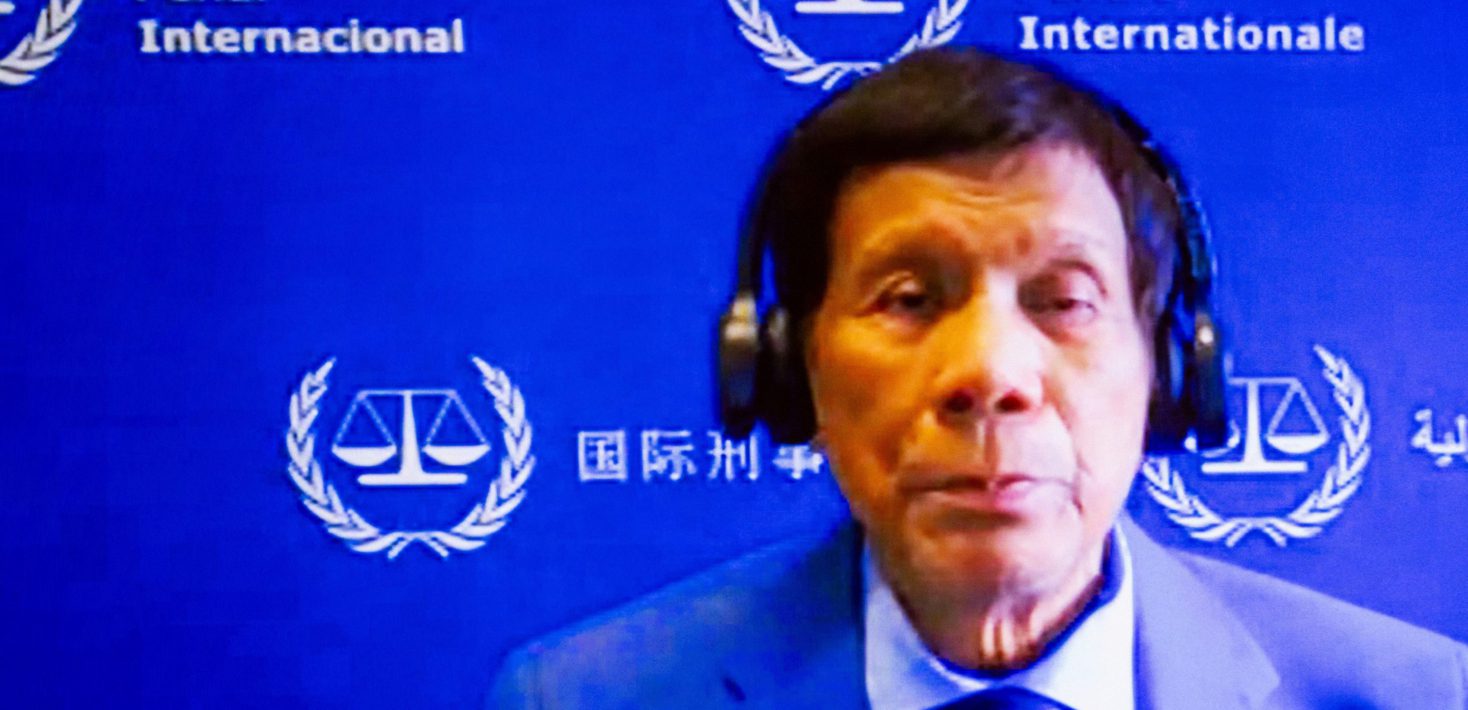


Former Philippine President Rodrigo Duterte’s trial at the International Criminal Court (ICC) for crimes against humanity is a historic opportunity for justice for victims of the so-called “war on drugs” and a defining test for the future of international accountability, Amnesty International said ahead of the trial starting on Monday 30 November.
The trial, which will focus on murders and attempted murders allegedly committed between 2013 and 2019 while Duterte was President of the Philippines and Mayor of Davao City, opens at a time when the ICC is facing unprecedented attacks from the US government and other powerful states.
“For thousands of families of victims, this trial represents something they have been denied for years: the chance to see those allegedly responsible for horrific crimes brought before a court of law,” said Ritz Lee Santos III, Executive Director of Amnesty International Philippines.
“The victims and survivors of the so-called ‘war on drugs’ have shown extraordinary courage and determination in pursuing justice. They must remain at the centre of these proceedings every step of the way.”
Duterte was arrested by the Philippine authorities in March 2025 and surrendered to the ICC to face charges of murder and attempted murder as crimes against humanity linked to the deadly anti-drugs campaign carried out during his presidency, and while he was mayor of Davao City.
During Duterte’s presidential term from 2016 to 2022, thousands of people, predominantly from poor and marginalized communities, were unlawfully killed by police officers or by armed individuals alleged to have links to the police as part of the government’s supposed “war on drugs”.
Duterte’s trial begins less than two months after the Trump administration intensified its campaign against the ICC. On 9 October 2026, the US government imposed sanctions against the institution as a whole, introducing sweeping financial and technological restrictions that will – without state party protection – significantly undermine the Court’s ability to function. The measures are an extension of an Executive Order signed by President Trump on 6 February 2025 authorizing sanctions against the Court, its staff and those cooperating with it.
“Duterte’s trial is a powerful reminder that no one should be beyond the reach of justice. At a moment when the ICC itself is under increasing attack, these proceedings demonstrate why the world must defend the Court’s independence and ability to hold even the most powerful to account under international law,” said Agnès Callamard, Secretary General of Amnesty International.
“The EU and G7’s unwillingness to protect the ICC and their appeasement in the face of US sanctions represent a betrayal of the victims of grave human rights violations in the Philippines’ poorest neighbourhoods and others around the world. These powerful, privileged leaders are trampling on people’s rights and their hopes of justice.”
The consequences of US sanctions reach far beyond the Philippines. Victims seeking justice through ICC investigations in Ukraine, Palestine, Venezuela, Sudan’s Darfur region, Afghanistan and elsewhere could all be affected if the Court and those working with it are prevented from carrying out their work.
The opening of Duterte’s trial coincides with the start of the Assembly of States Parties, the annual gathering of ICC member states, which this year has been relocated from New York to The Hague because of the impact of the US sanctions.
“The ICC constitutes a major – and sometimes the only – path to truth, justice and reparations for the world’s gravest crimes. If ICC member states fail to stand up for the Court, or protect it against US sanctions, it could altogether collapse. If ICC member states negotiate with the US and agree to their demands, they will destroy the ICC’s independence and credibility. Governments must recognize that it is not just the future of the ICC at stake, but the future of international justice itself,” Agnès Callamard said.
“The Court’s 125 member states must move beyond statements of support and take resolute, concrete action to defend it, including through political and financial support and full cooperation with investigations and arrest warrants. States should also enact national and regional ‘blocking statutes’ and open accounts for the ICC at central banks to mitigate the impact of US sanctions on the Court and those who work with it. Victims of the most serious human rights violations around the world are depending on states to act now.”
Background
Amnesty International documented patterns of extrajudicial executions and other serious human rights violations committed during the Duterte administration’s “war on drugs” in the Philippines and concluded that the violations amount to crimes against humanity.
The ICC is continuing to investigate additional alleged crimes against humanity connected to the “war on drugs” and the Davao Death Squad while Duterte served as mayor of Davao City. A redacted version of the charging document released on 13 February 2026 identified eight other individuals as alleged co-perpetrators alongside Duterte.
An arrest on the basis of an ICC warrant made public on 11 May is outstanding for former national police chief and current Senator Ronald ‘Bato’ dela Rosa for his alleged responsibility for murders during the “war on drugs” under the Duterte administration, and for his alleged role in the Davao Death Squad as chief of Davao police. In May he was present in the Philippines Senate building but with help from other senators was allowed to evade the execution of the ICC warrant. Since then, the government has failed to execute the warrant against him and his whereabouts are currently unknown.
Amnesty International continues to call on the Philippine government to cooperate fully with the ICC, including by executing arrest warrants. It must also ensure domestic accountability by independently investigating those allegedly responsible for unlawful killings, prosecuting them in fair proceedings where there’s sufficient evidence, and guaranteeing victims and their families have access to effective remedies and avenues to justice in the Philippines.