

Three young activists on the reality of growing up in today’s world
Children and young people around the world continue to speak up despite challenges because they believe their actions can make a difference. Many of them are tackling the impact of climate change head on, some are struggling to get an education, while others face dangers when they protest.
The Spark Club is a group of 11 to 18-year-old activists from around the world working with Amnesty International to make sure their voices are included, heard and listened to. They have been instrumental in shaping Amnesty’s new briefing Sparking Change - Children’s Right to Protest: A Perspective from Children and Young Activists, working alongside our researchers.
Here three young activists share more about the challenges they face in their countries and how they’re holding their governments to account.
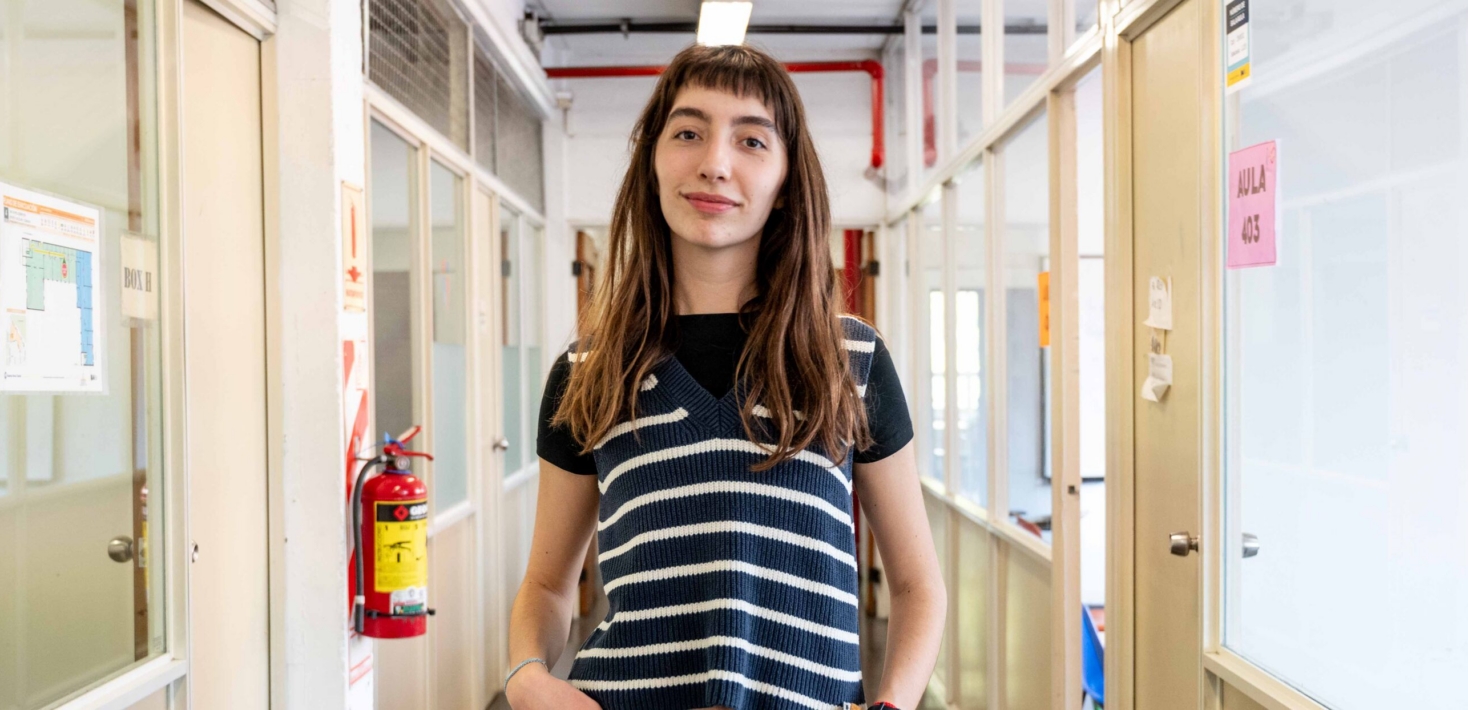
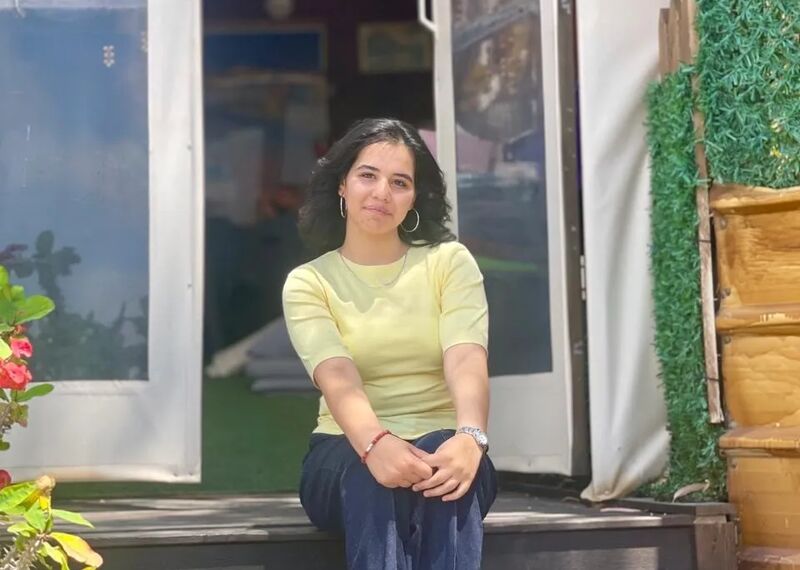
Lur, 18, Argentina (pictured above)
I first understood how powerful social protest can be as I held my mother’s hand during a demonstration when I was very little. I learned not to stay quiet facing an injustice.
Now I study Political Science in Buenos Aires University (UBA) and I focus my activism on fighting for human rights.
Speaking about human rights is as simple as speaking about happiness: It’s the basic belief that every person should have the opportunity to live a happy life, as it is the only one we get to live. That’s why everyone should have a job, a plate of food, access to healthcare and to quality education. I think these can’t be fulfilled in a society that functions by oppressing the working majorities to sustain minorities’ wealth.
As a Latin American country, we carry a history of economic subjugation that is relived every time a right or far-right government wins. Argentina’s current administration is violating many human rights, by cutting funding to all social policies that tried to provide equality. In this context, many young people struggle to get access to formal employment and can’t even think of becoming independent. At the same time, the government is defunding public education, a key tool for upward social mobility. Right now, being young in Argentina means being unable to imagine a future or to plan a life.
We need to come together, crossing barriers set by this era of isolation that came with social media. It is time to leave our rooms and take to the streets, the classrooms and schools. We need to understand the role new technologies play in the configuration of neocolonialism, and to use the tools that are against us, in our favour.
Spark Club gave me the opportunity to see the reality of protest around the world, and how, even as we come from very different places, we all care for the person next to us, and that’s what motivates us to keep fighting.
Charles, 18, Philippines
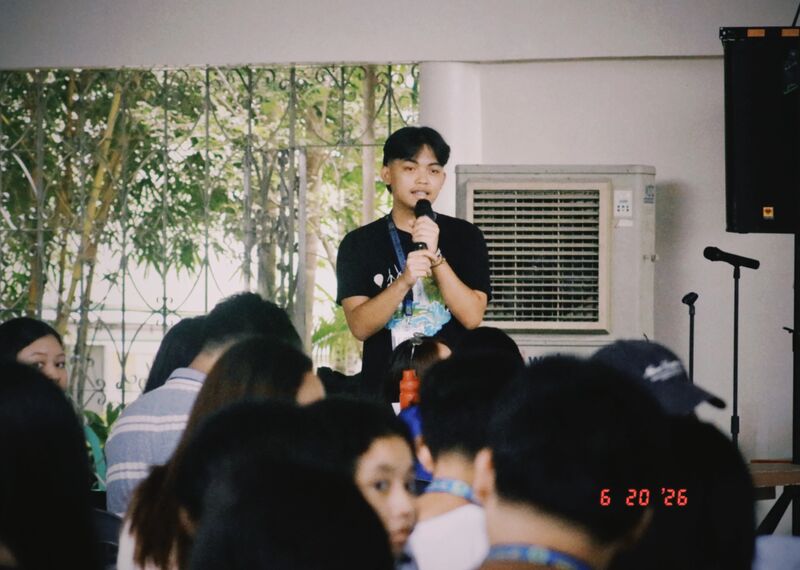
I come from Bohol in the Philippines, where I first came to understand what the climate crisis meant long before I knew how to talk about it in the language of policy. When Typhoon Odette hit in December 2021, our house was damaged, and the months that followed changed how I understood recovery. Life eventually resumed, as it tends to do, but returning to normal was a much longer process for some families than for others. I became interested in climate justice because I wanted to understand why the burden of a crisis that people had little part in causing could fall so heavily on their lives.
Since then, I have worked with young people on environmental campaigns in Bohol and taken part in international climate discussions, often moving between two worlds that seem to speak very different languages. In one, we discuss adaptation finance and the responsibilities of governments. In the other, I think about the people back home for whom these discussions have immediate consequences. I sometimes wonder how much of their reality makes it into those rooms and how much is lost when a community’s experience has to be condensed into a few lines in a report.
Being a young activist has taught me that people are generally comfortable with young people having opinions until those opinions become difficult to accommodate. We are encouraged to participate, but there is a difference between being given the opportunity to speak and having what you say taken seriously. I have encountered spaces where young people are welcomed as representatives of the future yet treated as though we have little to contribute to decisions being made in the present. For those of us who come from smaller communities, there is the additional difficulty of finding the resources and opportunities to get ourselves heard in the first place.
What keeps me in this work is partly where I come from and partly the people I have met along the way. I have seen young people continue organizing in their communities with very little support, returning to the same meetings and raising the same concerns because the problems have not gone away. Their work rarely comes with much recognition, and change can be slow enough to make you question whether anything is moving at all. Still, they show up. I have come to appreciate this less visible part of activism, the work that continues long after the attention has moved elsewhere.
Spark Club has given me the chance to meet people who understand why this work matters, even when the results are uncertain or difficult to see. It has also given me room to learn from experiences very different from my own.
I hope that children and young people will be able to speak about the conditions of their lives without having to worry about being punished, ridiculed, or dismissed for doing so.
I want a young person from a place like mine to know that they can question those in power and demand something better without first needing a title, an audience, or a reason to prove they deserve to be heard. Young people have their own understanding of the world they live in. They should be able to share it, challenge what they believe is wrong, and help decide what happens next.
Raya, 14, Palestine
Growing up in Palestine has shaped the way I understand children’s rights. When I see how fear and difficult circumstances affect children’s lives, I become even more aware of how important it is for them to have a voice and a safe space where they can express themselves, their feelings and their fears. These experiences have made me believe that children should never have to remain silent about the things that affect their lives.
I advocate for children’s rights and protection, including their right to participate in decisions that affect them. Through my work in child rights advocacy, I make sure children’s voices are heard and show that their opinions do matter. I also represent Palestine on the regional advisory council for children and young people in the Middle East and North Africa, where I believe it is important to bring the experiences of Palestinian children to wider platforms and make their voices heard.
I have not limited my advocacy to speaking about children’s rights; I have also tried to turn my ideas into practical solutions. This is why I developed Hakortna, an interactive application designed specifically for children in Palestine. It aims to help them understand their emotions, express themselves in a safe and gentle way, recognize their emotional and psychological struggles, and access activities and resources that may help them. To me, every child deserves someone who will listen, even when they find it difficult to put their feelings into words.
Children and young people who speak out face many challenges, including not being taken seriously because of their age, being excluded from decision-making, and fearing the consequences of expressing their opinions. In Palestine, these challenges become even more difficult because of the reality children live through. Sometimes, children are expected to remain silent when what they really need is someone who will listen and take their fears and experiences seriously.
What motivates me to continue is my belief that one voice can make a difference, and that change can begin with a small idea or a child finding the courage to speak. Spark Club also gives me a space to learn and connect with young people who share my belief in the power of our voices to create change.
I hope for a future where every child can express their opinions without fear, where adults listen to children instead of speaking on their behalf, and where children’s right to participation and peaceful protest are respected. We do not need to wait until we grow up to help build a better world. We are part of this world now, and the decisions made today affect our lives and our future.
Read Amnesty’s new briefing, Sparking Change Children’s Right to Protest: A Perspective from Children and Young Activists, as well as our guide for children and young people on the right to protest