
Overview
Reckless arms trading devastates lives. Weapons and ammunition are produced and sold in shockingly large quantities. In fact, there are more than one billion firearms in the world. Global military expenditure was over $2.7 trillion USD in 2024, an increase of 9.4% from the previous year. That’s almost half a trillion more than Canada’s entire gross domestic product that same year.
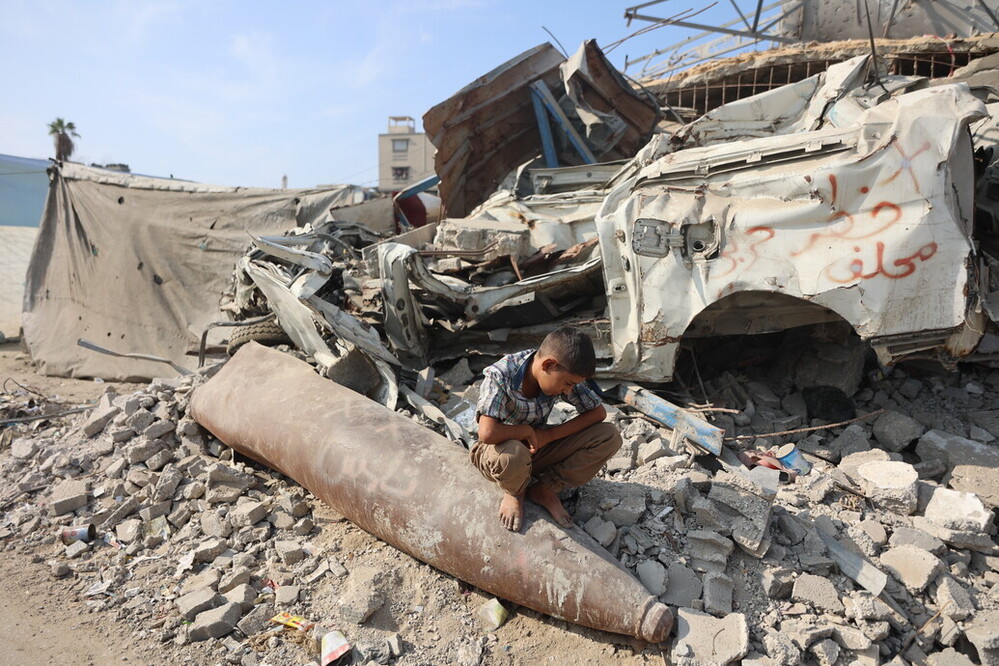
Every day, thousands of people are killed, injured or forced to flee their homes because of armed violence. Modern wars harm civilians the most. Bombs and missiles destroy hospitals, homes and markets, devastating everyday life and people’s access to their human rights.
Gun violence is a daily tragedy that affects people all over the world, mostly in places that are not directly involved in an armed conflict.
Amnesty International is campaigning to prevent weapons – from unregistered handguns to armed drones to tanks – from getting into the hands of those who will misuse them.
Why is arms control a human rights issue?
There is a direct link between the irresponsible arms trade and human rights. Arms continue to be sold into armed conflicts where war crimes and other crimes under international law are rampant. Outside armed conflict, armed violence can create chronic instability, preventing people from being able to live freely and safely.
The uncontrolled arms trade can violate several rights in the Universal Declaration of Human Rights (UDHR), including:
- the right to life, liberty and the security of person
- the right to be free from torture and other ill-treatment
- and the right to health
The impacts of weapons are profound and go beyond direct harm. Armed violence undermines the economy, disrupts communities and makes life more dangerous for everyone. It can severely impact children, women and other marginalized groups.
The misuse of policing equipment can also lead to the suppression of dissent. Around the world, military and police forces use illegal tactics and weapons against protesters, instilling a climate of fear that infringes on people’s civil and political rights.
Case Study: Gang violence in Haiti

In Haiti, unregulated arms transfers have stoked the flames of intensifying gang violence across the Port-au-Prince metropolitan area and neighbouring regions. While data on illicit transfers is scarce, experts estimate that around 600,000 illegal firearms are in circulation in Haiti. Gang violence has created a massive humanitarian crisis, marked by mass displacement and the collapse of essential services.
Research shows that gangs in Haiti rely on an array of weapons to commit human rights abuses. Children face unique risks, as armed gangs recruit and use them for dangerous roles – operating as lookouts and running errands like transporting weapons – and threaten them with violence if they refuse to comply. Sexual violence against women and girls, including at gunpoint, is used as a tool to intimidate and control communities.
What laws exist to regulate arms?
Several international and regional laws control the transfer and use of weapons. Some of the most important for human rights are:
- The Arms Trade Treaty (ATT): Sets global rules for trade in conventional arms, barring exports where there is a substantial risk that arms would be used to commit or facilitate serious violations of international human rights or humanitarian law.
- The EU Common Position on Arms Exports: Prohibits the export by EU member states of arms which might be used in the commission of serious violations of international human rights law or internal repression.
- Geneva Conventions, Additional Protocol 1, Article 35: Prohibits use of “weapons, projectiles and material and methods of warfare of a nature to cause superfluous injury or unnecessary suffering”.
- Anti-Personnel Mine Ban Convention: Prohibits the use, stockpiling, production and transfer of anti-personnel mines and mandates the destruction of stockpiles, clearance of contaminated areas and assistance to victims.
- The Convention on Cluster Munitions: Prohibits use, stockpiling, production and transfer of cluster munitions and mandates the destruction of stockpiles, clearance of contaminated areas and assistance to victims.
- Chemical Weapons Convention: Prohibits the development, production, stockpiling and use of chemical weapons and mandates their destruction.
Arms Trade Treaty
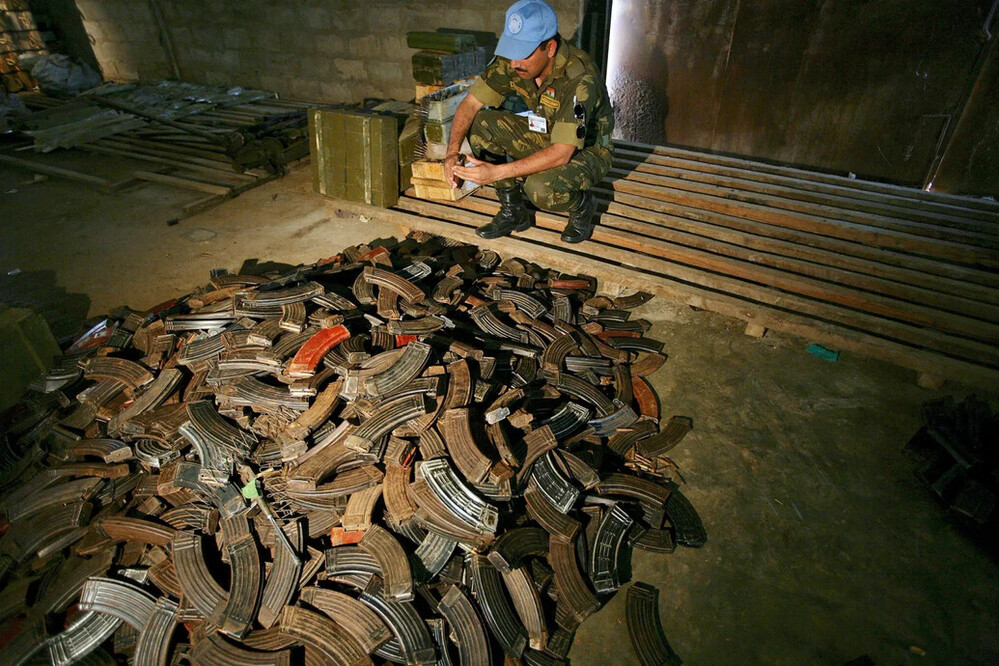
After more than 20 years of campaigning by Amnesty International and partner NGOs, the Arms Trade Treaty became international law on 24 December 2014. The Treaty was designed to stop deadly weapons from getting into the hands of people who will use them to commit serious violations of human rights or international humanitarian law, including genocide, crimes against humanity and war crimes.
Under the Treaty, states parties must not export arms where it is known that they would be used to commit genocide or other crimes under international law. They also must not export arms where there is an “overriding” (meaning to substantial) risk that arms would be used to commit or facilitate serious violations of international human rights or humanitarian law. This risk is the sole factor in determining if arms can be exported. No other considerations – political or otherwise – may be taken into account in the decision.
This assessment can never include balancing risk of misuse against other factors, such as supposed contributions to peace and security or political considerations.
Sadly, the treaty is often ignored. States parties and signatories, including some of the world’s biggest arms exporters, continue to openly flout the rules of the Arms Trade Treaty through unlawful arms transfers. The treaty can only work if countries follow the rules and are held responsible when they break them.
Bans on indiscriminate weapons
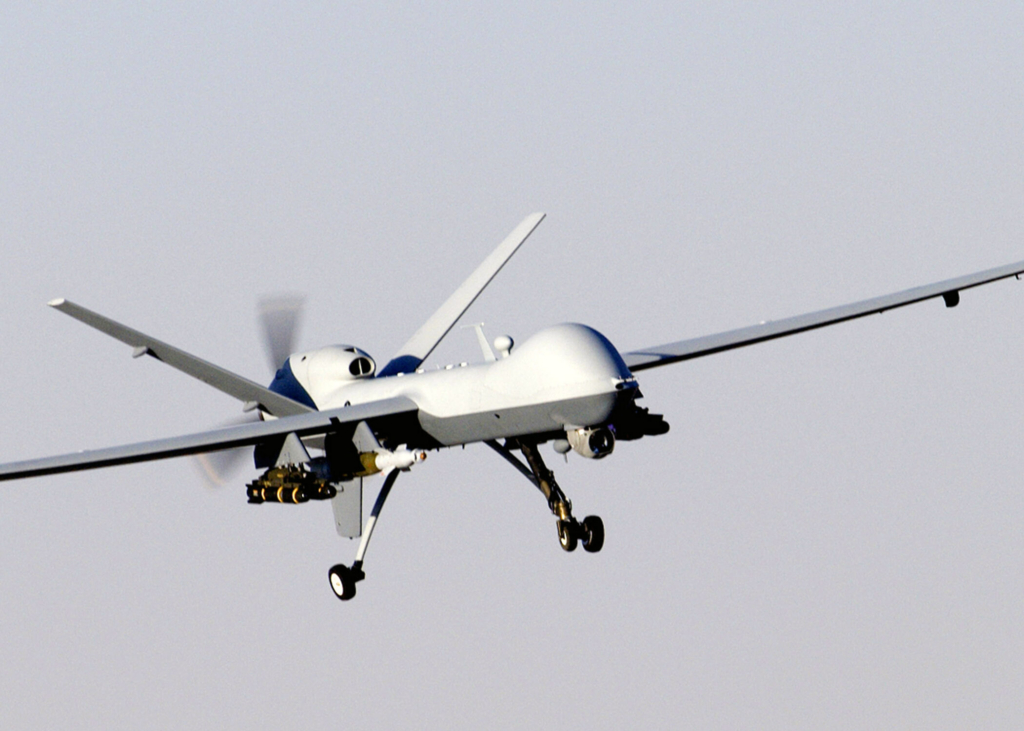
It is illegal to use weapons that are inherently indiscriminate, cannot be directed at a specific and legitimate military objective or whose effects cannot be limited as required by international humanitarian law. This is because their use makes it almost inevitable that civilians and civilian infrastructure (homes, hospitals and schools) will be harmed or destroyed. These weapons include, among others:
- Cluster munitions
- Anti-personnel mines
- Nuclear weapons
- Chemical weapons
- Fully autonomous weapons systems
Cluster munitions
Cluster munitions can contain hundreds of submunitions, which are released mid-air, and scatter indiscriminately over an area measuring hundreds of square metres. They can be dropped or fired from a plane or launched from surface-to-surface rockets.
Cluster submunitions often have a high “dud” rate which means a high percentage of them fail to explode on impact. This unexploded ordnance poses a threat to people years after the bomb was dropped. The use, production, sale and transfer of cluster munitions is prohibited under the 2008 Convention on Cluster Munitions, which has more than 100 states parties.
Anti-personnel mines (land mines)
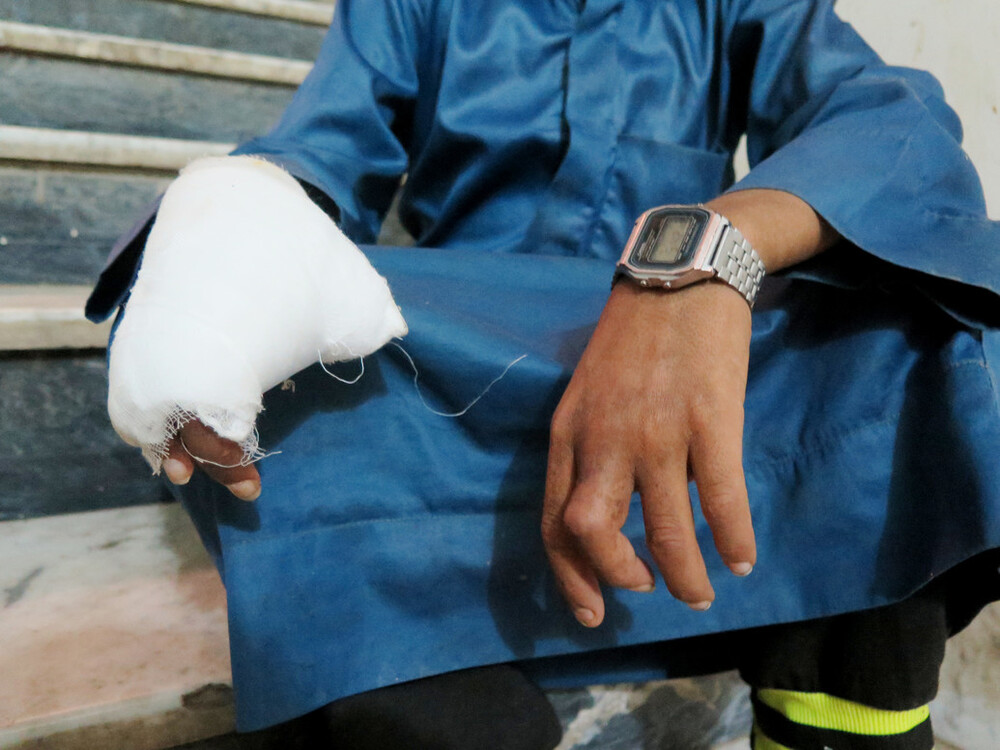
Anti-personnel mines are explosive devices designed to automatically detonate when someone approaches them. They are usually triggered when stepped on or via a trip wire. Anti-personnel mines can still maim, injure or kill people decades after the conflict has ended.
Once triggered, the blast can destroy multiple limbs, projecting debris that showers the victims with fragments that can cause deep wounds.
The Anti-Personnel Mine Ban Convention (also known as the Ottawa Convention) was adopted in 1997 and now has over 150 states parties. Since then, over 55 million stockpiled mines have been destroyed, vast areas of land cleared, and the production and transfer of these deadly weapons significantly reduced.
Nuclear weapons
Nuclear weapons are the most destructive, inhumane and indiscriminate weapons ever created; both in terms of the scale of the immediate devastation they cause and the threat of a uniquely persistent, pervasive and genetically damaging radioactive fallout.
On 7 July 2017, the United Nations adopted the Treaty on the Prohibition of Nuclear Weapons, which prohibits the development, testing, production, acquisition, possession, stockpiling, use or threatened use of nuclear weapons. The treaty has over 70 states parties, though no state known to possess nuclear weapons has joined.
Chemical weapons
Chemical weapons are defined as chemicals that are used to cause intentional harm or death through the use of toxic properties. This not only includes the toxic chemicals themselves, but also equipment such as mortars, artillery shells and bombs specifically designed to inflict harm through the delivery of those chemicals.
These weapons are banned by the Chemical Weapons Convention that entered into force in 1997, and now has near-universal adherence with over 190 states parties. Only Egypt, North Korea and South Sudan have neither signed nor ratified the Chemical Weapons Convention.

“Killer Robots” (Autonomous Weapons Systems)
Autonomous weapons systems, which select and engage targets based on sensor inputs rather than human inputs, are no longer the stuff of science fiction.
Some countries – including China, Israel, the Republic of Korea, Russia, the UK, the USA – are already developing weapons with increasing autonomy, edging towards removing the role of humans from life and death decisions. These weapon systems raise serious moral, legal, accountability, and security concerns.
Allowing machines to harm people on the basis of sensor processing would be dehumanizing and violate the right to human dignity. Machines respond to environmental cues and have no concept of the intrinsic value of humanity. Autonomous weapons systems must never be allowed to target humans. In addition, those which have the ability to be used without meaningful human control must also be prohibited.
Tools of torture
Across the world, detainees are beaten with batons, forced into stress positions by restraints and tortured with electric shock equipment. Thousands of protesters have sustained eye injuries resulting from the reckless use of rubber bullets, while others have been hit by tear gas grenades or doused in excessive amounts of chemical irritants.
These abuses are enabled by ‘tools of torture’, which leave lasting physical and psychological scars on human rights defenders, protesters, and already marginalized and discriminated against groups.
When misused, standard law enforcement equipment can become a tool of torture. The international trade in such equipment should therefore be regulated to prevent it being used for torture or other ill-treatment. Some equipment used by law enforcement, such as direct contact electric shock weapons or batons with spikes, are abusive by their very nature and simply shouldn’t exist.

The scale and power of the international arms industry
Arms companies supply large volumes of military equipment to some of the most violent and unstable parts of the world. This equipment is often used unlawfully in armed conflicts and political unrest marred by serious human rights violations. Global military expenditure was over $2.7 trillion USD in 2024, an increase of 9.4% from the previous year. That’s almost half a trillion more than Canada’s entire gross domestic product that same year. As devastating conflicts continue across the world, arms companies continue to rake in profits.
Unfortunately, the states with the most power to curb this escalation of conflict and military expenditure are also the very ones which dominate the arms trade. Between 2020 and 2024, the five permanent members of the UN Security Council – China, France, Russia, the United Kingdom and the United States of America – were responsible for 70% of the world’s large conventional arms sales.
The proliferation of arms – particularly to regions embroiled in conflict – increases the risk of human rights and humanitarian law violations and puts profits before people.
What is Amnesty International doing to help?
Using our global network of activists, Amnesty International continues to put pressure on governments and companies to abide by their international obligations and stop selling weapons illegally.
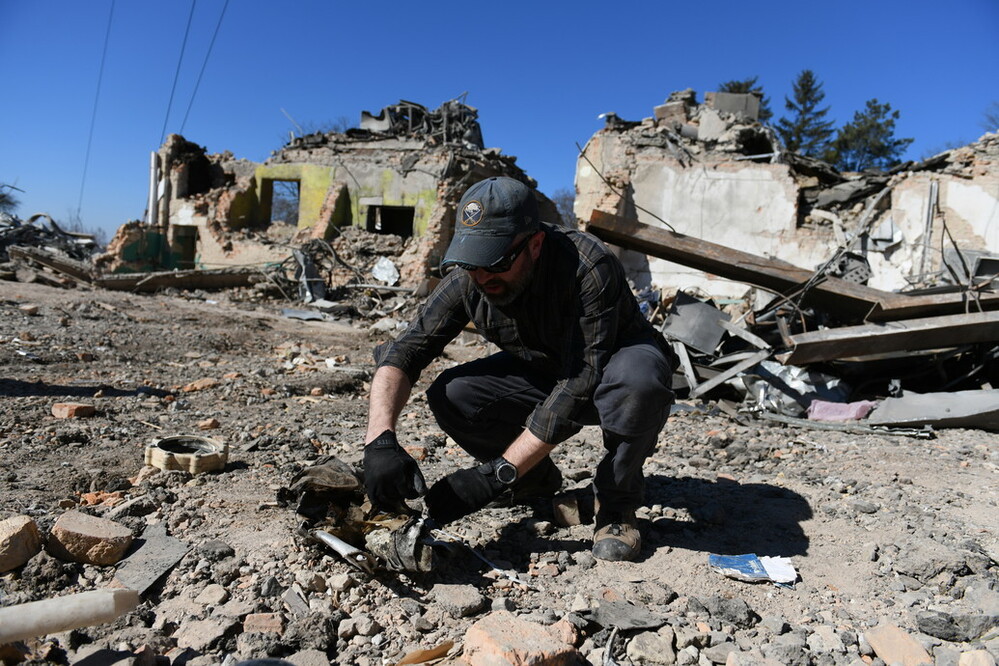
Amnesty International’s digital verification and weapon experts work to identify munitions and other remnants of weapons so that we can trace them back to their original source while Amnesty International’s legal experts have supported efforts to stop irresponsible arms supplies through the courts.
Calling for an arms embargo on Israel, Hamas and other Palestinian armed groups
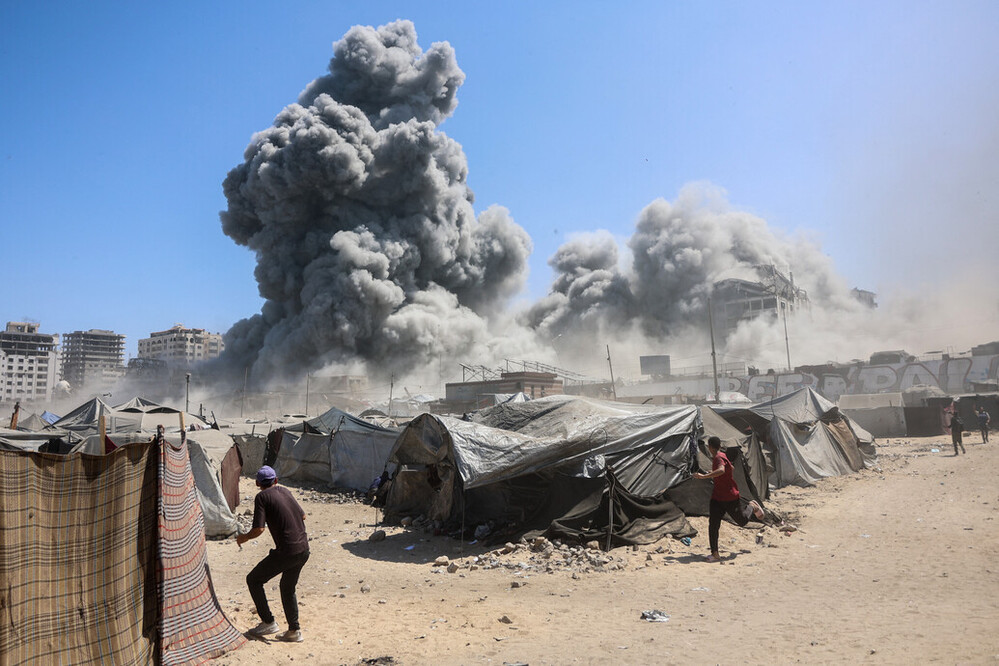
Israeli forces have carried out unlawful attacks in Gaza, including indiscriminate attacks, contributing to a staggering loss of human life, extensive destruction and damage to civilian infrastructure and unlawful displacement of civilians. Israeli forces use combat aircraft, missiles, guided and unguided bombs, tank shells, white phosphorus artillery rounds, among other types of arms, to commit these abuses. In December 2024, Amnesty International concluded that Israel is committing genocide in Gaza.
In June 2024, UN Experts issued a statement calling on arms manufacturers supplying Israel to end transfers or risk being complicit in serious violations of international human rights and international humanitarian law. Amnesty International has documented the use of arms manufactured by a number of companies.
Amnesty International is campaigning for a comprehensive arms embargo on Israel Hamas and other Palestinian armed groups, in response to Israel’s long history of committing serious violations of international humanitarian and human rights law, including the crime against humanity of apartheid against all Palestinians whose rights it controls, and its illegal occupation of Palestinian Territory; as well as serious human rights violations committed by Hamas and other Palestinian arms groups, including deliberate civilian killings, abductions and indiscriminate attacks.
The campaign is pushing for states to uphold their legal obligations to cooperate with efforts to end Israel’s illegal occupation, as detailed in the July 2024 Advisory Opinion of the International Court of Justice. It also supports strategic litigation across several jurisdictions to block the transfer and transit of arms to Israel, including parts and components of F-35 combat aircrafts, and to suspend any form of military assistance to Israel.
Calling to expand and enforce the arms embargo in Sudan to prevent further human rights abuses
Since the escalation of the conflict in April 2023, Sudan has been engulfed in a massive human rights and humanitarian crisis. The fighting between the Sudanese Armed Forces (SAF) and the Rapid Support Forces (RSF) and their allies has killed tens of thousands of people and displaced millions of others, making Sudan the largest displacement crisis globally.
Despite the mandatory UNSC embargo on Darfur which has been in place for two decades, recently manufactured weapons and military equipment from countries such as China, India, Russia, Serbia, Türkiye and the United Arab Emirates (UAE) have been imported in large quantities into Sudan and then used by parties to the conflict in Darfur, in violation of the embargo. Weapons and ammunition have also been smuggled into the country directly through Darfur including after April 2023. These include small arms, armed drones, armoured vehicles and various types of ordnance, from small calibre ammunition to advanced precision-guided bombs.
The UAE has provided advanced Chinese weaponry which the RSF used in Sudan. In addition, French-manufactured military technology incorporated into armoured personnel carriers made by the UAE have also been used on the battlefield in Sudan, in what could possibly amount to a violation of the embargo.
Amnesty International has been campaigning for the UN Security Council to extend the existing UN arms embargo to the whole of Sudan.
Advocating for a legally-binding treaty to regulate Autonomous Weapons Systems
As part of the Campaign to Stop Killer Robots, Amnesty International is calling for the adoption of a global, legally-binding treaty that ensures meaningful human control is retained over the use of force.
Amnesty International actively participates in discussions in both Geneva and New York, as well as in regional bodies, building international support for the negotiation of a treaty to regulate autonomous weapons systems. One area Amnesty International has focused on is the dangers of growing autonomy in weapons used for law enforcement.
Campaigning for a Torture-Free Trade Treaty
Amnesty International is campaigning for a legally-binding global treaty that would ban the production of abusive tools of torture such as direct contact electric shock devices and spiked batons. Equipment like this is specifically designed to inflict severe pain and suffering that is considered torture or other ill-treatment, which is unlawful under the UN Convention against Torture.
A Torture-Free Trade Treaty must also introduce strict trade controls on other law enforcement equipment, such as rubber bullets, police batons or tear gas. This equipment can have a legitimate role in law enforcement if used responsibly in accordance with international law and standards. However there are countless cases of repressive police forces using it to inflict torture or other ill-treatment on protesters and detainees.