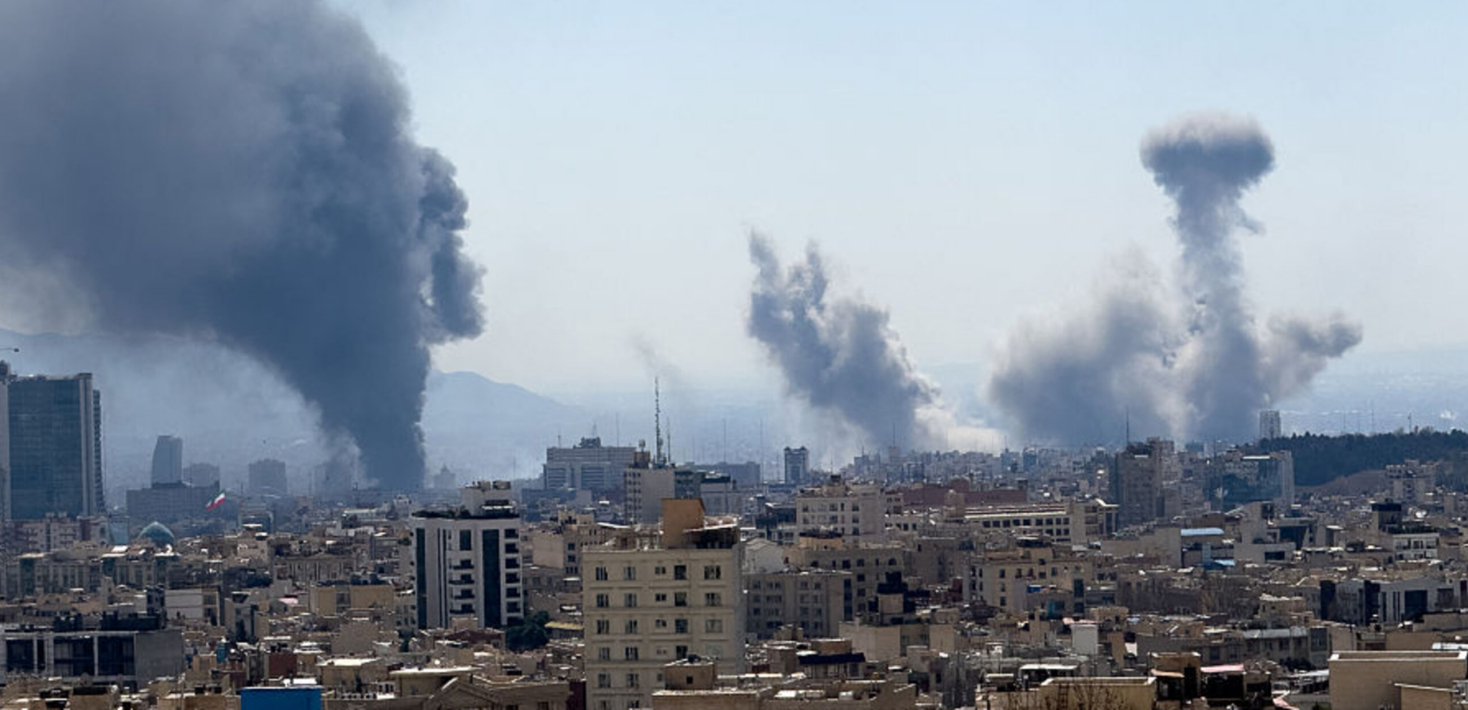


Amid rapid expansion of regional hostilities across the Middle East following the ongoing joint United States-Israel attacks on Iran and the subsequent wave of Iranian retaliatory attacks across the region, Amnesty International is issuing an urgent call on all parties to protect civilians, adhere to international humanitarian law, in particular by ending unlawful attacks, such as deliberate, indiscriminate or disproportionate attacks on civilians and civilians infrastructures.
Military operations have spread across the region and now involve more than 10 countries. They have already resulted in significant loss of civilian life and destruction of civilian infrastructure. Israel has escalated its attacks on Lebanon in the past 24 hours in response to Hezbollah’s attacks. The US has said that “the hardest hits are yet to come”. Iran has warned of further intensification and insecurity across the whole region following the killing of Iranian Supreme Leader and commander-in-chief Ali Khamenei.
“Civilians should not pay the price for the unlawful and reckless acts by parties to the conflict, ravaging the principles of humanity and distinction at the heart of international humanitarian law and threatening the very foundations of international peace and security. The stakes could not be higher. Across the region, civilians have already endured successive cycles of conflict and mass violations and crimes under international law. Their protection should now be the top priority. Instead, they are facing more senseless killings and repression,” said Agnès Callamard, Secretary General of Amnesty International.
“Parties to the conflict must immediately refrain from and cease unlawful attacks, whether direct attacks on civilians, indiscriminate and disproportionate attacks, or the use of explosive weapons with wide area effects in densely populated areas. They must take all feasible precautions to prevent civilian harm.
“As the threat of a protracted international conflict grows, compliance with international human rights law and international humanitarian law is more urgent than ever. Any failure to uphold these obligations will intensify an already devastating human toll and push the region even further towards another humanitarian and human rights catastrophe.”
Attacks on Iran and Iran’s response
On 3 March the Iranian Red Crescent Society, reported that 787 people have been killed in Iran since the attacks began. On 28 February 2026, according to the Iranian authorities around 150 school children were among 165 people killed when a school in the southern city of Minab, Hormozgan province, was struck. The UN has described the bombing of this school as a ‘grave violation of humanitarian law’, with UNESCO warning that attacks on educational institutions endanger students and teachers and undermine the protections guaranteed under international humanitarian law. The UN Human Rights Office has called for a prompt, impartial and thorough investigation into the “horrific” incident.
Across the region, civilians have already endured successive cycles of conflict and mass violations and crimes under international law. Their protection should now be the top priority.
Agnès Callamard, Amnesty International
Amnesty International verified six videos from the aftermath of the strike that impacted the school, which show black smoke rising from the partially collapsed building and rescuers and excavators searching through the rubble for victims. Footage filmed from the school entrance shows walls marking the parameter of the school yard and building, with smoke visible in the background from the direction of a nearby Iranian Revolutionary Guards Compound.
According to the head of the Medical Council of Iran, 10 medical centres have been damaged by the Israeli and US attacks. Hospitals in Iran have already been subjected to militarized raids by Iran’s security forces who committed widespread human rights violations against injured protesters and medical workers during and in the aftermath of the protest massacres in January 2026.
The Iranian authorities shut down access to the internet again on 28 February, preventing millions of people from accessing essential information about armed hostilities and communicating with loved ones inside and outside the country, and suppressing the flow of information about violations of international humanitarian and human rights law.
The armed conflict has intensified concerns about the fate and safety of prisoners across Iran, including the thousands of protesters and dissidents arrested in connection with the January 2026 uprising. These concerns stem from reports by human rights defenders of explosions near prisons and other facilities where prisoners are held as well as Israel’s previous attack on Tehran’s Evin prison during the 12-day war.
Human rights defenders are also expressing fears that the Iranian authorities have often used armed conflict as pretext to subject dissidents to intensified patterns of torture and other ill-treatment as well as summary, arbitrary or extrajudicial executions. Amnesty International calls on the Iranian authorities to immediately release all those arbitrarily detained and take effective measures to secure the safety of all other prisoners, including through temporary release on humanitarian grounds. Concerns for the rights of people in Iran are compounded by the Iranian authorities’ well-documented record to repeated crimes under international law and other serious human rights violations, including during successive lethal crackdowns to eradicate dissent. On 8-9 January, Iranian authorities carried out unprecedented massacres of thousands of protesters and bystanders during anti-establishment protests calling for an end to the Islamic Republic.
Iranian authorities responded to US and Israeli attacks with missile and unmanned aerial vehicle attack in Israel and across the Gulf region, including in the United Arab Emirates, Qatar, Bahrain, Kuwait, Oman and Saudi Arabia.
Media reports and official government statements indicate that some of the attacks, including as a result of falling debris from intercepted missiles or drones, led to some deaths, injuries or damage to civilian infrastructure. According to the authorities in Abu Dhabi, an Iranian drone targeting Zayed International Airport (AUH) was intercepted, leading to “falling debris” killing one person and injuring seven. On 2 March, both the Qatari and Saudi authorities claimed their oil facilities were targeted by the Iranians, and a Gulf Cooperation Council statement condemned “indiscriminate and reckless missile and drone attacks.”
In Israel, according to media and rescue agencies, at least 10 people have been killed and tens injured as a result of Iranian attacks. This includes nine people killed and more than 20 injured in Beit Shemesh after an Iranian ballistic missile strike, as well as the death of a woman in the Tel Aviv area from falling shrapnel. Iranian strikes also damaged at least 40 buildings in Tel Aviv, according to local authorities.
Israel has escalated severe restrictions on movement across the Occupied Palestinian Territory (OPT), effectively blocking movement between villages and towns in the occupied West Bank including East Jerusalem. The authorities have also closed all external crossings into and out of the OPT including Kerem Shalom/ Karem Abu Salem and Rafah crossings blocking lifesaving aid and effectively placing the entire Gaza Strip under siege. Kerem Shalom/Karem Abu Salem was reopened on 3 March.
These arbitrary measures are gravely exacerbating the suffering of Palestinians living under Israel’s unlawful occupation and apartheid and are further compounding the multi-layered humanitarian crisis in Gaza, where Palestinians are still living through Israel’s ongoing genocide.
In Iraq, a faction [Saraya Awliya Al-Dam] of the Iran‑aligned militia groups, calling itself the Islamic Resistance, has claimed responsibility for multiple drone attacks on Erbil in the Kurdistan Region of Iraq and later in the capital Baghdad, primarily targeting US military facilities. According to Kurdish Iranian opposition groups, drone strikes have targeted their positions in the Kurdistan Region of Iraq following warnings from the Islamic Revolutionary Guard Corps.
Escalation between Hezbollah and Israel in Lebanon
Following Hezbollah rocket attacks on northern Israel, which the group said was retaliation for Khamenei’s killing, the Israeli military significantly escalated its attacks on Lebanon, including the suburbs of Beirut, overnight on 2 March. Israeli air strikes in Lebanon had killed at least 40 people and injured 246, according to the Lebanese authorities, by 3 March. Before the recent escalation and since the November 2024 ceasefire agreement, Israel had been carrying out near daily attacks in the south of Lebanon, killing more than 380 people, including 127 civilians.
The escalating crisis in the Middle East poses a grave threat to multilateralism and to the integrity of the international legal order.
Agnès Callamard, Amnesty International
A new, mass “evacuation” warning, issued by the Israeli authorities after midnight on 2 March, has again displaced hundreds of thousands of civilians across Lebanon. The vague and broad warning covered more than 50 villages across the country’s south and east, and led to panic, clogged roads and another round of displacement for many. Additional broad mass evacuation warnings were issued early on 3 March ordering people in dozens of additional villages in southern Lebanon to leave their homes and expanding the area under threat.
On 2 March, the Israeli military said it would strike Hezbollah-affiliated financial institutions in multiple locations across Lebanon, then did. Israel previously targeted branches of the Hezbollah-affiliated financial institution in October 2024, which Amnesty International described as a likely violation of international humanitarian law, calling for such attacks to be investigated as a war crime.
International humanitarian law strictly prohibits direct attacks on civilians and civilian objects, as well as indiscriminate strikes that fail to distinguish between civilians and civilian object and combatants and military objectives, and disproportionate attacks. Aerial attacks impacting schools, medical facilities or residential buildings, as well as the firing of ballistic missiles and other explosive weapons with wide area effects into densely populated areas, raise grave concerns of possible violations of international humanitarian law.
Amnesty International is closely monitoring the situation and call on all parties to adhere to international humanitarian law. In instances of civilian death, injury and infrastructure harm, parties should initiate immediate investigations and hold anyone responsible for violations of international law to account.
“The escalating crisis in the Middle East poses a grave threat to multilateralism and to the integrity of the international legal order. Unlawful acts by parties to the conflict, particularly those committed by influential states, not only endanger civilians across multiple countries, but also accelerate the erosion of the global norms that are essential for the protection of human rights and global peace and security,” said Agnès Callamard.
“It is imperative that all parties take urgent measures to protect civilians and civilian infrastructure, including airports, hospitals, residential buildings, schools and prisons. They must also ensure safe and unhindered humanitarian access to all affected areas and enable independent international monitoring.
“We call on the international community to intensify diplomatic efforts to prevent further military escalation to avert additional civilian harm, and halt any further crimes under international law against populations who have already endured decades of repression. In line with international law, states must exercise the utmost restraint, refrain from any conduct that could fuel further violations, and remember that they have clear obligations not to aid or assist internationally wrongful acts, as well as a duty to cooperate to bring such breaches to an end.”