Overview
Many people will experience leaving the place where they grew up. Maybe they will only move as far as the next village or city, perhaps to find work or go to school. But some people will make a much harder decision – to leave their country entirely – sometimes for a short time, but sometimes permanently.
This has been the case for millennia. Human civilization – our culture, language, technology and more – is shaped by a long history of interweaving identities that cross paths because of our innate imperative to explore and seek safety.
Nobody should have to face violence, exploitation, abuse or discrimination as a result of making the decision to move to another country. Amnesty International is working towards a world where the act of seeking asylum or migrating is understood in terms of justice, dignity, and solidarity.
Why do some people leave their country of origin?
Mobility is an enduring feature of human history. However, movement across borders is restricted by states, via systems such as passports and visas, and immigration laws which categorize who ‘deserves’ to enter a country and who does not.
There are many reasons why people want to travel and build their lives in a different country. They might be looking for better job prospects or education, or they might want to join family who are already living abroad. Some face conflict, climate change, political unrest, discrimination and persecution. They decide to leave because home has become too dangerous to stay.
People often make these journeys with the hope of improving their situation. But the reality is many may encounter significant danger, human rights violations, and obstacles to protection due to punitive and restrictive migration and asylum policies. They may also experience racism, xenophobia and discrimination throughout their journey and in the societies that they join. At the same time, some will have lost their support networks – their communities, family, friends, and colleagues.
Terms and definitions
Who is a ‘refugee’?
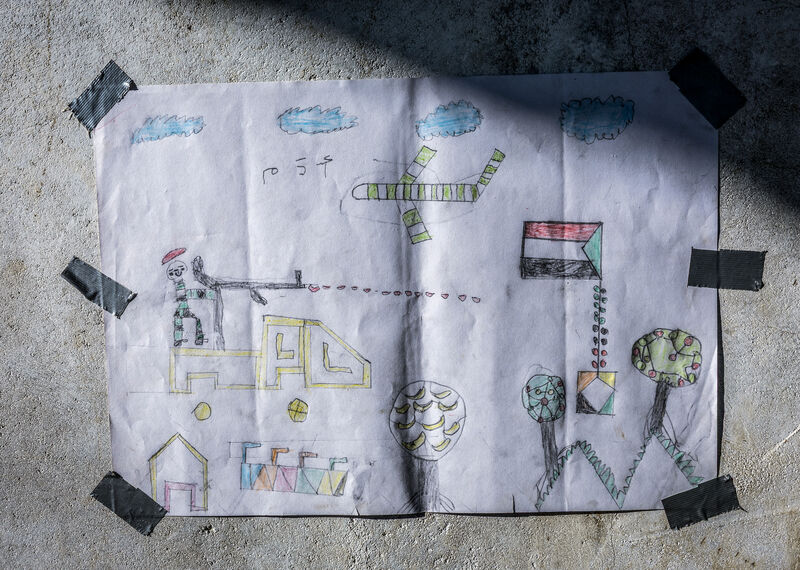
This is a legally recognized term that describes a person who cannot return to their country of origin because they are at risk of persecution there. They may decide that to leave their country is their best option because their own government cannot or will not protect them. Refugees have a right to international protection.
Who is an ‘asylum seeker’?
An ‘asylum seeker’ is a person who is seeking protection as a refugee, but who hasn’t yet been legally recognized as a refugee and is waiting to receive a decision. Seeking asylum is a human right. This means everyone should be allowed to seek asylum. While ‘asylum seeker’ is a legal term, in some societies the term is loaded with negative connotations which lead to dehumanization. In these cases, some people may prefer to refer to themselves using other terms, including ‘people or person seeking asylum’.
Who is a ‘migrant’?
This is an umbrella term to describe a range of people who live in a country other than their home country, including people with a visa linked to their job, studies or family, or those who are undocumented or have an irregular status. There is currently no internationally accepted legal definition of a migrant. Amnesty International uses this term regardless of the person’s legal status, what the causes for the movement are, and what the length of stay is.
Going beyond labels
But labels alone cannot capture the complexity of people’s lived experiences. Over the course of a life, someone might move in and out of these labels as their circumstances change, or they may identify with certain labels but not with others. For instance, a refugee or migrant may become a citizen after living in a country for a certain number of years, or a migrant may begin to see worrying developments while outside of their country and decide to claim asylum. Some may choose to self-identify as a migrant or a refugee even if they themselves didn’t move from one country to another because they belong to a community with strong cultural connections to a previous home. Others may reject all labels.
Regardless of how someone is labelled or self-identifies their human rights should be guaranteed and protected.
How should people be treated?
Refugees, people seeking asylum and migrants have human rights, including specific rights related to their treatment in a foreign country. They are protected by international law, regardless of how and why they arrive in a country. Specific protections include but are not limited to:
- The Universal Declaration of Human Rights (Article 14), which states that everyone has the right to seek and enjoy asylum from persecution in other countries
- The 1951 UN Refugee Convention (and its 1967 Protocol), which protects refugees from being returned to countries where they risk being persecuted
- The 1990 Migrant Workers Convention, which protects migrant workers and their families
Despite these protections, many states adopt migration policies and practices that discriminate against, exploit, and marginalize people who have left their countries of origin.
Whatever their legal status, people crossing borders should be treated with dignity, and be met with responses built around justice and solidarity. In practice, this means that refugees, people seeking asylum and migrants should not be deprived of their liberty, should not be punished for seeking asylum, should have access to adequate housing and health care, and should be able to change jobs and employers freely. They should not be scapegoated and vilified by politicians or commentators, and like everyone else, they should be able to participate in and shape the decisions that affect them.

Racialized borders
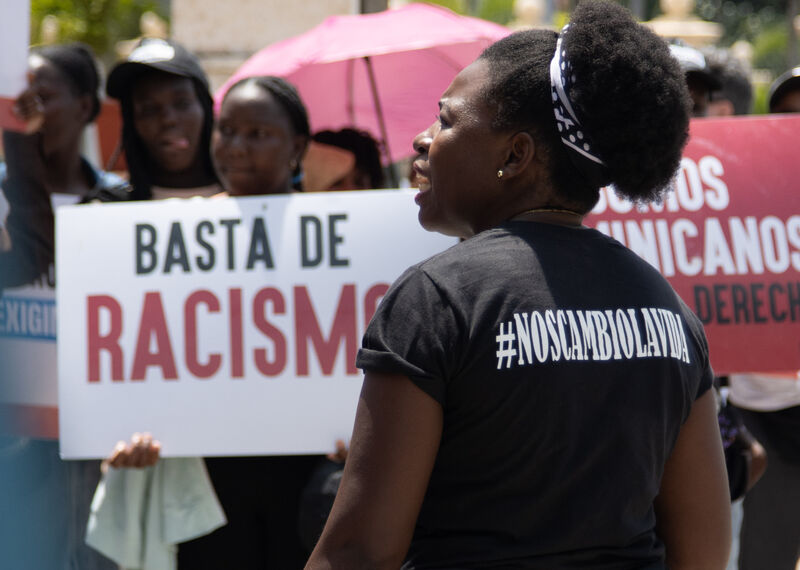
The term ‘racialized borders’ refers to the ways migration policies, asylum systems, and border enforcement reproduce systemic racism and racial discrimination. Borders are not simply lines on a map but complex infrastructures of control, social ordering and exclusion. Many borders have been shaped by colonialism, slavery and other forms of oppression.
Racialized borders are enacted in various forms including but not limited to visa bans, discriminatory visa allocation, racial profiling, biometric surveillance, exploitation of racialized migrant workers, and rhetoric portraying some people as a threat or a burden.
Racialized borders are rooted in historical racial injustices, such as slavery and colonialism, through which colonial powers imposed, reshaped or influenced borders and their enforcement in the countries they colonized. They dictated or influenced who and how people could move across borders and imposed racialized hierarchies which exclude some and privilege others. These colonial legacies continue to shape how states respond to migration and how people experience migration today.
Case Study: Canada
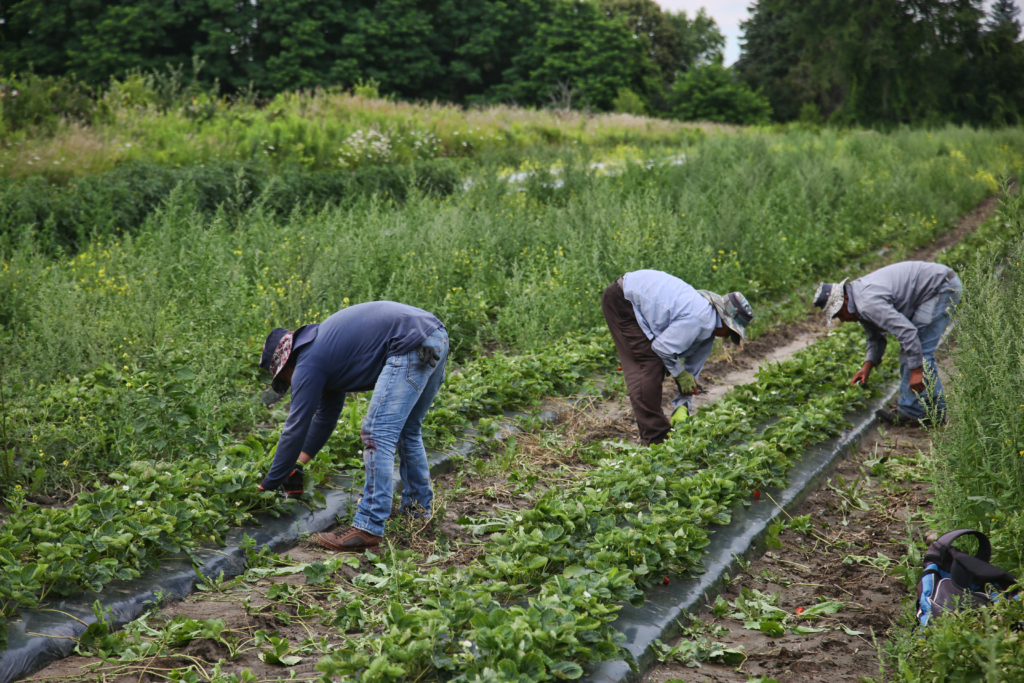
Tens of thousands of migrant workers travel to Canada every year in the hope of providing a better life for their families. They are granted entry through a labour scheme called the Temporary Foreign Worker Program (TFWP). They are promised labour opportunities and working conditions that very often they cannot enjoy in their countries of origin.
These migrant workers carry out essential work; they help to keep Canada’s food, caregiving, construction, and hospitality sectors going. But instead of being treated the same as Canadians doing the same work, they are restricted by closed work permits that grant their employer control over their immigration status, labour conditions, and sometimes their housing and transportation. This puts them at increased risk of exploitation, discrimination and other abuses. It also prevents them from changing employers when they do experience abuse. They are made to work long hours without rest, are underpaid, suffer physical and psychological abuse, and are often subjected to stereotypes and assumptions about their skills, behaviours or identities.
Migrant workers, who are predominantly racialized, are profoundly dehumanized through the scheme. Many workers face termination and swift deportation when they fall sick, suffer injuries, or develop occupational illnesses, or if they speak out and try to assert their rights. Amnesty International is calling on Canadian authorities to abolish closed permits and make reforms to the Canadian immigration system so that it does not result in discrimination based on race, class and gender.
Climate displacement
Climate displacement is the movement of people related to the impacts of climate change and other environmental disasters. Climate change is a global emergency that affects everyone, but those in especially vulnerable locations are on the frontlines of the crisis. People who live in poverty, those who belong to racialized communities, women, older people, children, people living with illness or disability, Indigenous Peoples and other marginalized groups, are most affected.
The threats posed by climate change can be just as dangerous as those arising from violent conflict or persecution. It acts as a “threat multiplier”, meaning that it intensifies already existing inequalities. People may be at increased risk both because of where they live and its vulnerability to the climate crisis, and/or because of their individual circumstances or identity.
Amnesty International is calling on all states to urgently establish clear legal frameworks at national, regional and international level for the development of rights-based migration and protection mechanisms for people displaced across international borders in the context of climate change and other disasters. This should complement bold climate justice initiatives, so that people are able to continue living on their homelands with their rights respected.
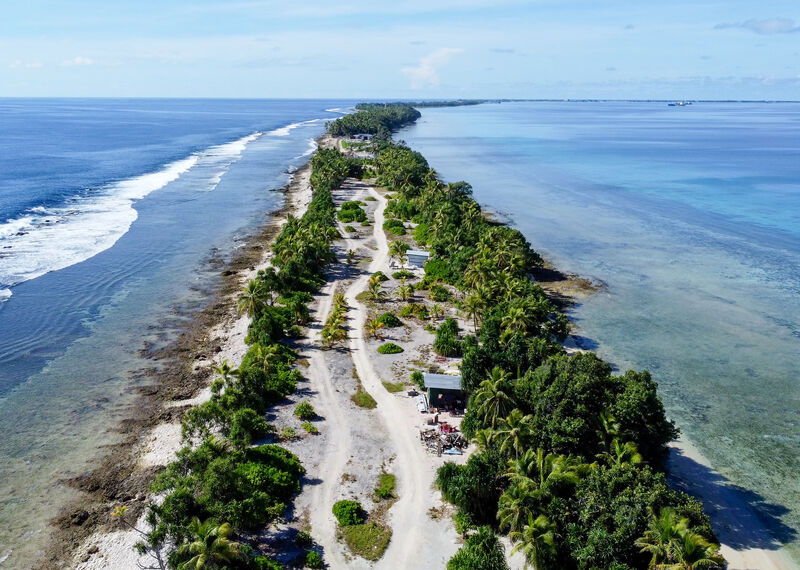
Case study: Pacific Islands
As human-induced climate change threatens the human rights of people living in the Pacific, many seek opportunities to migrate to Aotearoa New Zealand. Sea level rise constitutes an existential threat for low-lying island countries projected to increasingly lose land to the encroaching ocean, such as Tuvalu and Kiribati. Coastal erosion, king tides, floods, extreme heat, droughts, and cyclones threaten Pacific Peoples’ rights to life, health, an adequate standard of living, and a clean, healthy and sustainable environment.
Aotearoa New Zealand’s immigration policy fails to reflect the needs of climate-affected Pacific Peoples. Instead, it offers limited and arbitrary migration pathways that discriminate, separate families, and disregard children’s rights. In the absence of migration pathways and protections specifically dedicated to people displaced by the climate crisis, those attempting to navigate Aotearoa New Zealand’s immigration opportunities in other areas fall through the cracks.
The international community’s failure to act on climate change, coupled with states’ increasingly restrictive approaches to international migration, subjects people displaced in the context of the climate crisis to a double injustice. Aotearoa New Zealand – and the international community – must act now to protect the rights and dignity of Pacific Peoples in the face of the climate crisis, both at home and in their country of destination
The impact of technology
Digital technology is increasingly shaping the way in which governments manage migration and asylum. The rapid growth in digital technologies and so-called “smart border” technologies is creating a whole raft of human rights risks, including to the rights of privacy and non-discrimination. From electronic monitoring, satellites, and drones to facial recognition, “lie detectors” and iris scanning, there is a growing and urgent need to investigate and understand these technologies and their impact on refugees, people seeking asylum and migrants.
Amnesty International is calling on governments and the private companies building and profiting off these technologies to ensure that any development and use of technology respects and protects the human rights of all.

What is Amnesty International doing?
We campaign for a world where human rights can be enjoyed by everyone, no matter their migration status, who they are or where they come from. For decades, Amnesty International has worked to defend and advance the rights of refugees, people seeking asylum and migrants.
We focus on disrupting punitive migration systems – policies, practices and harmful mindsets that devalue, disempower and dehumanize refugee and migrant communities, and tackle the ways these systems manifest: from unlawful deportations to the denial of asylum, ingrained discrimination and exposure to discriminatory surveillance and border technologies.
Community power is central to our work. We seek solutions alongside refugees, people seeking asylum, migrants, and the communities where they live who are organizing, forming solidarity networks, resisting injustice, and building connections which uplift everybody.
Ultimately, we work towards a world where asylum and migration policies are grounded in justice, dignity, and solidarity, and where those most affected shape decisions that impact their lives. We envision communities where care, belonging and communal life transcend borders and racial hierarchies.
Promoting community sponsorship
Around the world, millions of people have met in village halls, mosques, classrooms and neighbours’ living rooms to form community sponsorship groups. Community sponsorship refers to programmes involving governments, civil society, and organizations like the UN Refugee Agency (UNHCR) which empower local people and communities (“sponsors”) to welcome refugees and help them rebuild their lives.
Sponsor groups utilize the diverse skills, knowledge and networks amongst their members to raise funds, find accommodation and build a plan which among other things supports children to restart their education and helps adults to find new jobs, navigate new neighbourhoods and systems, budget in a new currency and do a myriad of unfamiliar things for the first time. Schemes like this have sprung up around the world bringing locals and refugees together as neighbours.
Through sponsorship, communities and their new neighbours have shared experiences of transformative connections, hopeful futures and solidarity in abundance. Amnesty International has been a proud supporter of sponsorship – working alongside partners and communities to see schemes take root around the world.