


- Military-connected social media accounts target activists with disinformation
- Online slurs precede intimidation and violent attacks against dissidents
- Meta, TikTok, X and YouTube allow harmful content to spread rapidly
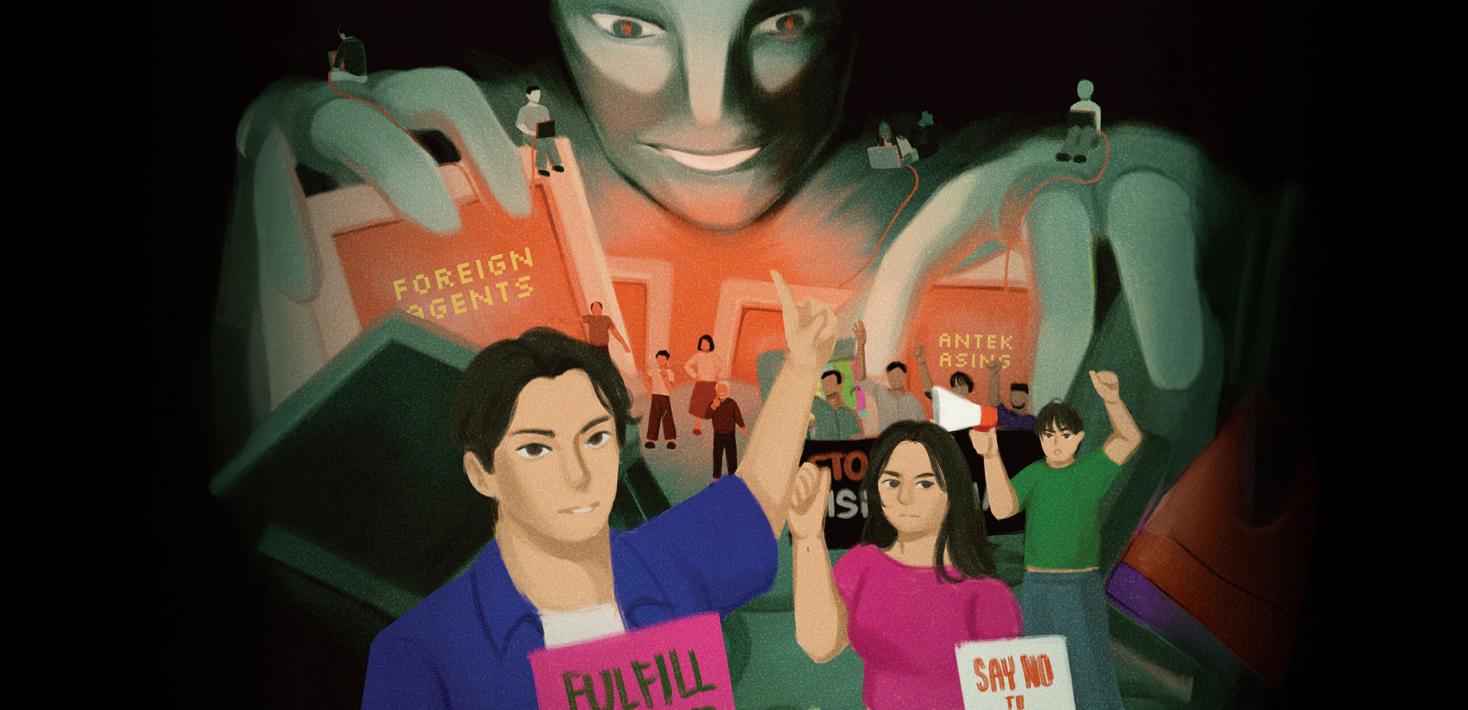
Coordinated disinformation campaigns portraying government critics as “foreign agents” are silencing dissent and fueling intimidation and violence under Indonesian President Prabowo Subianto, Amnesty International said in a new report published today.
‘Building up Imaginary Enemies’ reveals a growing pattern in which Indonesian authorities – including the military – deploy online disinformation to target journalists, activists, academics and protesters in retaliation for their legitimate activism and expression. Meanwhile, tech giants Meta, TikTok, X and YouTube have allowed harmful disinformation to remain online.
This disinformation is a political weapon, deployed to consolidate the government’s power when public criticism intensifies, while demonizing and weakening those who dare to speak out.
Agnès Callamard, Secretary General at Amnesty International
“Authoritarian practices have accelerated in Indonesia under President Prabowo Subianto’s government. Amnesty’s research shows that in the 18 months since Prabowo took power, online disinformation has emerged as a key tactic to systematically discredit government critics, shut down public debate and justify repression – all while social media companies sit back and let it happen,” Amnesty International’s Secretary General Agnès Callamard said.
“This disinformation is a political weapon, deployed to consolidate the government’s power when public criticism intensifies, while demonizing and weakening those who dare to speak out. By branding protesters, journalists and human rights defenders as ‘foreign agents’, Indonesia’s authorities and their supporters are deliberately shifting attention away from people’s legitimate grievances.”
Intent to deceive
Since President Prabowo took office in October 2024, there have been multiple waves of demonstrations in Indonesia, including against corruption, budget cuts, environmental degradation and expanded powers handed to the military. Prabowo and senior officials have responded by repeatedly and publicly accusing critics of being paid, manipulated and controlled by foreign interests, and framing dissent as orchestrated rather than legitimate.
This has been followed by a proliferation of “foreign agent” slurs against civil society actors online, often based on unsubstantiated claims that they want to “undermine” or “divide” Indonesia due to the fact they receive foreign funding or other support from overseas actors.
Under international law, civil society organizations and media outlets have the right to access international funding, which is often essential for exercising the right to freedom of association.
Amnesty International’s research found that campaigns disseminating false “foreign agent” allegations against civil society have in most instances involved hundreds of accounts acting in sync to post identical videos, graphics or messages in quick succession. This false information is then amplified across Instagram, Facebook, X, TikTok and YouTube. Amnesty was able to infer from the coordinated nature of the campaigns that these accounts were spreading falsehoods with the intention to deceive, a key element of disinformation.
The implications for those branded as “foreign agents” are severe, with victims telling Amnesty it undermined their work and credibility, increased their risk of criminalization and exposed them to physical harm.
‘Your head will fall to the ground’
Digital disinformation campaigns have frequently spilled over into physical violence. In March 2026, Andrie Yunus, deputy coordinator of the Commission for the Disappeared and Victims of Violence (KontraS), was the victim of an acid attack in Jakarta, suffering severe chemical burns.
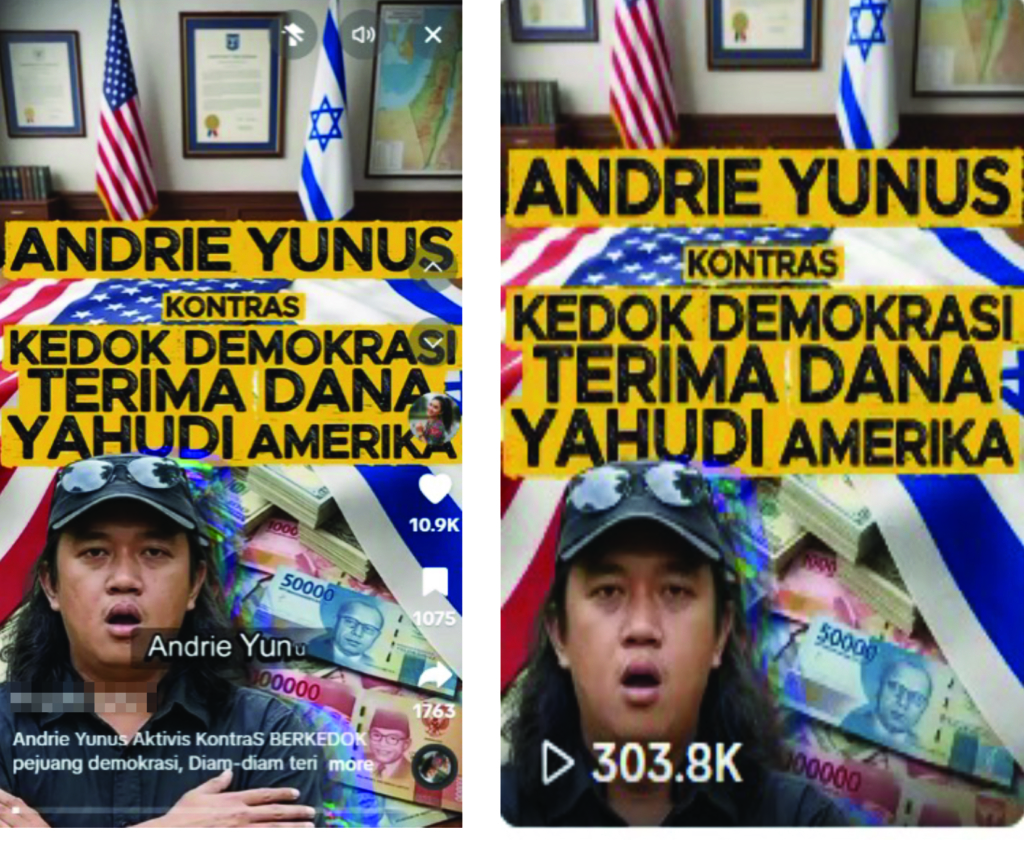
He had been targeted for months by coordinated online campaigns portraying him as a “foreign agent” after he helped lead peaceful protests against revisions to Indonesia’s Military Law. Dozens of accounts presenting themselves as part of the Indonesian military, together with hundreds of anonymous accounts, took part in these campaigns across different social media platforms.
State investigations later led to the arrest of four military officers. Yet even after the acid attack and arrests, disinformation continued. Coordinated videos accused Yunus of staging the assault to attract foreign funding.
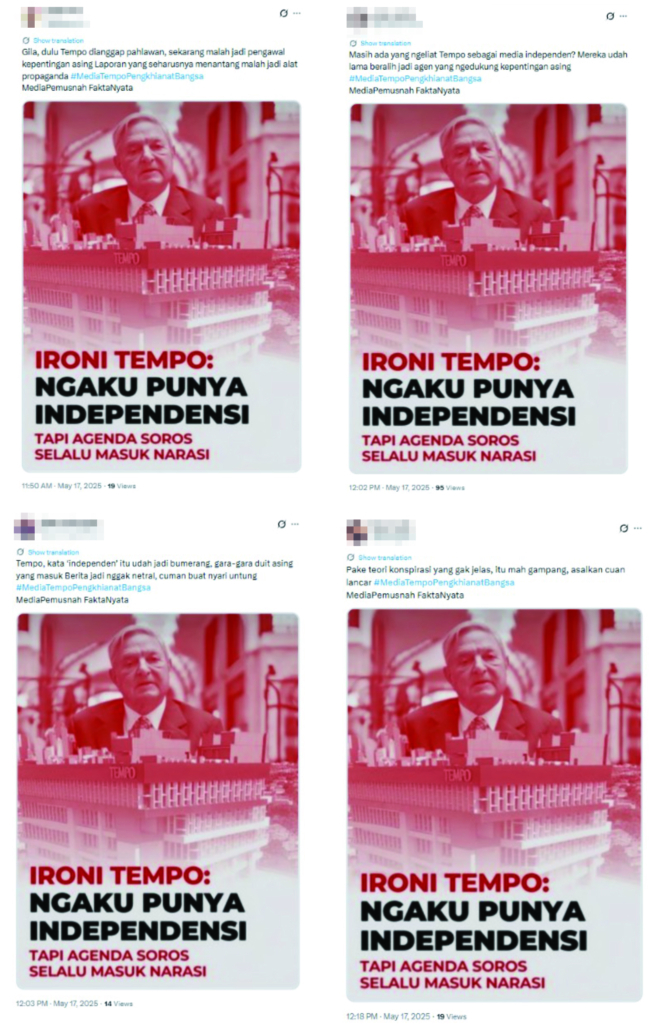
Independent media outlets have also been heavily targeted. Tempo, one of Indonesia’s most respected news organizations, faced sustained disinformation campaigns, including by Instagram accounts presenting themselves as military units, accusing it of being controlled by foreign donors after it reported critically on government policy.
Online smear campaigns were accompanied by chilling acts of intimidation, including a severed pig’s head delivered to Tempo’s newsroom and follow-up packages containing decapitated rats. Online disinformation then sought to portray the threats as staged stunts to garner foreign support.
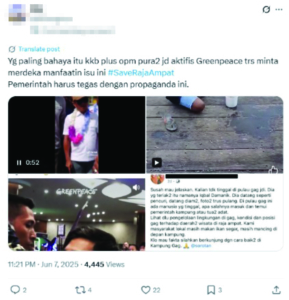
Greenpeace Indonesia activist Iqbal Damanik was targeted after he led a peaceful protest against the government’s mining activities in Raja Ampat, West Papua.
He told Amnesty: “I received so many direct messages from anonymous users. I assume they are the ones who believe the disinformation out there about me. Some threatened to kill me. One of them said, ‘Your head will fall to the ground.”
Climate of intimidation
The pervasive use of disinformation has created a climate of fear far beyond those directly targeted, discouraging people from participating in protests, collaborating with civil society organizations or expressing critical views online.
As one journalist told Amnesty: “This is dangerous for all of us. If we all become afraid of being labelled ‘foreign agents’ and stop reporting news or any stories critical of the government, then we are back to the authoritarian atmosphere of the past.”
Amnesty’s report found that Indonesia’s domestic laws fail to protect those targeted with disinformation and are more likely to be used to prosecute and criminalize critics. A new proposed law on ‘Countering Disinformation and Foreign Propaganda’ risks deepening Indonesia’s authoritarian trajectory by being used to further restrict the right to freedom of expression.
“Instead of upholding fundamental rights to freedom of expression, association and peaceful assembly, Indonesian authorities have failed at every level: state actors participate in the attacks, victims are denied protection and a climate of intimidation is allowed to take hold,” Agnès Callamard said.
“The Indonesian government must protect journalists, activists and protesters rather than enabling and disseminating toxic disinformation against them.”
Social media companies’ responsibilities
The report also finds that Meta, TikTok, X and YouTube’s inadequate content moderation, engagement-driven algorithms and failure to address Indonesia’s heightened human rights risks allowed disinformation to spread rapidly. Most of the posts documented remained online for months – some for more than a year – and many went viral.
“Big Tech’s failures have contributed to the human rights harms documented in this report, with falsehoods spreading faster than facts. Their platforms have played a significant role in enabling an environment in which disinformation, censorship and violence can thrive,” Agnès Callamard said.
Amnesty International wrote to Meta, TikTok, X and YouTube twice: first to seek information during the research phase, and later to share its findings before publication. Only TikTok responded to Amnesty International’s letters detailing our findings, pledging to “set up additional monitoring for this specific issue”.
“Despite the increasingly hostile climate for human rights work and failures of the government and social media companies to counter disinformation, many of the activists we interviewed remain resilient. They continue to adapt, support one another and resist. However, the burden must not rest on them alone,” Agnès Callamard said.
“Amid the heightened risks under President Prabowo’s administration, Meta, TikTok, X and YouTube must stop disinformation, strengthen content moderation, conduct Indonesia-specific human rights due diligence and provide remedy to those harmed due to their failures.”