

Amnesty International’s Write for Rights campaign takes place annually around 10 December – Human Rights Day, in celebration of the adoption of the Universal Declaration of Human Rights in 1948. The campaign mobilizes millions of people worldwide to support individuals and communities facing human rights violations.
During last year’s Write for Rights campaign, more than 4.6 million letters, tweets, petition signatures and other actions were taken across 200 countries and territories. Almost 1 million people joined human rights education activities – learning, reflecting and taking action together for justice.
People everywhere are proving that borders are no barrier to solidarity, and that words have the power to inspire hope and spark change.
About the human rights education toolkit
This year’s human rights education toolkit includes lesson plans and participatory activities to help teachers, educators and groups deepen understanding of human rights, build solidarity and guide participants toward thoughtful, effective action. The activities are designed for use in classrooms, community groups and activist circles, and can even be used at home.
As a facilitator, you can adapt the materials to best suit the needs and context of the group with which you are working. For example, you may want to consider what knowledge the group members already have about the issues discussed, the size and age range of your group and how to best organize the activity to allow for active participation, adapting each step to be inclusive.
What’s in this year’s toolkit?
This year’s Write for Rights toolkit offers three powerful lesson plans designed to spark learning and action:
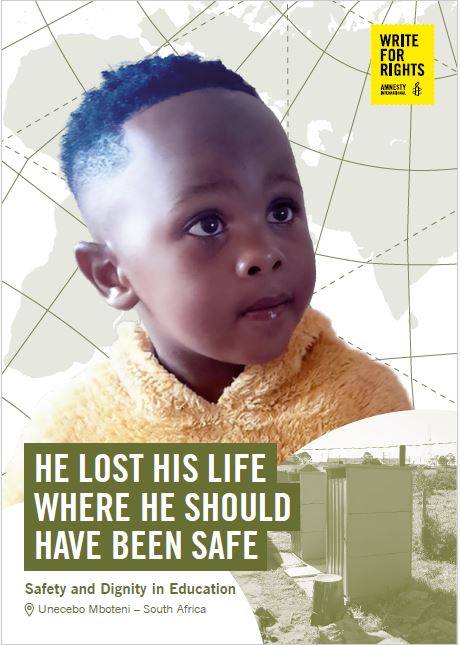
1. Safety and dignity in education
Discuss Unecebo’s story from South Africa to understand how unsafe learning environments affect children’s lives and rights, and explore how safe, rights-respecting schools are vital to children’s survival, dignity and equality.
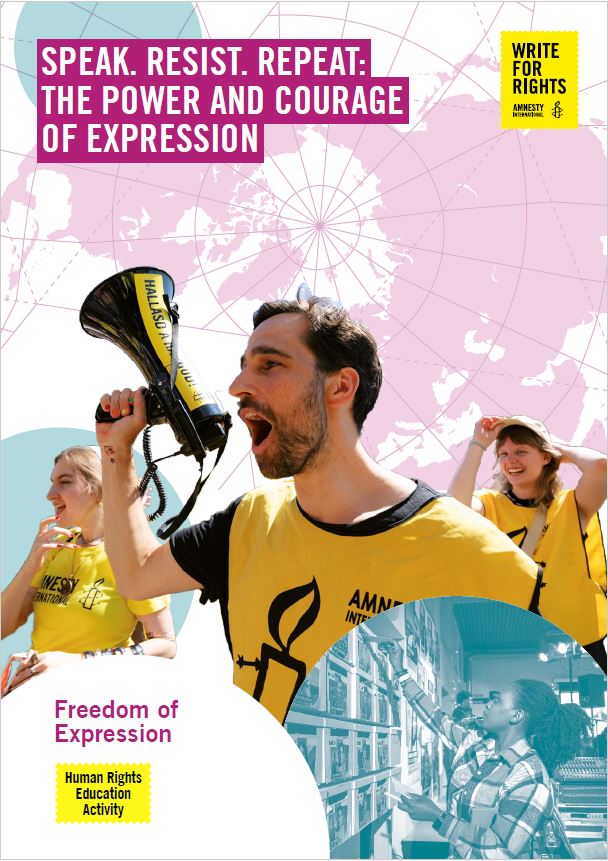
2. Freedom of expression
Explore cases from Kyrgyzstan, Myanmar and Tunisia, where individuals have been silenced for speaking out against injustice, and examine how people around the world are defending their right to express themselves.
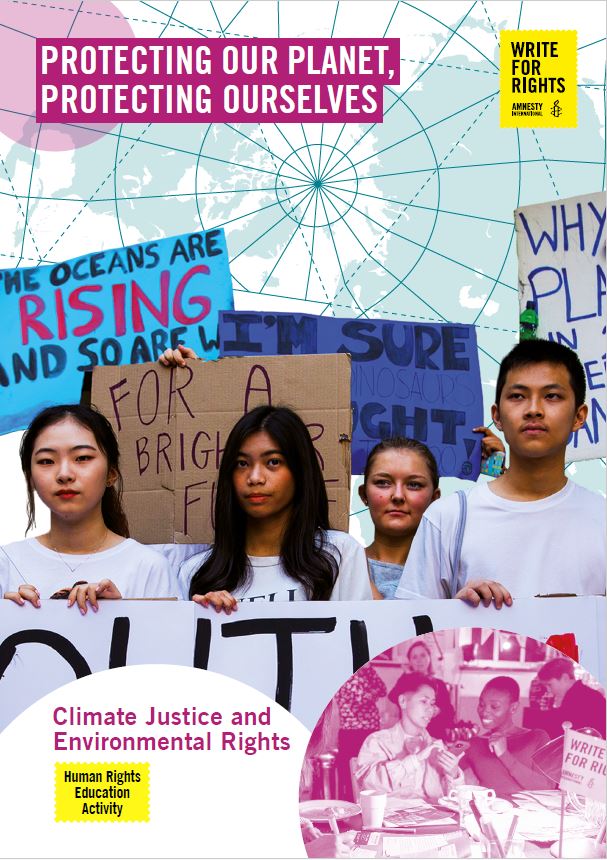
3. Climate justice and environmental rights
Learn how human rights defenders in Madagascar, Ecuador, Honduras, Cambodia and Norway are protecting our planet and explore the connection between environmental protection, climate justice and human rights.
Participatory learning: more than just a lesson plan
The activities are all based on participatory learning methods in which learners are not merely presented with information – they explore, discuss, analyse and question issues relating to the stories in each activity. This methodology allows participants to:
- develop key competencies and skills
- form their own opinions, raise questions, and gain a deeper understanding of the issues presented
- take control of their learning, and shape discussions according to their interests, abilities and concerns
- have the space required for them to engage emotionally and reflect on their attitudes.