


Good morning, everyone.
Thank you for attending the launch of Amnesty International’s report, City Under Siege, Children Under Fire’: Rapid Support Forces’ Crimes Against Humanity in North Darfur.
We are publishing this 200+ page report at a time of utmost urgency for the people of Sudan
At a time too when many urgent actions and attention are demanded of politicians, policy makers and UN officials the world over – from Gaza and the West Bank to Lebanon, from Venezuela to Myanmar, and here on the African continent, from the DRC to Nigeria, and including too many other places.
Amnesty is launching its report at a time too when the multilateral mechanisms are at their weakest, starved of the necessary resources, deliberately weakened by superpowers.
So what will it take to convince those with the authority, the power and the duty to act?
And if we do convince them, what should they do?
With regard to the first question, our report provides sadly page after page of reasons as to why we cannot turn away, ignore, the plight of people of Sudan. Our report demonstrates why it is well past time for the international community to open its eyes to the nightmare unfolding in Sudan.
Our report focuses on El Fasher. But let’s make no mistakes: what this report describes is not an oddity, nor a moment of madness.
It also does not describe a conflict between armed groups.
It highlights a playbook to harm people, kill and displace them. A war on civilians.
What our report describes is the RSF range of tactics they are implementing or will implement in North Kordofan’s El Obeid and in Kadugli or Dilling of South Kordofan, if the international community fails to respond and act.
It is a playbook of atrocities.
-I-
Our report documents, in painstaking detail, how civilians in and around El Fasher were injured, beaten, detained, tortured and killed between early 2024 and October 2025, as the RSF fought the Sudanese Armed Forces and allied Joint Forces in a war that devastated North Darfur.
Amnesty International has concluded that the RSF committed 8 crimes against humanity, including murder, forcible transfer, imprisonment, torture, rape, sexual slavery, other forms of sexual violence, enslavement and extermination. Amnesty International also concluded that the RSF committed the crime against humanity of persecution on the basis of ethnicity and gender in North Darfur.
RSF’s war on civilians included:
Siege and engineered starvation: Throughout the 18-month siege of El Fasher, the RSF also restricted the entry of food and humanitarian supplies, driving famine conditions
Deliberate targeting of the most vulnerable, inflicting immense and unimaginable harm on them.
Deliberate targeting of women: The RSF subjected women and girls to rape and other forms of sexual violence, sexual slavery on a massive scale, leaving survivors with severe physical and psychological harm.
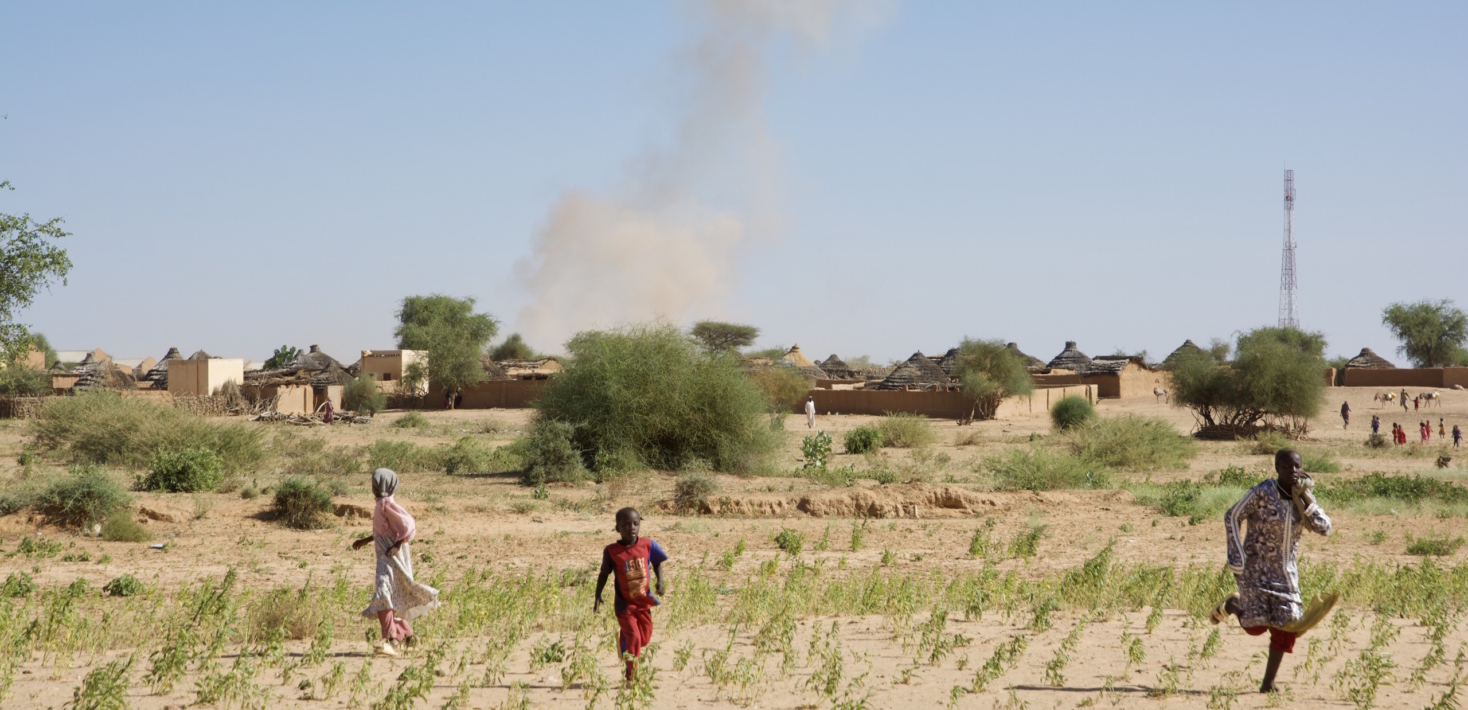
Deliberate targeting of Children: Children were not collateral damage of this violence. The RSF intentionally killed, injured, raped, abducted, and forcibly recruited minors on a massive scale.
Countless children have been orphaned. Hundreds of thousands of boys and girls have been displaced. Many repeatedly risked death and injury during attacks or while fleeing their homes.
Deliberate targeting of non-Arab communities and especially Zaghawa civilians, routinely referred to with discriminatory terms like falangay, denoting slavery or servitude.
Ethnic cleansing in Abu Zerega and surrounding villages, a rural area that is about 35km south of El Fasher.
RSF treated Zaghawa civilians as collectively responsible for the actions of the Joint Forces, and subjected them to detention, rape and killings, regardless of their personal conduct.
One 13-year-old Zaghawa girl was herding the family’s livestock with her father when RSF fighters attacked her village west of El Fasher. She watched the RSF shoot her father dead, before they abducted and repeatedly raped her.
The testimonies we have gathered could not be more harrowing.
-II-
RSF committed a litany of crimes against humanity during their campaign to seize El Fasher. They exterminated.
The RSF will repeat those crimes, again and again.
Until they are stopped.
We live in an era where powerful states have normalized atrocity crimes against people, calling them collateral damage, security measures, geostrategic gains, market shares.
Sudan is no exception.
For two years now, Amnesty has documented how manufactured weapons from countries including China, Russia, Türkiye and the UAE had been transferred into and around Sudan, often in flagrant breach of the existing Darfur arms embargo. Amnesty International also revealed how French-manufactured weapons systems were being used on the battlefield in Sudan.
Amnesty International and countless others have also shown that the UAE has been the RSF’s principal military, diplomatic and political supporter and backer.
The UAE shielded RSF from sanctions and the UAE was shielded in turn by their own supporters.
Take the British government – the penholder on Sudan at the UN Security Council – for example. Just last week, a UK Parliamentary Committee was told that, instead of taking action to avert mass atrocities during the siege of El Fasher, the British government bowed to “significant private pressure” from the United Arab Emirates not to publicly divulge information regarding Emirati and Ethiopian support for the RSF.
El Fasher is not just a stain on our conscience.
It is the reflection of a deep moral corruption.
It is not just that world leaders failed to act.
Oh they acted alright… Europe and the US cut humanitarian aid!
Sudan has been reeling from the impact of humanitarian funding cuts, which deepened an already catastrophic human rights crisis for communities that have lost everything, having been displaced, starved, besieged, and subjected to horrific violence.
Europe, the US, China and others sold the weapons that’s fueling the conflict.
World leaders did issue some statements.
The Coalition for Atrocity Prevention and Justice for Sudan plus other states who joined the statement at the HRC have called RSF to immediately cease their assault and called for those supporting the parties to stop their assault on civilians.
But the civilians of Sudan need actions, not just words.
The people of El Fasher have paid the highest price for our inaction. With their lives, their future.
Will the people of El Obeid confront the same fate?
-III-
The answer to this question resides, of course, first and foremost with RSF commanders responsible for the military operations and therefore for serious violations of international law.
Amnesty has taken the extraordinary step of naming three commanders criminally responsible for the worse possible crimes.
They are Al-Fateh Abdullah Idris, more widely known as Abu Lulu, responsible for the mass execution of captives who were wearing civilian clothing. He was reportedly arrested by the RSF leadership in October 2025 after multiple videos shared online showed him executing captives in civilian clothing. However, a report by Reuters in May 2026 revealed that he had returned to the battlefield in Kordofan in March 2026. He should be immediately withdrawn from the battlefield, and held accountable for his alleged war crimes.
Or Major General Gedo Hamdan Ahmed Mohamed (‘Abu Shouk’), who directed interrogations and participated in torture, and Lieutenant Colonel Abbas Khater Bakhit, who was seen ordering the torture of prisoners and facilitating payments.
Our message to them is clear: you will be personally liable for violating international law or for implementing orders that violate international law. Stop now.
Our message to all RSF Commanders as they are nearing El Obeid is also clear: take all necessary measures to protect civilians. Demonstrate to the international community and the people of Sudan that the horrors of El Fasher will not be repeated.
-IV-
Whether the people of El Obeid face extermination and persecution and ethnic cleansing depend first and foremost though on how the international community react and prevent further atrocities in Sudan.
Amnesty believes that acts documented in its report, as well as other suspected crimes under on-going investigation, may be relevant to the crime of genocide.
We are launching this report today so that it can act as the alarm bell and the catalyst for action for the protection of civilians in El Obeid/Kordofan.
States must break the cycle of impunity that enables endless abuses. This requires urgent and meaningful actions including through invoking states’ obligations to prevent genocide.
So what should their response entail?
- First and foremost, there must be an immediate nationwide ceasefire.
The international community, including the African Union and other regional bodies, must do everything in their power to pressure the SAF and the RSF to agree to and implement a nationwide ceasefire, accompanied by a sustainable framework for longer-term security and stability, human rights protection, and justice and accountability.
- An independent and adequately resourced international force must be deployed to Sudan to protect civilians against crimes by all parties to the conflict.
The force needs strong human rights, child protection and gender expertise, and should help deter attacks, protect civilians, support humanitarian access, and monitor and publicly report on violations.
Local responders, who are under continual attack, need critically needed political and financial support, including establishing a system to track attacks on local aid actors and taking action against those responsible.
The protection of civilians cannot be dependent on a ceasefire
- The UN Security Council must expand the arm embargo in place on Darfur for nearly two decades, to the rest of the country.
- All states must immediately stop providing arms and ammunition to all parties of the conflict.
Amnesty has documented how foreign-manufactured weapons and military equipment – including Chinese and French weaponry – have been imported into Darfur and other areas of Sudan.
Without the largely unimpeded flow of arms and ammunition, the current scale and intensity of the war in Sudan would not be possible.
It is particularly vital that all countries stop providing the UAE – the RSF’s chief backer – with any arms until it can be brought into compliance with the UN embargo. The UN Security Council must also expand the existing arms embargo on Darfur to the rest of the country.
- The international community must ensure sufficient support for all existing accountability mechanisms for Sudan, including the International Criminal Court, and UN and African Union-backed fact-finding missions.
All those responsible for the crimes documented in this report should be investigated and, where there is sufficient admissible evidence, prosecuted in fair trials.
This includes individuals who directly committed violations, as well as commanders who ordered, facilitated, failed to prevent or punish crimes by forces under their effective control. The evidence we have gathered points to direct criminal responsibility and potential command responsibility.
Countries with the required legal framework, such as Universal Jurisdiction should investigate all those suspected of war crimes and crimes against humanity in Sudan. The Kenyan Public Prosecutor should investigate their alleged crimes, including under the country’s International Crimes Act of 2008.
State parties to the ICC should call on the UN Security Council to expand the referral of the situation in Darfur to cover crimes under international law committed in Sudan.
- The UN Security Council and the Human Rights Council must condemn the UAE for its support, including military support, to the RSF. And so should all UAE supporters, including the US and EU.
The tip toeing around the UAE must stop.
- EU and its member states should ensure that ongoing EU-UAE negotiations on the Free-Trade Agreement and the Strategic Partnership Agreement are linked to concrete and measurable benchmarks for progress on human rights both in the UAE’s internal and external policy.
Both agreements should include a suspensive human rights clause, grounding the agreements in respect for human rights in the parties’ internal and international policy, as an essential element of the agreements.
- The international community must ensure that adequate aid reaches refugees and displaced persons, including child-focused services, to help quell the catastrophic humanitarian crisis.
At a conference on Sudan in Berlin in April 2026, states made new funding pledges. However, Sudan’s 2026 Humanitarian Needs and Response Plan is still only 31% funded, and camps hosting civilians in neighboring countries remain under-resourced.
- African States must join the Coalition for Atrocity Prevention and Justice for Sudan. Right now, the only member is Sierra Leone. Other States must join, beginning with Kenya.
-V-
To fail to deliver on these recommendations would be to pour yet more fuel on the inferno engulfing Sudan, instead of putting it out.
The international community cannot continue to turn its back on the people of Sudan.
How many more children must die?
How many people must suffer irreparable, lifechanging trauma for states to act?
The inertia must end today.