
Overview
It is easy to think that people in detention have no rights – that they have somehow forfeited them for a life of crime. Equally, you might think that state authorities have unfettered power to detain certain categories of people. This is wrong on two counts.
Firstly, everyone has rights and they can never be taken away, no matter where a person is or what they may have done. Secondly, just because someone has been imprisoned or detained, it does not mean they are guilty of a crime. If they were lucky enough to have a trial at all, it may not have been a fair one. Meanwhile, others may have been detained for political reasons, for their identity or migration status or on spurious ‘security’ grounds.
From sending faxes and tweets to making phone calls or taking to the streets, since we began in 1961, Amnesty activists have been ready to spring into action for people facing wrongful detention and those in imminent danger in detention.
While there have been thousands of victories, systemic change is harder to come by and, all over the world, far too many people are still unjustly languishing in detention.
Which human rights specifically relate to people in detention?
First, it’s important to be clear about exactly who we are talking about when we refer to ‘people in detention’. Unsurprisingly, this includes people who have been accused or convicted of crimes and are being held in prisons or other correctional facilities. However, it also includes people who are being held in non-criminal forms of detention. For example, people are often held in detention because they are immigrants – sometimes for prolonged periods.
People in detention – whether imprisoned for an alleged crime or held for other reasons – have a range of rights under international human rights law and standards. These cover:
- rights that the state must grant every person during the process of detaining them
- rights a person must be able to access after they have been detained
- minimum standards of treatment a person should receive while in detention
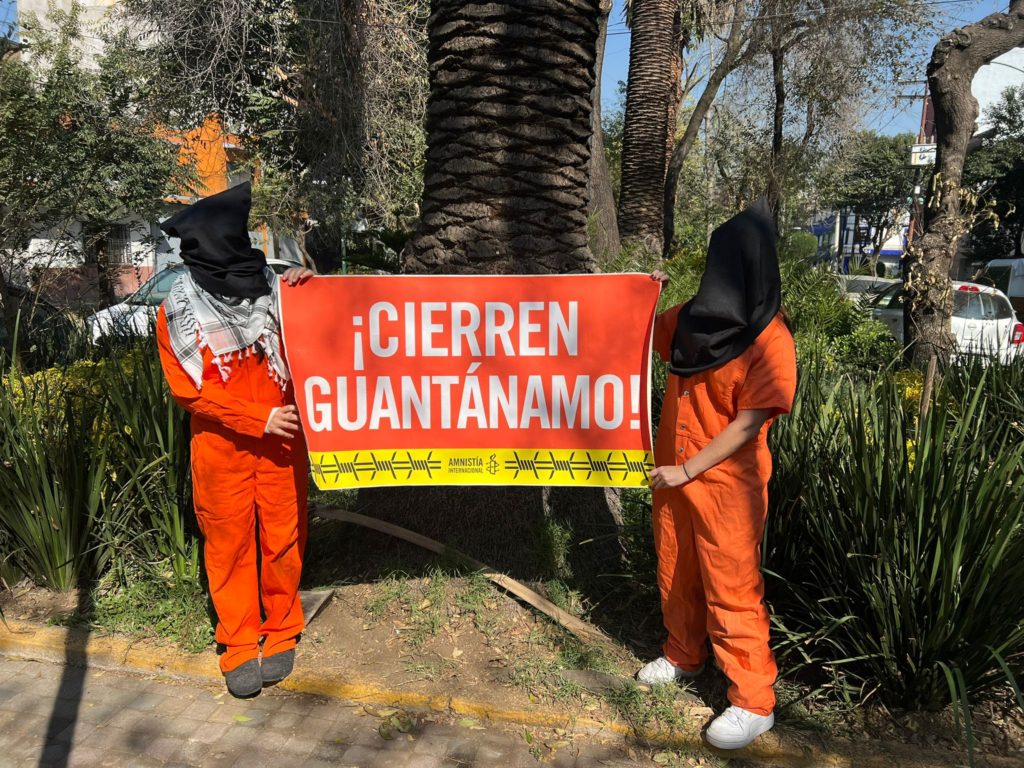
However, in many countries throughout the world, these rights and protections are ignored. People are frequently detained without proper legal processes being followed while safeguards such as access to lawyers, family members and medical care are not respected. People in detention are also often subjected to violence, including the extraction of so-called “confessions” through torture or other ill-treatment.

Unlawful detention
International law sets out a number of circumstances in which a person’s detention may be unlawful.
First, the state cannot detain a person without a legitimate reason that is recognized under international law, and anyone accused of a crime has the right to a fair trial. By failing to provide a legitimate reason or an adequate legal process, the state is subjecting a person to what’s known as arbitrary detention.
After a person has been detained, they have a right to access lawyers and family members. Those denied this access are being subjected to incommunicado detention. In some cases, as well as being denied contact with the outside world, prisoners or detainees are held in locations known only to the authorities – this is known as secret detention and may amount to enforced disappearance.

Mistreatment of people in detention
UN guidelines on prison conditions set out minimum standards on the treatment of prisoners and their environment.
Torture and ill treatment
This includes restrictions on the use of measures such as solitary confinement, defined as the isolation of a person for 22 hours or more a day without meaningful human contact. Depending on its length and other conditions, solitary confinement may amount to torture or other cruel, inhuman or degrading treatment or punishment. The use of solitary confinement is prohibited against certain categories of people, including children and pregnant women. It is also always prohibited to hold anyone in solitary confinement for more than 15 days.
Where it is misused, solitary confinement is just one of many methods of torture or other ill-treatment that are used by authorities against prisoners and detainees. Torture is when somebody in an official capacity is responsible, either directly or indirectly, for the infliction of severe mental or physical pain or suffering on somebody else for one of a few specified purposes. Sometimes authorities use torture or other ill-treatment to extract a “confession” for a crime, or to get information from them. Sometimes torture is simply used as a punishment or is motivated by discrimination.
Torture methods vary. They can be of a physical nature, like beatings and electric shocks; of a sexual nature, like rape or sexual humiliation; or of a psychological nature, like death threats or sleep deprivation.
Under international law, torture and other forms of ill-treatment are always unlawful.
Prison conditions
International laws also demand that detention conditions conform to international human rights standards across a range of other areas, including minimum standards on accommodation and hygiene; access to medical care, food and exercise; and that detainees are not discriminated against on the grounds of their gender, race, colour, sex, sexual orientation or gender identity, political views, disability, religion or other protected characteristics.
Overcrowding is widely recognized as one of the most serious problems in prisons today. Around 102 countries have reported prison occupancy levels of over 110%, often combined with filthy and unsanitary conditions, with a significant proportion of prisoners charged with, or convicted of, non-violent crimes.
What does it mean to be a prisoner of conscience?
Since we were founded, Amnesty has campaigned for a special category of detainee known as prisoners of conscience (PoC) – a term coined by the organization’s founder, Peter Benenson.
Amnesty International defines a prisoner of conscience as a person imprisoned (or otherwise detained) solely because of who they are (ethnic origin, sex, colour, language, national or social origin, economic status, birth, sexual orientation, gender identity or expression, or other status) or what they believe (political, religious or other conscientiously held beliefs), who has not used violence or advocated violence or hatred in the circumstances leading to their detention. Amnesty calls for the immediate and unconditional release of all PoCs.
Throughout the years, Amnesty has effectively campaigned for thousands of PoCs around the world and in many instances contributed towards securing their release. Some well-known examples include Raif Badawi and Leila de Lima.
Case Study: Eskinder Nega

Renowned Ethiopian journalist and prisoner of conscience, Eskinder Nega, was imprisoned nine times simply for doing his job. In 2018, after featuring in Amnesty’s annual Write for Rights campaign, he was released from the country’s notorious Maekelawi prison. Here are some extracts from a letter he wrote to Amnesty International’s supporters following his release:
“Even though I am a peaceful person, the Ethiopian Government convicted me on terrorist charges. Throughout the world, such charges are frequently levelled against dissident journalists like me who challenge their governments.
I’ve seen every side of prison life. I have been kept in dark cells, measuring less than two square metres. As I slept it was as though my head was touching the wall and my feet were touching the door…I was allowed to go to the bathroom twice a day. A shower was out of the question.
The conditions [in Maekelawi prison] were terrible. It was overcrowded, difficult to find a place to sleep and the sanitation was unbelievably bad. The prison officers demanded I stop writing and when I refused, I was branded a troublemaker, a difficult prisoner and segregated from the others.
I will forever be grateful to Amnesty’s supporters. Keep up the good work. You are the conscience of humanity, the voice of the oppressed. The voice of human rights needs to continue until everyone is free from tyranny.”
What is Amnesty doing to help?
Amnesty International works with lawyers and family members to highlight the cases of unlawfully detained people all over the world. We mobilize our global network of activists to lobby state authorities and advocate directly with state officials to demand they respect their obligations under international law and protect the human rights of people in detention.
Amnesty’s annual Write for Rights campaign regularly features cases of people who have been arbitrarily detained, forcibly disappeared, held incommunicado or mistreated in detention. Thanks to the letters written, petitions signed, and e-mails sent by Amnesty activists, unlawfully detained individuals have been granted access to family members and lawyers and seen their conditions and treatment improve. The campaign has also led to people’s release.
Amnesty’s Fair Trial Manual is a practical guide to international fair trial standards. It is a vital tool for lawyers, judges and trial observers. It is also used by political prisoners representing themselves in court as a DIY defence guide – such as Albin Kurti who used the Manual to represent himself before a UN tribunal in Kosovo and was released.