
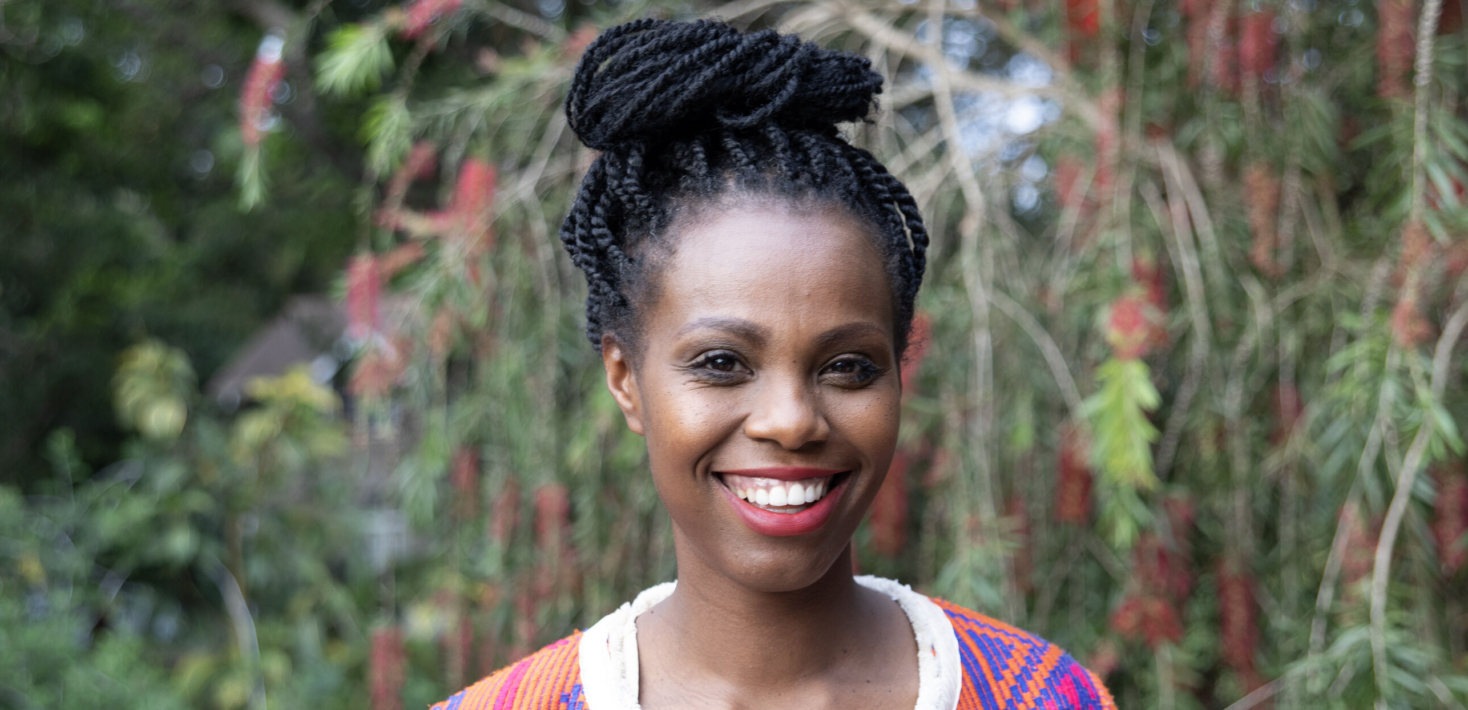


Liliane Umubyeyi on the importance of reparatory justice
Liliane Umubyeyi co-founded African Futures Lab in a bid to rewrite the narrative around Africans and people of African descent and to ensure they receive the reparatory justice they deserve.
Now, as anti-right movements become the norm and racial violence around the world accelerates, she wants to remind people that there’s a movement of people fighting back, calling for reparations and holding those in power to account….
Politics has always been a part of my life.
As a young child in Rwanda, I remember there being a violent political climate preceding the 1994 Rwandan genocide against the Tutsi. By the time I was 10, we were forced to flee following the genocide.
We travelled to Kenya, on to Cameroon where I learnt French, before settling in Belgium, where we were Black African refugees.
After studying law, taking on a PhD and working for differing human rights organizations, including the UN, I began to see a disconnection between human rights and racial justice. I could see the impact of colonialism in terms of how the organizations I was working for resolved problems – they had a Eurocentric way of thinking when it came to how political and legal systems should work.
Changing the narrative: from charity to accountability
I wanted to change things but knew it would be impossible in a big organization. Together with a friend, we co-founded African Futures Lab – and while I didn’t set out to become an activist, I somehow just became one.
Our aim was to change the culture of impunity concerning the racial injustices affecting Africans and People of African descent and the discourse around the development of their societies.
Since the second half of the 19th century, we were seen as people to save and support and African/African descendent immigrants in the Global North were to blame for socio-economic issues in these countries. However, this would not have been the case if our bodies and our natural resources weren’t exploited for so many years. African people helped to build the wealth and contributed to the development of colonial powers through the exploitation of African resources and labour, so African Futures Lab wanted to move the narrative from charity support to accountability and reparations, with a particular focus on gender and climate.
One of the key issues we are working on is the violence perpetrated by colonial administration to Metis children.
These children, born to African mothers and European fathers during Belgium’s colonial rule in Rwanda, Burundi, and the Democratic Republic of Congo, were systematically abducted and forcibly separated from their families between 1948 and 1961.
I remember hearing how a family member was kidnapped from his mother as a child. His mother kept sending letters, trying to find her child for many years, but she could not speak the language, nor did she have the resources to find him. I started to wonder why the mothers of these mixed-race children were not in the picture. I’m a mother. I am from Rwanda. I know what it would feel like if my child was taken from me.
They deserve access to justice
Belgium was instrumental in turning socio-economic categories into ethnic categories in the case of Rwanda. France was instrumental in creating the conditions which lead to the genocide against the Tutsi in Rwanda. We’ve had apologies from Belgium. However, France is yet to address the issue of reparations, having just recognized the moral responsibility. Essentially, they’ve destroyed a country, apologized, then said “let’s move on”.
When it comes to racism, crimes related to colonialism and neo-colonialism, there’s a real refusal to talk about it.
Liliane Umubyeyi
In the human rights space, we talk about reparations all the time. But when it comes to racism, crimes related to colonialism and neocolonialism, there’s a real refusal around it. For me, it was natural to ask, ‘Why don’t Africans deserve to have access to justice for the crimes related to colonialism? And why don’t the mothers of the Metis children deserve justice?’ They have seen their children abducted which is the most heinous crime.
Since 2022, African Futures Lab has been working with a collective of Metis associations in Burundi, DRC and Belgium. In 2024, five Metis women brought a case against the Belgian State and won, with the court ordering to pay reparations. The women were themselves were Metis children separated from their families by the Belgian colonial government. When the ruling came through it was surreal. In 2026, the Belgian state appealed the decision, but again we won.
Now we want to use the Court decision to amplify its impact. For example, what can we do for the people who stay in the DRC, Rwanda, or Burundi? This victory was for five women, but what about the others?
Some of the mothers of abducted Metis children are still alive, so how do we make sure that before they die, they can access psychological help or financial support. These are basic rights, and we need to strike while the iron is hot.
A long battle
Far-right movements have been around for years, but now, racial violence is accelerating and we must resist. Continuing to demand accountability and call for reparations for historical and contemporary racial injustices is an act of resistance. It is a way of refusing to be silenced.
The African Union’s decade of reparations was already in our agenda, but I think it makes even more sense to take tangible action. The conversations around reparations and racial justice are still very much happening in conferences and academic circles but it’s important that more people have access to these conversations and can learn about the real and ongoing impact of colonization.
Together with partners Reforms Initiative, Baraza Media Lab and Deep South Solidarity Fund, we created the Wakati Wetu Festival, the first-ever reparations festival on the African continent, which took place last year. It was a place to bring people from more than 20 countries and 75 organizations together and transform an ecosystem to make sure that colonial and racial violence is on the agenda and prove that reparative justice is not an isolated battle. We worked with several organizations to bring the festival to life, including Amnesty International, as it’s about creating a network to win these battles and prove that hope is stronger than fear.
Given what’s happening in the world, the battle might take longer than expected and I don’t know whether our generation will win it, but at least those who will come in 50 years won’t have to start from scratch – and for me that is key.
This story was originally published in Le Soir.
In our series, Voices of Reparatory Justice, we speak with artists, activists and leaders who share their stories of repair and resilience in fighting against the negative impacts of historical injustices, slavery, and colonialism. Despite existential challenges, their journey to secure dignity and rights of racialised groups, restores hopes for our collective future, humanity must always prevail. This is one of those stories. Find out more about our work.