
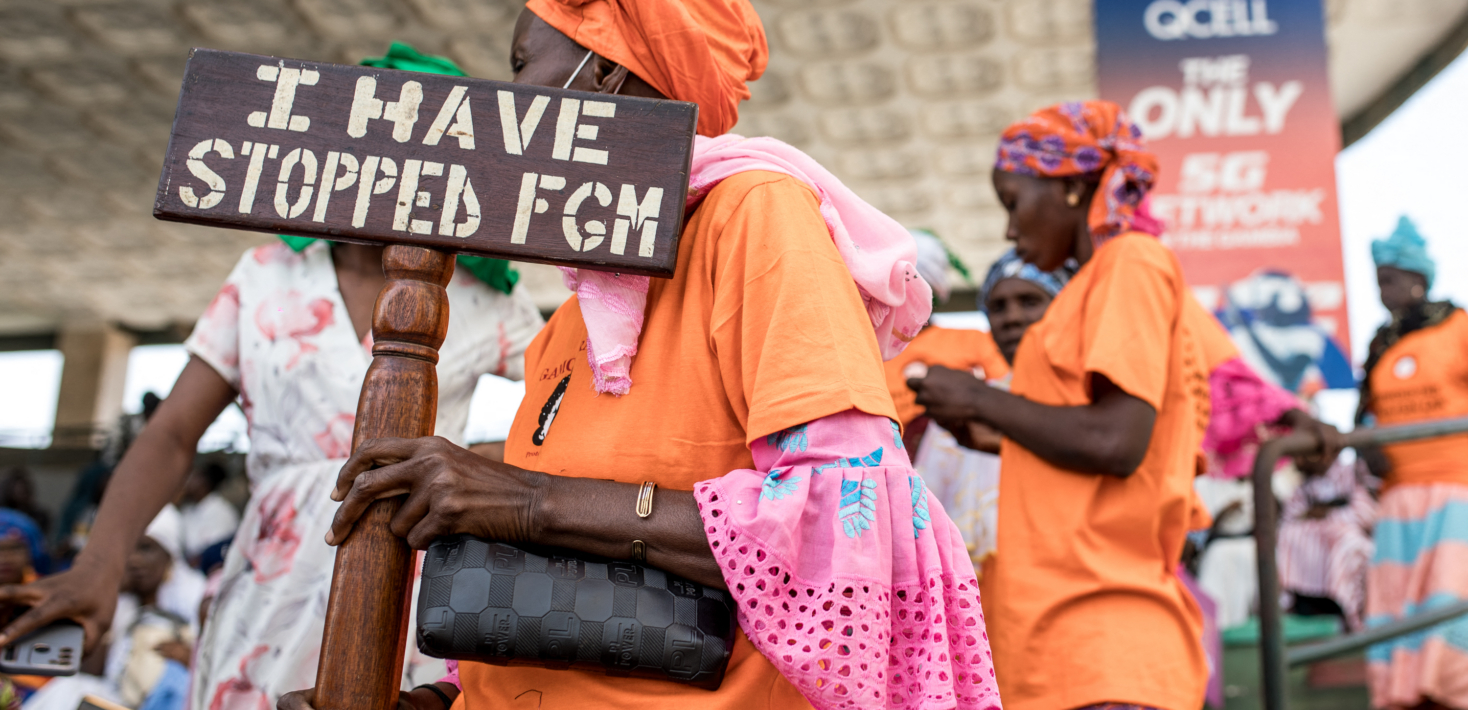


Thirty-year-old Tala Camara grew up in the Upper River Region in rural Gambia. An entrepreneur and consultant, she also volunteers for several organizations. A survivor herself, she raises awareness about the harm caused by female genital mutilation (FGM) through community meetings and mentoring for children.
According to the 2020 Demographic and Health Survey, 73% of Gambian women aged 15–49, and 63% of girls aged 10–14, have been subjected to FGM. FGM can lead to a range of complications including chronic pain, infections, difficulties during childbirth, mental health issues and even death.
The 2015 Women’s (Amendment) Act sets out punishments for performing, aiding and abetting FGM. A bill introduced in parliament to reverse the ban on FGM was rejected in July 2024. In April 2025, a member of parliament and religious organizations appealed to the Supreme Court to request the repeal of the law passed in 2015. The Supreme Court began reviewing the appeal on 18 December 2025.
“The act that has been done on me is still fresh in my memory. I was only seven, but it still lingers in my head. During the holiday season, I was taken to the village with my cousins. We were cut by a woman who used to live in our community.
If I hadn’t undergone FGM, I would have been much happier. It has held me back on so many things, including getting married and having children. Whenever I hear a story about FGM it triggers something in me. Sometimes I can speak out on my social media handles, but other times I just need to go mute because I don’t know how to balance it in my head. I haven’t fully recovered. Being a survivor is challenging whether we speak about it or not.
I’ve been an activist for over 15 years now. Because I stood my ground, my little sister was not cut. I have a sense of responsibility towards her and other children. Most of the children I have mentored are now adults. I always tell them that they should serve as protectors to the younger ones, just like they were protected themselves.
Pending the Supreme Court’s ruling, FGM continues
Gambia has signed a lot of treaties. The human rights groups are watching. Attention is on the Gambia right now. FGM is going to stay banned, I am not even worried. But within this period, while we are all waiting for the Supreme Court’s decision, a lot of damage is happening. A lot of girls are still being cut.
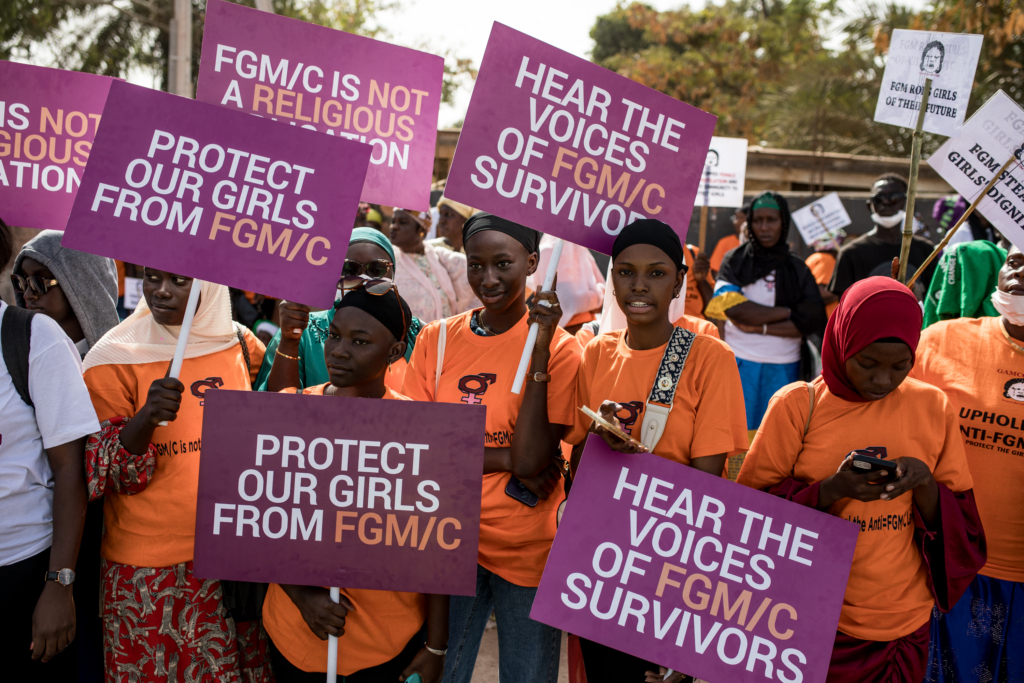
Sending perpetrators to prison has been met with resistance. In 2023, three women were sent to prison and were asked to pay a fine. Then a religious leader came on board to pay the fine, defending the practice of FGM in the name of Islam.
Some religious leaders look at us activists as non-believers, but at the end of the day, we are all Muslims. If Islam is saying ‘when you get married, sex is a way of worship’ and at the same time some argue that the same Islam is telling you to remove the clitoris of a woman – which supports her when she gets intimate – you are contradicting yourself. This is the point I always bring up.
What I have picked up from the whole issue is that the activists, the NGOs, the community-based organizations, and even the government – we made a mistake in the way we were carrying out our activities. For 30 years, we focused on the regular schools, and we forgot about the ‘Madrasas’ [Islamic educational institutions], and we also forgot about the ‘Majlis’ [cultural and social meeting spaces]. That backfired. Some people use Islam to their advantage, claiming that FGM is a good practice, that FGM is Islamic. We should go back to the drawing board.
For so long this country has been in the hands of men. Nothing is changing.
Tala Camara
Education is key
Based on my community work, I’ve come to realize that you can’t make people understand by force. The women who perform FGM, theydon’t do it to harm or inflict pain. They do it out of the belief that they are protecting girls until they get married so that their husband meets them as a virgin. In the past, girls who were not cut were stigmatized, and called all kinds of names. I don’t blame those women. Education is what is lacking.
As for the women who survived FGM, and send their daughters to be cut, they don’t have access to information. Most of them have not been through conventional education. They have complications because of the FGM they have undergone, but they don’t know the cause of these complications. In our communities, we don’t talk about sexuality. We need to bring this conversation to their level, so that they will be able to understand it, using their own experiences.
Women should take the lead
A lot of activists are tired – those on the frontlines. It’s difficult to talk about the same thing over and over again and people just don’t want to listen.
I can remember having an encounter with one of the national assembly members who was given the task of looking at the law when it was challenged in 2024. I realized that he knew nothing about FGM. When I went through pictures on my phone to show him, what a cut woman looks like and what one who is not touched looks like, he was surprised. These are the people that are being put in positions to decide about our health and well-being. Our authorities should do better.
For so long this country has been in the hands of men. Nothing is changing. Every day girls are being cut, every day girls are dying. We are frustrated. We are scared. We don’t feel safe. It’s just too much! Positions that deal with women’s issues, let them be filled by women that have experience and empathy. They should take the lead in the fight against FGM, because women are the ones surviving it.”