
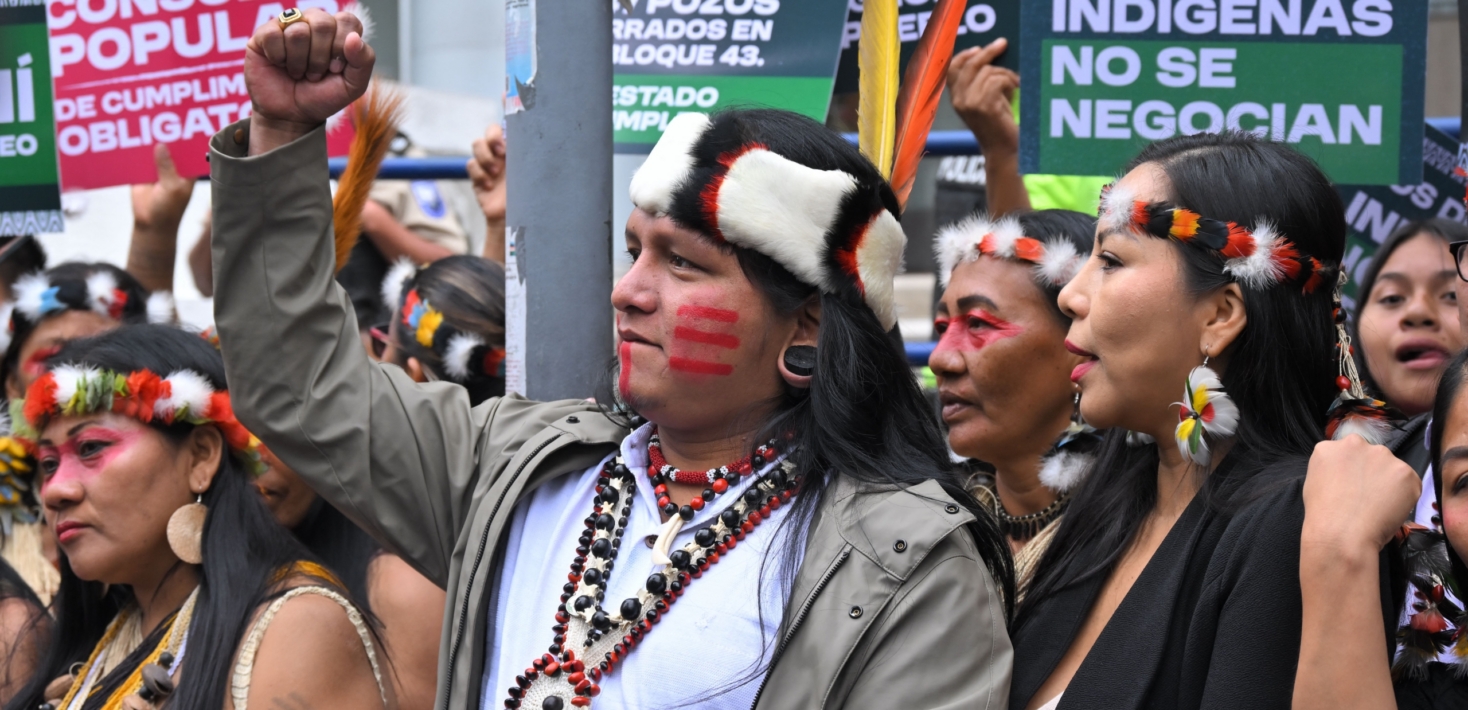


Three years after Ecuadorians voted overwhelmingly to protect Yasuní National Park from oil extraction in one of the most significant environmental referendums in Latin American history, the authorities have yet to fully implement the result of the vote. At the same time, members of the YASunidos collective are facing disproportionate financial penalties for their participation in the campaign.
The one-year deadline established for the gradual and orderly withdrawal of oil operations expired in August 2024. However, oil extraction continues and the plan submitted by the government to the Constitutional Court proposes extending the shutdown process until 2034.
“Three years ago, millions of people made history by voting to protect Yasuní. Today, those who dedicated years of their lives to securing the park’s protection are facing fines of $18,000. This is clear harassment of civil society,” said Ana Piquer, Amnesty International’s Americas Director.
Three years ago, millions of people made history by voting to protect Yasuní. Today, those who dedicated years of their lives to securing the park’s protection are facing fines of $18,000. This is clear harassment of civil society.”
Ana Piquer, Amnesty International’s Americas Director.
Yasuní defenders are being punished for defending It
The sanctions imposed on two members of the YASunidos collective illustrate the growing restrictions faced by Ecuadorian civil society in carrying out its work defending human rights, the environment, and climate justice. They also highlight the deterioration of civic space under President Noboa’s administration.
YASunidos is a citizen-led collective that has spent more than a decade defending Yasuní National Park from oil exploitation and played a key role in the process that culminated in the August 2023 popular referendum.
Located in the Ecuadorian Amazon, one of the most biodiverse regions in the world, the park is a protected area covering 10,200 km2 and is threatened by oil extraction activities. Amnesty International has documented how the Ecuadorian Amazon has become a sacrifice zone for the oil industry.
In 2025, Ecuador’s National Electoral Council (CNE) launched proceedings against members of YASunidos for alleged electoral violations related to irregularities in reporting donations received to finance the campaign in favor of protecting the Yasuní. According to members of the collective, the irregularity amounted to a discrepancy of just 39 cents in their financial reports. A first-instance judge ruled in favor of YASunidos, arguing that the collective could not be sanctioned for the omission because it is not a political party but rather a citizen initiative.
However, following an appeal by the CNE, a second-instance court imposed fines totalling approximately $18,000 on two of its members, which have already been paid. The collective subsequently filed an extraordinary protection action before the Constitutional Court, alleging violations of constitutional rights. The petition was received on May 7, 2026.
“Ecuadorian authorities must ensure that oversight mechanisms are not used in ways that intimidate, silence, or wear down those who defend human rights and the environment,” Ana Piquer stated.
Ecuadorian authorities must ensure that oversight mechanisms are not used in ways that intimidate, silence, or wear down those who defend human rights and the environment.”
Ana Piquer, Amnesty International’s Americas Director.
A Civic Space Under Growing Pressure
The sanctions against YASunidos are not isolated incidents. In recent years, Amnesty International has documented increasing restrictions affecting the work of civil society organizations and human rights defenders in Ecuador, highlighting the deterioration of civic space under President Noboa’s administration.
In 2025, the approval of the Organic Law on Social Transparency and its implementing regulations raised concerns about their potential impact on freedom of association. In this context, civil society organizations have reported the blocking or closure of bank accounts, including those belonging to groups dedicated to environmental and human rights advocacy. At the same time, social organizations and human rights defenders have been subjected to stigmatization campaigns led by high-ranking authorities, including the president, who has referred to them as “anti-patriots.”
These developments are compounded by obstacles to accessing public information and maintaining effective channels of dialogue with authorities, as well as concerns about restrictions on the right to peaceful assembly. During a visit to Quito in May of this year, Amnesty International met with around twenty civil society organizations, which reported that the sanctions imposed on YASunidos and the freezing of bank accounts belonging to other organizations are having a chilling effect on human rights advocacy in the country.
Given this context, Amnesty International reiterates its call on Ecuadorian authorities to refrain from actions that hinder the full exercise of the right to freedom of association and obstruct the legitimate defense of human rights. With respect to Yasuní National Park, the organization also urges the government to comply with the outcome of the 2023 referendum and to ensure an enabling environment in which civil society organizations, including YASunidos, can carry out their advocacy work.
“The Ecuadorian people have already made their decision. It is now the State’s responsibility to respect that decision and ensure that those working to make it a reality can do so without fear of reprisals,” Ana Piquer concluded.
The Ecuadorian people have already made their decision. It is now the State’s responsibility to respect that decision and ensure that those working to make it a reality can do so without fear of reprisals.”
Ana Piquer, Amnesty International’s Americas Director.
For more information or to arrange an interview, please contact [email protected]