


Representatives from Latin American and Caribbean states will meet in Montevideo (Uruguay) from 18 to 20 August 2026 to participate in the sixth session of the Regional Conference on Population and Development (CRPD).
This United Nations Conference is intended to follow up on the Montevideo Consensus, one of the region’s most significant agreements for guaranteeing the rights of different population groups, including women, girls, children and adolescents, older persons, migrants, Afro-descendant and Indigenous Peoples, persons with disabilities and LGBTQIA+ persons, among others.
“Amid a relentless wave of attacks on the rights of women, girls and adolescents, the Montevideo Consensus must continue to be a roadmap for the protection of human rights and not a mere list of outstanding promises. Current challenges require concrete actions, adequate resources and effective accountability mechanisms”, said Ana Piquer, Americas director at Amnesty International.
Amid a relentless wave of attacks on the rights of women, girls and adolescents, the Montevideo Consensus must continue to be a roadmap for the protection of human rights and not a mere list of outstanding promises.”
Ana Piquer, Americas director at Amnesty International.
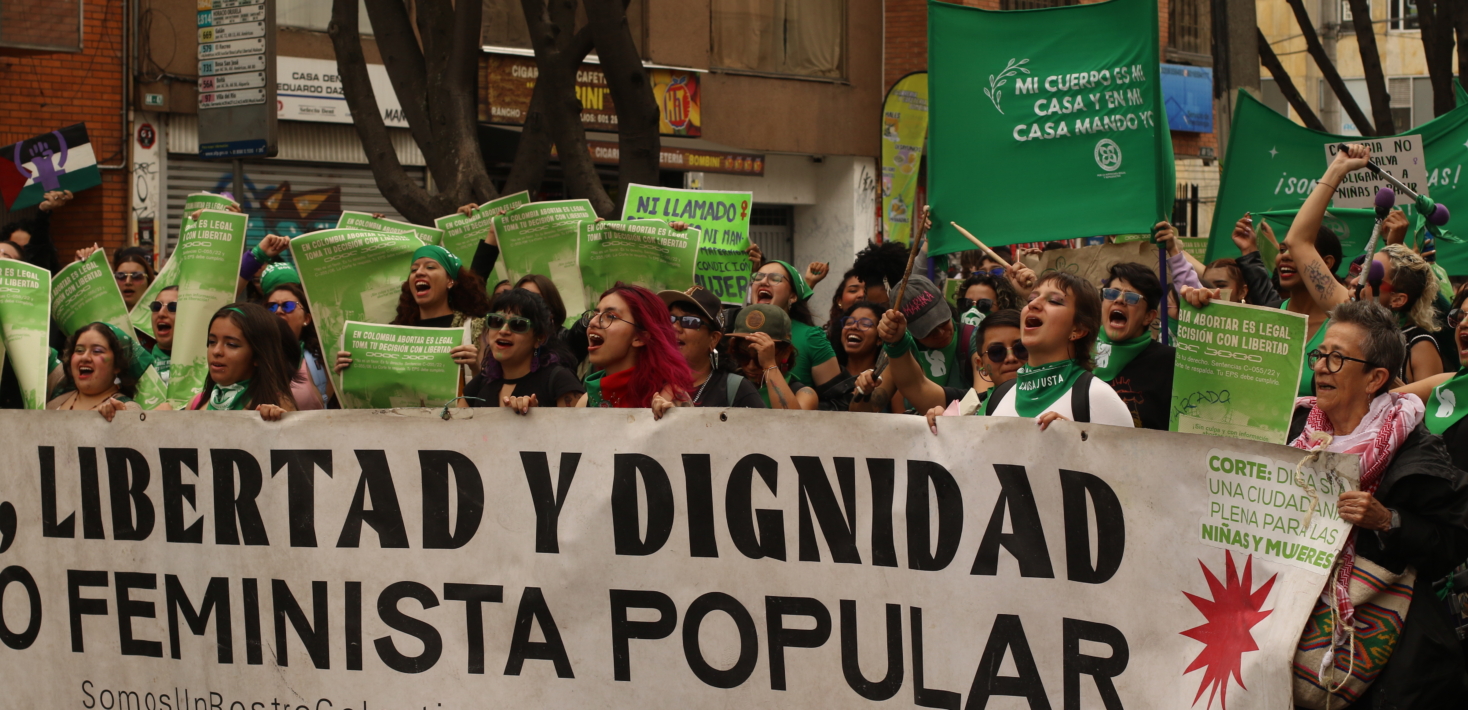
This Conference comes amidst growing rhetoric that seeks to discredit decades of progress in gender equality and restrict the work of those who defend such rights. In much of the region, the dismantling of public policies essential for guaranteeing sexual and reproductive rights, such as comprehensive sexuality education, access to contraception, information on sexual and reproductive health and access to legal abortion, has intensified, limiting the ability of women, girls and adolescents to make free and informed decisions regarding their bodies and their life projects.
These measures disproportionately affect adolescent girls, who still suffer high unintended pregnancy rates that condition their life choices, their access to education and employment, and their right to equality. They also affect migrant women, who experience greater barriers in access to maternal, sexual and reproductive health as a result of discrimination associated with their origin and/or legal status.
With regard to sexual violence against girls, Latin America and the Caribbean is the region in the world with the second highest pregnancy rates among girls. The Girls, Not Mothers (Niñas, No Madres) campaign has documented for years how justice, health and social protection systems systematically fail to guarantee the rights of girls who are victims of sexual violence, denying them timely access to information, comprehensive care, justice and reparations. In addition, girls face institutional neglect, stigmatization, educational barriers, permanent impacts on their physical and mental health and the imposition of motherhood in the midst of their childhood.
“The region must stop normalizing an intolerable reality. No girl should be forced to become a mother. The prevention of sexual violence, comprehensive sexuality education, access to health services and justice, and the guarantee of comprehensive reparations must be centre stage in the Conference agenda”, said Lucía Pérez Chabaneau, executive director at Amnesty International Uruguay.
The prevention of sexual violence, comprehensive sexuality education, access to health services and justice, and the guarantee of comprehensive reparations must be centre stage in the Conference agenda”.
Lucía Pérez Chabaneau, executive director at Amnesty International Uruguay.
The Americas region is experiencing a worrying increase in rhetoric that seeks to discredit and criminalize the reporting of gender-based violence, and this extends in some countries to proposals for legislation. According to UN Women, the evidence indicates that false reports account for only a tiny fraction of all reports and do not constitute a widespread problem, much less one associated with sexual or gender-based violence. On the contrary, violence against women continues to be underreported.
Legal initiatives in this regard reinforce discriminatory stereotypes and have a chilling effect on those who already face more obstacles to reporting, greater difficulties in providing evidence and an increased fear of not being believed, which in turn results in silence and impunity. This trend is particularly serious when disappearances and feminicides continue to claim thousands of lives in the region.
“The Regional Conference on Population and Development must consolidate institutional progress aimed at guaranteeing the rights of women, girls and adolescents. This begins with making gender justice a priority for states and ensuring that the institutions tasked with safeguarding women’s rights are not dismantled, defunded, subordinated to or merged with other bodies”, said Jennie Dador, executive director at Amnesty International Peru.
The Conference must consolidate institutional progress aimed at guaranteeing the rights of women, girls and adolescents. This begins with making gender justice a priority for states and ensuring that the institutions tasked with safeguarding women’s rights are not dismantled, defunded, subordinated to or merged with other bodies”.
Jennie Dador, executive director at Amnesty International Peru.
In recent years, feminist organizations, women searching for disappeared persons, women human rights defenders and civil society organizations have faced increasing restrictions and attacks in carrying out their work. In various countries across the region, legislative reforms and initiatives, stigmatization campaigns and excessive administrative requirements have been implemented against organizations working to promote access to justice, gender equality, sexual and reproductive rights and support for victims of gender-based violence.
Women defenders often face gender-specific risks. In addition to threats, surveillance or criminalization, they are frequently the target of smear campaigns against their work and their personal lives. In many cases, these assaults include sexist language, attacks on their reputation, and the calling into question of their legitimacy to participate in the public debate. In contexts of criminality, impunity and institutional ineffectiveness, this violence has become lethal.
Continued restrictions on civil society have direct consequences for the implementation of the Montevideo Consensus. Women’s organizations have played a decisive role in promoting legal reforms and access to sexual and reproductive health, supporting victims, searching for disappeared persons, producing evidence, monitoring public policies and demanding accountability.
“The Montevideo Conference must send a clear message: every woman, girl and adolescent must be able to make free and informed decisions regarding their bodies, every woman survivor of violence must have support and protection from the state, and every woman defender must be able to demand justice and equality without fear of reprisals”, said Ana Piquer, Americas director at Amnesty International.
Every woman, girl and adolescent must be able to make free and informed decisions regarding their bodies, every woman survivor of violence must have support and protection from the state, and every woman defender must be able to demand justice and equality without fear of reprisals”.
Ana Piquer, Americas director at Amnesty International.
The Regional Conference on Population and Development can be followed online via the official channels of the Economic Commission for Latin America and the Caribbean (ECLAC). On 18 August, a civil society statement agreed by feminist networks will be delivered. Amnesty International will join advocacy, communication and mobilization actions to demand that states reaffirm and strengthen the Montevideo Consensus in favour of gender equality in the region.
For more information or to arrange an interview, please contact [email protected]