


Amnesty International strongly condemns the Zambian government for open-endedly “postponing” RightsCon – the largest global tech and human rights conference, which was due to start today in Lusaka and online – after allegedly being pressured by Chinese diplomats.
Conference organizers Access Now have confirmed they believe “foreign interference” was behind the last-minute postponement. According to their statement, officials from Zambia’s Ministry of Technology and Science had communicated that they were under pressure from Chinese diplomats over, among others, the participation of Taiwanese civil society, prior to the Zambian authorities’ decision to postpone the event. In its 29 April statement announcing the decision, Zambia’s Ministry of Information and Media claimed the postponement was “necessitated by the need for comprehensive disclosure of critical information relating to key thematic issues proposed for discussion during the summit…to ensure full alignment with Zambia’s national values, policy priorities and broader public interest considerations.”
“The apparent coercive pressure behind the de-facto cancellation of RightsCon is a clear sign of a growing and dangerous pattern of Chinese authorities abusing their power and influence over other governments to silence dissent and restrict fundamental rights, in particular those of individuals the Chinese state deems as a threat. We strongly condemn these acts, which constitute transnational repression. There must be serious consequences for this kind of state-driven intimidation and political bullying,
Sarah Brooks, the China Director at Amnesty International.
RightsCon is a prominent platform for global dialogue on emerging human rights issues in the digital space.
“The postponement of RightsCon shrinks already limited spaces for global coordination on regulating and governing technology at a time of explosive AI expansion and the deepening entwinement of the tech industry with authoritarian practices and power. This erosion of civic and policy space has real consequences, and it is a loss the world cannot afford,” said Damini Satija, Amnesty Tech Director at Amnesty International.
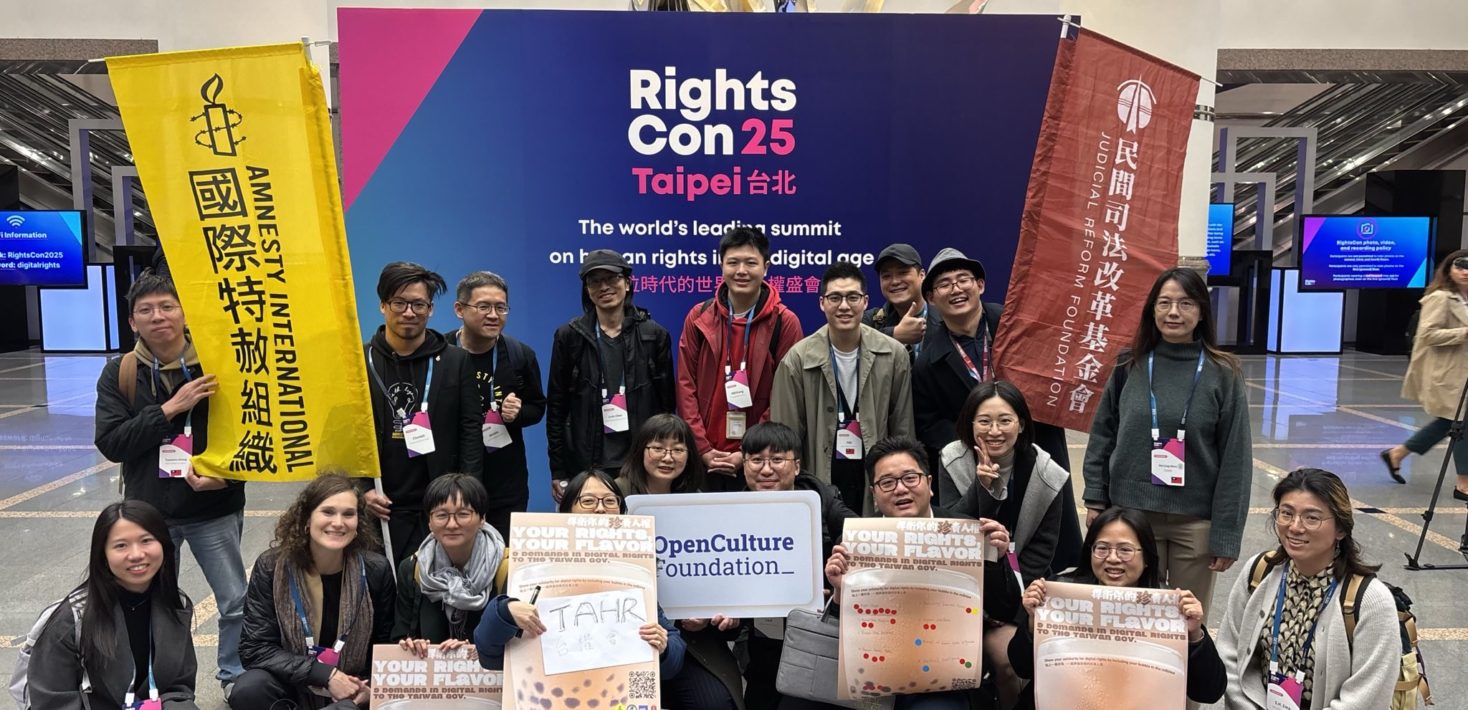
Over 5000 people from 150 countries and 750 organizations and institutions, were expected to attend the event in Lusaka, Zambia and online to discuss pressing issues at the intersection of technology and human rights. Last year RightsCon was held in Taipei, Taiwan, and co-hosted by the Taiwanese civil society group Open Culture Foundation. Other members of Taiwanese civil society, including E-Ling Chiu, the director of Amnesty International Taiwan, have attended and made presentations at this and prior iterations of RightsCon.
Access Now had been engaged in high level coordination with Zambian government officials since 2024 to organize intricate logistics and coordinate the movement of large groups of participants for the summit in Lusaka. Cancelling the event just days before it was due to begin cannot be justified under these circumstances and will drain an immense amount of resources for civil society and Zambian businesses that would have benefited from the conference.
“We urge all states to step up and support RightsCon by working with Access Now and the global civil society to secure an alternative venue and ensure the conference takes place this year. This is a critical test of political courage. Standing aside is not neutral, it abandons the thousands of civil society actors and the millions of people worldwide whose rights they serve and protect,
Damini Satija
Having nearly successfully suppressed domestic civil society and public debate, online and off, within its borders, the Chinese government routinely engages in efforts to silence critics abroad, including targeting overseas students, dissidents and diaspora groups across Asia, Europe and North America. Amnesty International has documented such practices, which we consider clear examples of transnational repression, including in a 2024 report on the intimidation and restrictions on freedoms faced by Chinese and Hong Kong students overseas. China has also long exerted pressure on countries, intergovernmental bodies and companies around the world to exclude Taiwanese voices, both official and civil society, from multilateral fora and global debates and platforms focused on human rights.
China has also shown itself to be increasingly keen to shape global debates around how existing and emerging technologies should be governed, whether at the UN or in other forums. Meanwhile, numerous credible reports indicate that AI and other technologies have been used within China in connection with serious human rights violations, including against the Uyghur people and other mostly Muslim ethnic groups. As China’s tech and infrastructure investments expand and are exported, so does the risk that these tools may facilitate similar violations elsewhere.
The Zambian government must now explain its role in this fiasco, given that the postponement was reportedly a result of pressure from Chinese diplomats. This episode raises further concerns about the export of authoritarian practices, particularly the support of one government to constrain or silence voices critical of another.
“This is censorship and a direct attack on the rights to freedom of expression, association and peaceful assembly. It is yet another deeply worrying sign of a broader slide towards authoritarian practices, a pattern we are increasingly seeing in other parts of the world,
Tigere Chagutah, Amnesty International’s Regional Director for East and Southern Africa.
“The Zambian government must now urgently address the credible allegations of foreign interference and fully and transparently explain the full reasons behind the postponement of this event. This last-minute reversal also raises serious concerns about the shrinking civic space in Zambia and calls into question the authorities’ stated commitment to civic participation, human rights and respect for their international obligations.”
This did not happen in a vacuum. In Zambia, China’s leverage is reinforced through debt and major infrastructure investments including renovations to Mulungushi International Convention Center, which was slated to host RightsCon. This influence also extends into key economic sectors with Chinese companies playing a significant role in copper mining and amplified by Zambia’s roughly US$ 5 billion debt to China.
Zambia is just three months away from a general election. President Hakainde Hichilema, elected in 2021 on a promise of democratic renewal, has spent recent years enacting cyber laws that have become tools of surveillance and speech repression.
Amnesty International will continue to closely monitor developments as the country approaches these crucial elections.
Background
Every two years, RightsCon brings together the human rights community, policymakers, general counsels, government representatives, technologists, academics and journalists from around the world to address urgent challenges at the intersection of human rights and technology. The event in Zambia was to be the first time it was hosted in Sub-Saharan Africa.
Several China-related themes were on the conference agenda in Lusaka, including Uyghur forced labour in global supply chains, the China-Russia authoritarian nexus, Chinese surveillance, the digital reach of China’s Belt and Road Initiative, cybersecurity “with Chinese characteristics” and the export of authoritarian norms. In addition to Taiwanese civil society, a number of members of diaspora groups, including Hongkongers, Tibetans and Uyghurs as well as mainland Chinese, were expected to attend.