


The Algerian authorities must immediately and unconditionally release all arbitrarily detained journalists targeted for exercising their right to freedom of expression, including Abdelwakil Blamm, Hassan Bouras and Christophe Gleizes, Amnesty International said today. The call comes ahead of the 14 May trial of Abdelwakil Blamm on bogus terrorism charges, amid the Algerian authorities’ misuse of the criminal justice system to punish independent critical media voices.
Since November 2025, the Algerian authorities have arbitrarily detained, prosecuted or convicted seven journalists and media workers solely based on their media work or for expressing their opinions. One was sentenced to prison; three were convicted and granted suspended sentences while three others remain in pretrial detention.
This wave of repression stands in stark contrast to recent government claims. On 4 May 2026, during a ceremony for World Press Freedom Day, Communication Minister Zoheir Bouamama highlighted government efforts to guarantee freedom of expression “free from any pressure or restriction.”
The Algerian authorities must stop misusing the justice system to punish journalists solely for carrying out their work or for expressing critical or controversial opinions.
Diana Eltahawy, Deputy Regional Director for the Middle East and North Africa at Amnesty International.
“While senior officials celebrate World Press Freedom Day and publicly commit to upholding freedom of expression, the reality for media workers critical of the authorities is strikingly different. They risk arrest, prolonged arbitrary detention, prosecution on terrorism and national security charges and travel bans solely for writing critical articles or communicating with other journalists and activists,” said Diana Eltahawy, Deputy Regional Director for the Middle East and North Africa at Amnesty International.
“The Algerian authorities must stop misusing the justice system to punish journalists solely for carrying out their work or for expressing critical or controversial opinions. They must immediately release unjustly detained journalists and allow journalists to express their views without fear of harassment.”
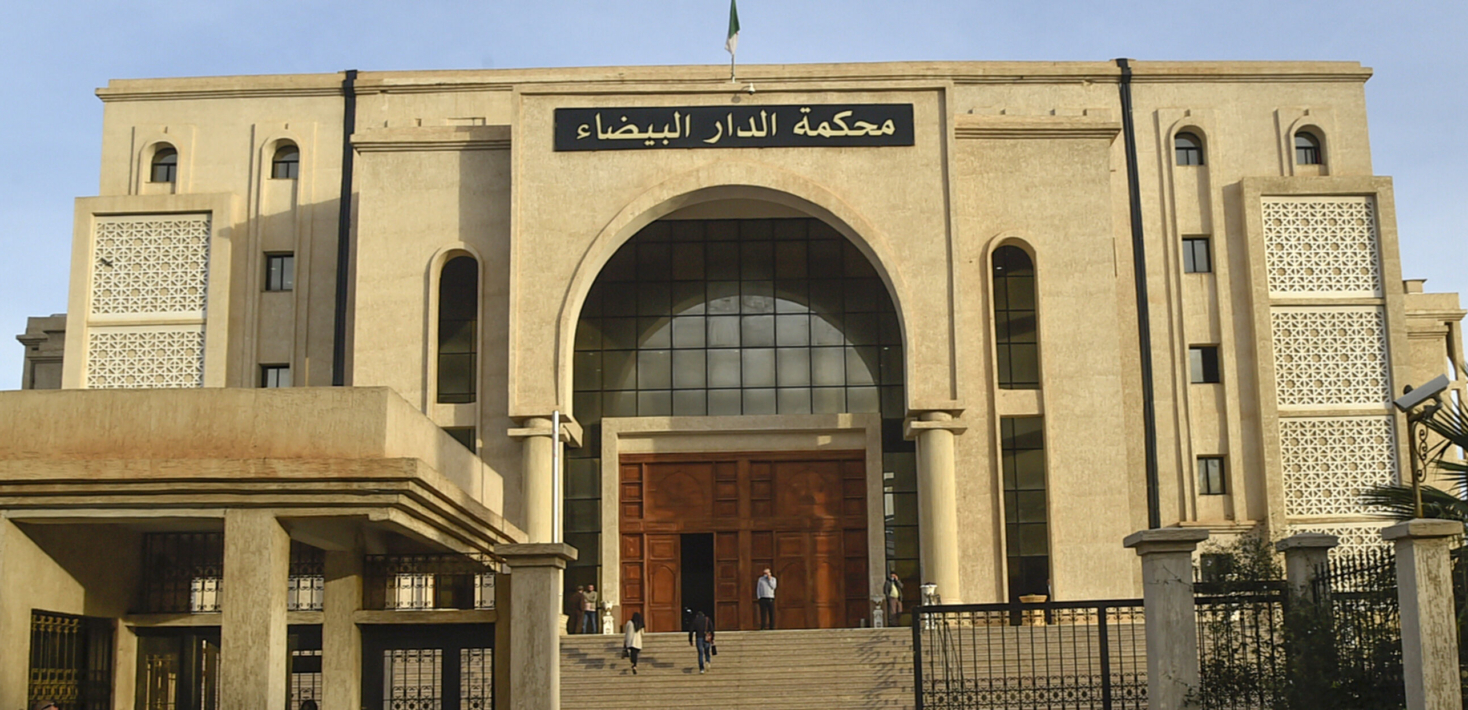
Abdelwakil Blamm, who is due to appear before the Dar El Beida tribunal in Algiers on 14 May, is accused of “participating in a terrorist organization,” “disseminating false information,” and “undermining national unity.” He has spent over 16 months in arbitrary pretrial detention following his arrest in December 2024. Authorities denied his family information about his fate and whereabouts for a week following his arrest, subjecting him to enforced disappearance.
Security forces arrested Abdelwakil Blamm as part of a broader crackdown against an online protest movement campaigning for improved socio-economic conditions and an end to repression in the country. Authorities are prosecuting him for expressing support for the movement on his Facebook page, which has 15,000 followers, and for communicating online with other activists and journalists, including individuals designated as “terrorists” by the Algerian authorities.
Amnesty International reviewed the case file and found that the prosecution presented no evidence of his involvement in any recognizable crimes, in accordance with international law and standards. In addition, the process of designating individuals or organizations as “terrorist” in Algeria remains contrary to international human rights law.
The crackdown on independent voices had also targeted Hassan Bouras, a journalist and former member of the dissolved Algerian League for the Defence of Human Rights (LADDH), who has been in arbitrary pretrial detention since 12 April 2026.
Bouras was arrested in front of his family home in El-Bayadh, 400km south of Algiers, and detained without access to a lawyer, which his family could not secure due to financial and geographical constraints. He suffers from cardiac issues, rheumatism, and asthma, which has worsened in prison where other detainees smoke.
Authorities must ensure that Hassan Bouras, who started an open-ended hunger strike on 3 May in protest at his arbitrary detention, has access to adequate health care, provided in compliance with medical ethics, including the principles of confidentiality, autonomy, and informed consent.
Hassan Bouras has previously been detained and convicted for his journalistic work on multiple occasions, most recently in November 2022.
Other members of the press have faced politically motivated trials, including a foreign journalist.
In December 2025 authorities confirmed a seven-year prison sentence for French sports journalist Christophe Gleizes for reporting on a football club in Tizi Ouzou and communicating with local football figures, including individuals designated as “terrorists” by the Algerian authorities due to their affiliation with the Movement for Self-Determination of the Kabylie (MAK).
Media publisher and activist Abdelkrim Zeghileche is being prosecuted in five separate cases on bogus charges including “offending the president” and “publishing content likely to harm to national interest”, based on digital publications protected under the right to freedom of expression such as a Facebook post from 6 December 2025 in which he called for the release of political prisoners. He is expecting a verdict on 19 May in the first of these trials held on 5 May, while his trial hearings scheduled for 6 and 7 May were postponed to 3 and 4 June respectively.
In a separate case on 30 September 2025, authorities sentenced him to a suspended prison term without a lawyer, following the decision by a prosecutor to refer him to trial immediately following interrogation which did not allow him adequate time, facility and access to information to prepare his defence.
On 4 December 2025, the Bir Mourad Raïs tribunal in Algiers sentenced journalist Saad Bouakba to a three-year suspended sentence and a fine for “insulting and defaming the symbols of the National Liberation Revolution” and “disseminating false information likely to harm security and public order,” after holding him in arbitrary pretrial detention for a week. The journalist was already under a travel ban and suffering from a chronic illness.
Saad Bouakba’s conviction was based on an interview he gave to online media channel Vision TV news on 20 November 2025 in which he discussed allegations of unlawful distribution of funds by Algeria’s first president Ahmed Ben Bella. The appeal trial is scheduled for 2 June 2026.
In a further attack on independent media, the manager of Vision TV was also prosecuted as an accomplice and handed a one-year suspended prison sentence and a fine. The court also ordered the closure of the channel and the seizure of its equipment. Following this prosecution, the channel has stopped posting content.
The authorities must stop using the criminal justice system as a tool to stifle the press.
Diana Eltahawy.
“Authorities are resorting to overly broad and vague charges such as insulting ‘national symbols’ that infringe on the right to freedom of expression to silence dissent. Insult is not a recognizable offence under international human rights law and imprisonment is never an appropriate penalty for defamation,” said Diana Eltahawy.
The authorities must stop using the criminal justice system as a tool to stifle the press.”
Journalist Mustapha Bendjama also continues to be harassed by the authorities. In two separate cases in February and March 2026 courts handed him suspended prison sentences based on his journalistic work and critical social media posts including denouncing Abdelwakil Blamm’s detention. Even though a court lifted his four-year-long travel ban in March 2026, on 16 April 2026 border police prevented him from travelling. On 21 April 2026, police briefly arrested him and opened a preliminary investigation against him after questioning him about the sources for his reporting on a 2020 police shooting.