
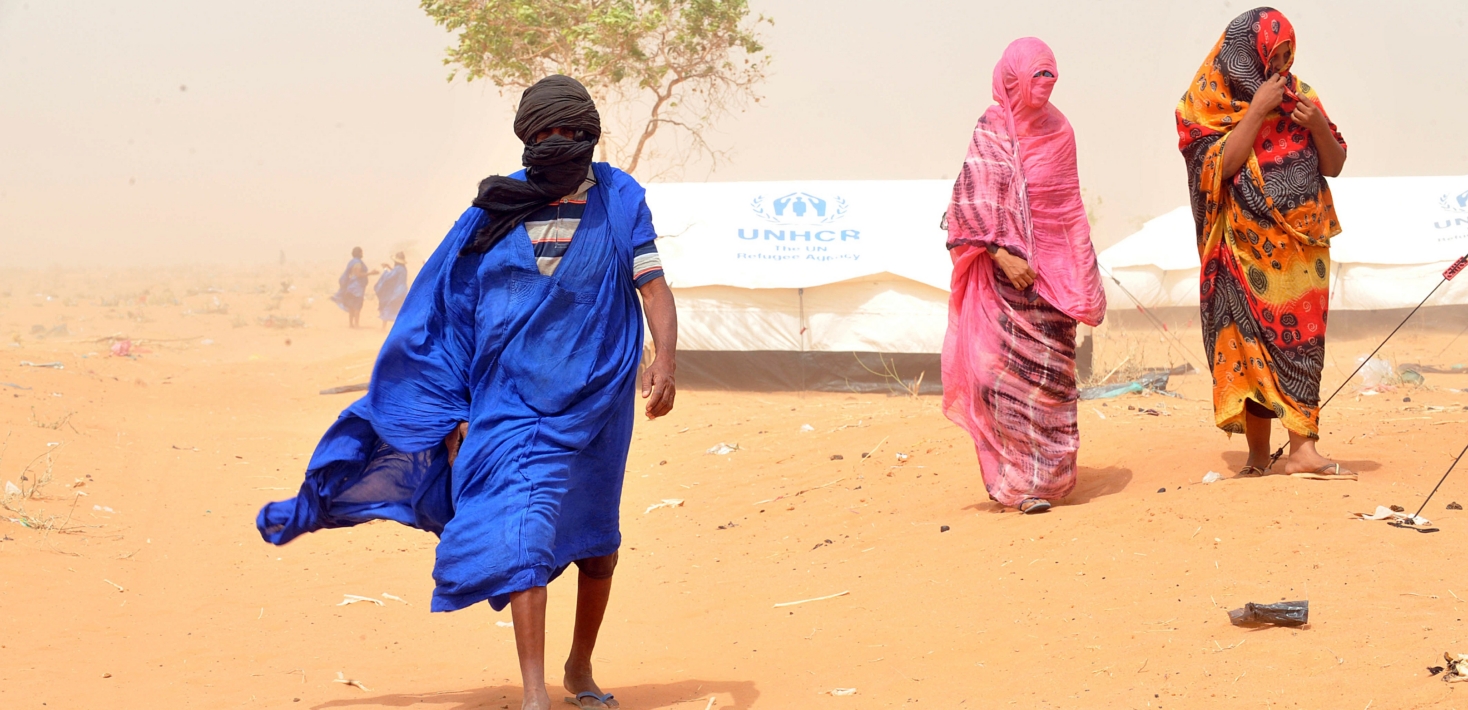


Over the past decade, the conflict in Mali between the armed forces and their allies and various non-state armed groups has forced hundreds of thousands of people to flee their country, including to Mauritania.
Certain armed groups, in particular the Group for the Support of Islam and Muslims (GSIM), also known as Jama’at Nusrat al-Islam wal-Muslimin (JNIM), and the Islamic State – Sahel province (ISSP), violate the right to religious freedom, and plunder civilians’ goods and resources. They are also driving people out of their villages, particularly in the Ségou, Timbuktu, and Mopti regions.
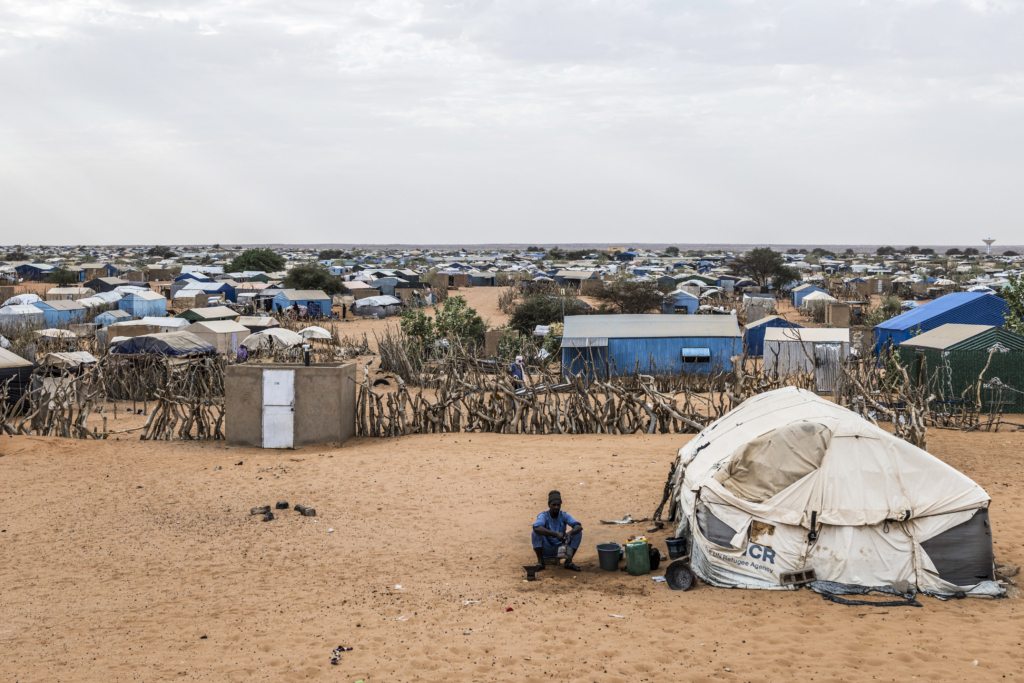
In July 2026, 290,000 Malian refugees were registered by the UNHCR in the wilaya [region] of Hodh Ech-Chargui, in southeastern Mauritania, near the Malian border.
Amnesty International visited them in 2025 and 2026 as part of a research about abuses committed by the parties to the conflict in Mali.
“They came to impose their rule”
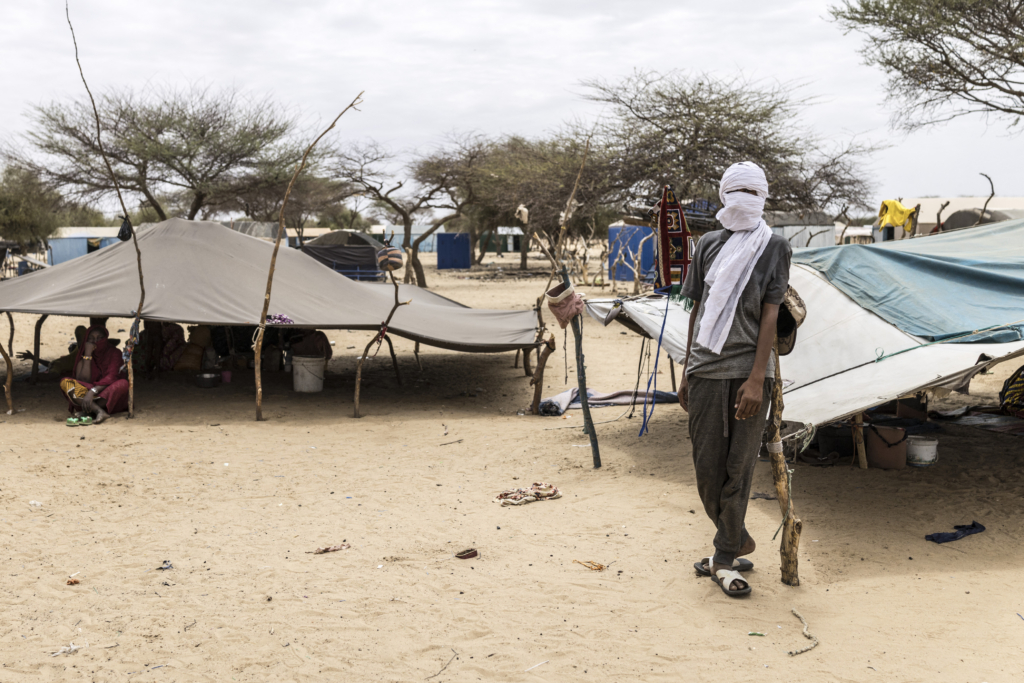
Husseini* was a herder in Mali. He left the Ségou region in October 2024 with members of his family and now lives in the hamlet of Kleiva, in Mauritania.
“What happened to us in Mali has happened in many other villages across the country. The jihadists came to our village to impose their rule at gunpoint. We had no choice but to submit. We began paying zakat [statutory alms practised in Islam], and the women began dressing in black. They also demanded that we let them marry our daughters. They looted much of our community’s property, including 20 camels, about 400 cows, and more than a thousand sheep and goats… We can’t even count the number of times they’ve come to threaten us.
It was this submission that the army and Wagner [a Russian private military company active in Mali between 2022 and June 2025] later held against us. One day, soldiers came and accused us of being jihadists. They ordered us to leave. Then they bombed jihadist positions in the surrounding area. Shortly after that, it was the jihadists who came to tell us to leave the village. That’s when we left to seek refuge in Mauritania. Today, we have nothing left.”
“We were on the road for 10 days – it was tough”
Aminata*, 36, a mother of five, used to live in the Ségou region. She has been a refugee in Mauritania with her children since May 2025. Her husband has not yet joined them.
“We can’t even describe everything we’ve been through because it’s beyond words. And there are some things we can’t even remember.
Before we left, I sold condiments and fish, and business was going well. My husband was old and ill, so he couldn’t work; I was the one who provided for the family.
The jihadists arrived in our area around 2022. They lived in the bush but used to come to the village. They knew our names, and we knew theirs.
They told us to stop playing music and using the tam-tam [a traditional drum], and to give zakat. They banned women who did not wear the black veil from entering the village. As soon as I saw a jihadist, I would run to put one on. If they saw us without a veil, they would beat us or beat our husbands. They told us that this was Sharia law, and we accepted it because we had no choice.
My husband came with a cart and the children, saying we had to leave immediately.
Aminata*
One day, they came to take the village chief away. They held him in the bush for three months, then brought him back. They suspected the villagers of having given information to the army. When the army and Wagner came, they searched the houses, looking for weapons…
Then the jihadists told us that no one was allowed to stay in the village. I was at the market that day. My husband came with a cart and the children, saying we had to leave immediately.
We were on the road for 10 days – it was tough. We arrived in a town under siege, surrounded by the army. We couldn’t work, so we begged to survive. The soldiers told us to go to Mauritania, so we left, without my husband, who’s supposed to join us. Along the way, we ran into the jihadists, who also told us to leave and never to come back.”
“Now, in our village, there’s no one left but the birds”
Ahmadou*, originally from the Timbuktu region, lost two family members in the conflict. He has been living in Fassala, Mauritania, since late 2025.
“There have been incidents since 1991, but what we’ve been through in our region since 2012 is something else entirely. Before, we could stay, endure, and resist, but then, with the armed groups coming out of the bush, it became impossible. We were caught between the rock of the army and the hard place of the jihadists.
One day in October 2025, eight jihadists arrived. They gave us 24 hours to leave the village; otherwise, they would kill us. The women and children were afraid, and some left the very next day. Fourteen people were killed by the jihadists as they fled. At that point, we hadn’t left yet. But after the massacre, everyone who was still there was terrified and decided to flee.
We know that it was the GSIM that issued this ultimatum. They presented themselves to us as mujahideen [fighters for the faith, in Arabic]. We moved to another village in the municipality, and then, faced with the ongoing threat, we left the country. Some went on foot, others on donkeys, on horseback, or in carts. We’ve been here for a few months now. Now, in our village, there’s no one left but the birds.”
“What had we done to deserve this?”
Massoud* was a livestock farmer before fleeing Mali several months ago. Today, he still fears for his safety and that of his loved ones.
“One night in January 2026, two jihadists came and told us to gather on the west side of the village because they had a message for us. Since it was late, we were reluctant. We suggested meeting at the mosque. That’s when one of them made a phone call, and suddenly about 40 motorcycles arrived from all directions with their headlights off.
They told us that the next day, at the same time, if they found people still there, whatever happened to them would be their own fault. I raised my hand and said I had two questions for them. First, what had we done to deserve this? Second, how did they expect us to move out in just 24 hours?
There were about 900 of us in our village, and now there’s no one left.
Massoud*
That’s when they accused us of being friends of the government. I defended myself against that accusation. The army comes into our village, searches our homes – there’s nothing we can do about it! We asked them where we were supposed to go. They said, ‘Go wherever you want in Mali, or even to Mauritania.’ From that day on, people began leaving for another village, nine kilometres away. We stayed there for two months. They came back to threaten us and tell us again to leave within 24 hours. They forbade us from taking our animals.
We had to rent vehicles and carts to transport our belongings to Mauritania. During the convoys, no one was killed, but some people were beaten by the army. One of the people who was beaten is here with us. He has lost his mind.
No one dares to stay after an ultimatum. There were about 900 of us in our village, and now there’s no one left. Everything has been abandoned, even the nomadic camps. Now, only God can help us.”
“Everyone obeys the jihadists’ orders. Who dares to refuse?”
Khalid*, 26, is from the Ségou region. He lost a loved one and fled to avoid being forcibly recruited into an armed group.
“I arrived at Ehel Mahal Allouch [Mauritania] recently. The reason I came here is that I was afraid. I was really afraid.
From 2016 to November 2025, I lived with my older brother, who ran a shop. One day, he set out on a motorcycle taxi to buy merchandise with another shopkeeper who was wanted by Wagner. My brother and this man were intercepted about 20 kilometres from our village… We went to the place where they took my brother, and that’s where we buried him.
In April 2026, I left to join my parents. One night there, four armed jihadists came to forcibly recruit young people. We had seen them coming and going before, demanding zakat, but this time they wanted young people to join their ranks. I knew they had already forcibly recruited one person. I decided not to wait for the worst to happen and to flee alone to Mauritania. Everyone obeys the jihadists’ orders. Who dares to refuse? To get here, I took a car, then a motorcycle. I’m going to stay here for a while.”
*Names have been changed