
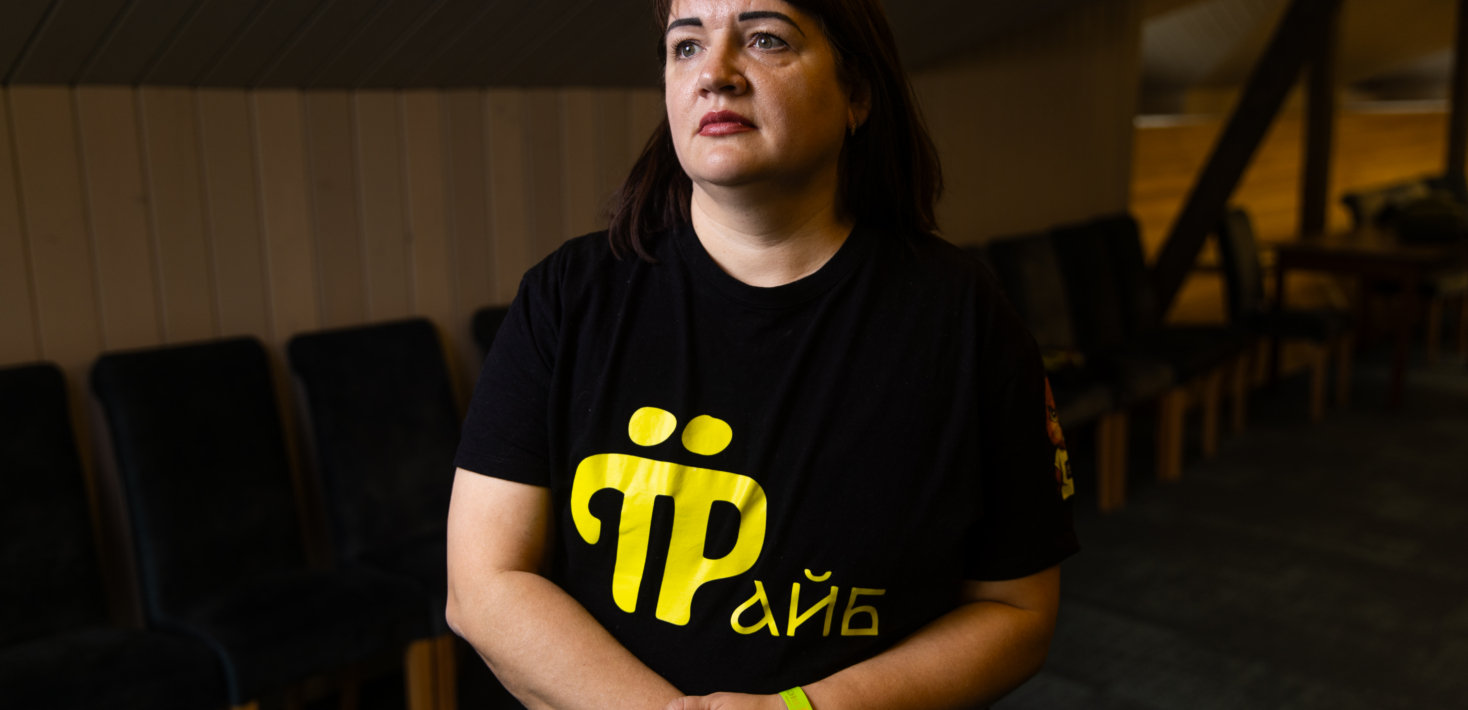


Natalia Lishchyshena is a veteran of the Russian-Ukrainian war who now works as a specialist, supporting military personnel and veterans to address legal and social issues, after she was injured by the body armour she was wearing on the way to a warzone.
Despite facing constant setbacks, Natalia has become the first woman in Ukraine to prove the harm standard-issue body armour, designed for men, can cause to the female body, after receiving official recognition from the medical commission. In this story, she shares why protective equipment needs to be adapted for women in the military.
“I was born into a military family. My father was a serviceman, and I always wanted to be like him. After he finished his service, our family settled in the Luhansk region in eastern Ukraine. When Russia started hostilities in our region in 2014, I decided to stay in Luhansk region because my father was ill and needed care.
I dreamt of becoming a lawyer. At the age of 38, I started studying law. Later, I volunteered for military service. My husband supported my decision. In 2021, I signed a contract with the 80th Separate Air Assault Brigade. I was 40 years old. We did not believe that a full-scale war would start. But on February 24, 2022, at 4am, we were woken up by an alarm: the first explosions, airborne troops, confusion. We did not understand who was ours and who was the enemy. The beginning of the full-scale invasion found us in the south, in the Mykolaiv region.
Our commander told us: “There are no women in the army, there are only military.”
In the army, I performed different tasks assigned by the command: logistics, supply, and other duties. I cannot say that there is gender equality in the army, even though more than 70,000 women are currently serving in the Armed Forces of Ukraine. At the training center, during preparation, our commander told us: “There are no women in the army, there are only military. No one will help you. You knew where you were going. You can rely only on yourself.”
As for equipment, there was no proper uniform for women soldiers until 2024. Now uniforms are provided, but there is still no body armour adapted to female anatomy.
Injury, diagnosis and consequences
Once, when we were travelling through a war zone, there was an air raid alert. As per the safety protocol, we dropped to the ground. At that moment, I was injured by my body armour. I had a large bruise on one breast, but I did not pay attention to it.
Later, I got sick, had a strong cough, and was sent to the hospital. After long treatment, I had to pass a medical commission to confirm my ability for further service. During a breast examination, I was diagnosed with breast intraductal papillomas. It is not cancer, but in many cases it can become malignant. Officially, it is a precancerous condition. The doctor explained that there wasn’t any treatment and recommended surgery.
I went through several surgeries because of complications. As a result, I had my mammary glands fully removed. Before the operation, the doctor spoke with my husband and explained the consequences. My husband said his priority was for me to stay alive.
After the surgeries and treatment, I had to fight to obtain disability status.
Step by step, I achieved justice
At first, the medical commission refused to grant me disability status, even though my illness had officially been recognized as related to military service, since the injury was caused by standard body armour. One doctor even said the decision to remove breasts was mine and there were no medical reasons for that. It was outrageous. But step by step, I achieved justice. That doctor no longer works there.
I have a lifelong disability now. There are still limitations: I cannot, stay in the sun for a long time, raise my arms high, or overwork. I also need constant medical check-ups and health monitoring.
I want real changes, not just on paper
However, I could not sit at home and feel sorry for myself for long. After a few months of rehabilitation, I returned to work and became a veteran support specialist in my community.
I use my law degree to help veterans, families of the fallen and missing military. This includes restoring lost documents, communicating with military units, and arranging legal payments. I want to help people because I have been through this myself. I understand the challenges that veterans and active military face today. Many of them simply do not know how to deal with bureaucracy.
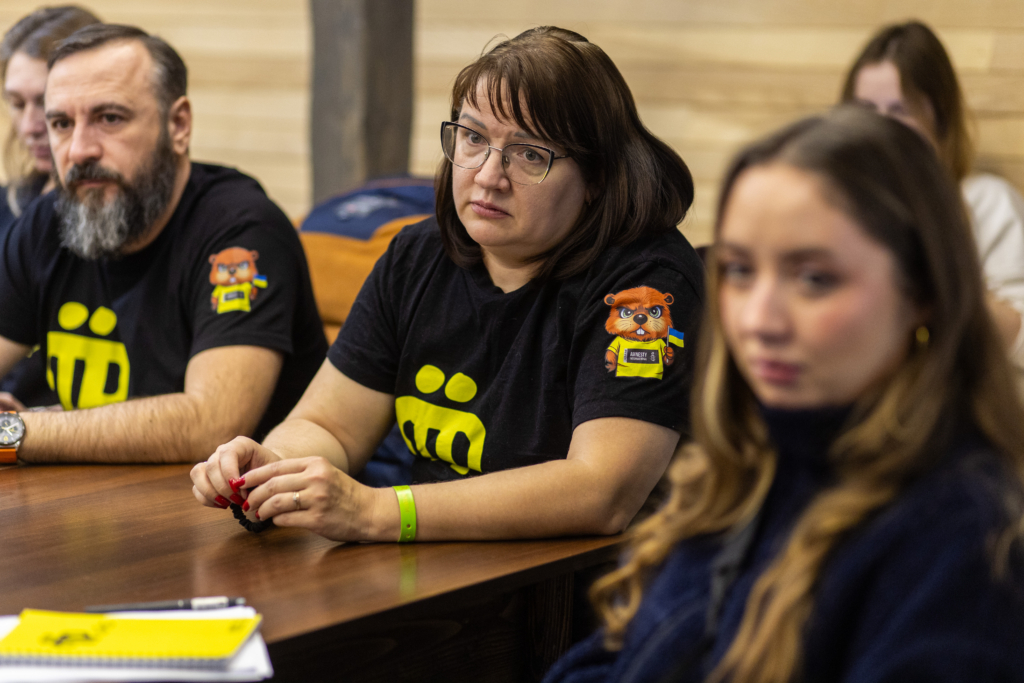
Alongside my work as a specialist, I also help people re-integrate into everyday life through a programme called TRIBE, run by Amnesty International Ukraine and Amnesty International Denmark. TRIBE helps veterans build a supportive community, learn to advocate for their rights, and helps bridge the gap between civilians and people with combat experience.
I use my law degree to help veterans, families of the fallen and missing military
I share my experience with project participants, particularly on legal matters. I also provide individual consultations, including on issues such as obtaining disability status. I write media columns, speak publicly, and advocate for the rights of women in the military and for adequate conditions and support after discharge.
Moving forward
At the moment, I am advocating for proper body armour for women and for a state programme for breast implants. Thanks to my advocacy work, which lasted at least four months, a state programme on reconstructive surgery and breast endoprosthetics for servicewomen and women veterans was approved in April 2026. Its official launch is currently expected. According to the doctors, for every 10 women from the military who come in for general check-ups, nine of them will have problems. It is a very sad statistic. For now, though, I tell all my friends, especially military women: “Girls, please get regular check-ups. You may not even feel that you are being injured.”
Now that my story has become public, the issue has reached the state level and it is an ongoing process with the Ministry of Veterans Affairs and the Ministry of Health.
For me, the most important thing is that real changes happen, not just empty words on paper.