
Overview
The Cuban authorities’ absolute power over all aspects of society – social, political or economic – presents an enormous threat for all those with opposing views. Dissent in Cuba is met with unrelenting harassment, criminalization and violence. Anyone daring to speak out against the government risks losing their livelihoods, being jailed or put on house arrest, or subjected to violence and even torture and other ill-treatment by state authorities.
This climate of fear intensified after the July 2021 protests, when demonstrators took to the streets to protest against the government’s irresponsible managing of the prolonged economic crisis and continued descent into authoritarianism. Women face unique risks when they speak out against the government, including gender-based state repression, misogynistic insults and sexual harassment.
Despite unrelenting attacks on activists and human rights defenders, Cubans continue to courageously resist authoritarian practices and push for the protection of their rights. Amnesty International is calling on the authorities to heed these demands and allow space for a flourishing civil society, where people are not in fear of state repression.
ACT NOW
Stand with women human rights defenders in Cuba
Cuban women who defend human rights not only fight for themselves: they fight for a country where raising their voices is not a reason for punishment. Their reports of state violence need our attention and solidarity to bring real change.
The political context
In place for decades, Cuba’s one-party political system does not allow for political pluralism – the idea that people with differing opinions and values can coexist and share power for the common good.
Critics within Cuba face steep consequences if they speak out. In addition, trade and labour are highly controlled by the state, giving it unique control over the population. 70% of the jobs available in Cuba are in the public sector, meaning most people with jobs work for the government. Authorities use this as a tool of repression, to coerce critics into silence.
Cuba remains closed off to international human rights organizations, and it is challenging for local civil society to operate freely and safely.
These and countless other measures, which are designed to silence dissent, leaves state power in Cuba almost completely unchecked.

A prolonged humanitarian crisis
Cuba has been in a permanent humanitarian crisis for decades. Poverty is rife and basic services like healthcare and education are hard to access and inadequate.
The state has continuously pushed a false narrative that Cuba’s financial situation can be solely attributed to U.S. sanctions, which have been in place since 1962. But there are also critical structural problems that have been created by the state’s economic policy.
Since the 1990s, there has been a series of reforms that have created more space for economic growth in the private sector. However, these were quickly met with counter-reform measures, such as price freezes and restrictions on independent economic activity – leading to cycles of economic volatility and instability, which has had a negative impact on human rights.
Since 2020, economic measures have contributed to skyrocketing inflation which has decimated salaries and pensions, and made food and basic services even harder to buy or access. The economic crisis of the past few years has seen more frequent power cuts and regular shortages of food and medicine.

July 2021 protests
Chanting “freedom”, thousands of Cubans took to the streets in July 2021 to express their anger at the government’s failure to address the worsening economic situation, its curbs on civil liberties and its handling of the COVID-19 pandemic. Their hopeful resistance was met with violence and repression.
Security forces arbitrarily detained hundreds of people, including seven prisoners of conscience, three of whom have since been released. The others, however, remain imprisoned.

Authoritarian practices in Cuba
In Cuba, authoritarian practices taken by the state to consolidate power, silence criticism, instil fear and evade accountability, are systemic. They affect the entire spectrum of human rights – from civil and political to economic, social and cultural. Dissidents have been repressed for decades, their ability to exercise their human rights and participate in public affairs severely curtailed. Journalists, activists and human rights defenders face widespread arbitrary detention. Authorities forcibly disappear people and use abusive unlawful surveillance tactics.
In fact, anyone perceived to be critical of the government risks being targeted by state violence.
Harassment
State authorities use a sophisticated machinery of harassment to isolate anyone perceived to be critical of the government. This often extends to intimidating their family members.
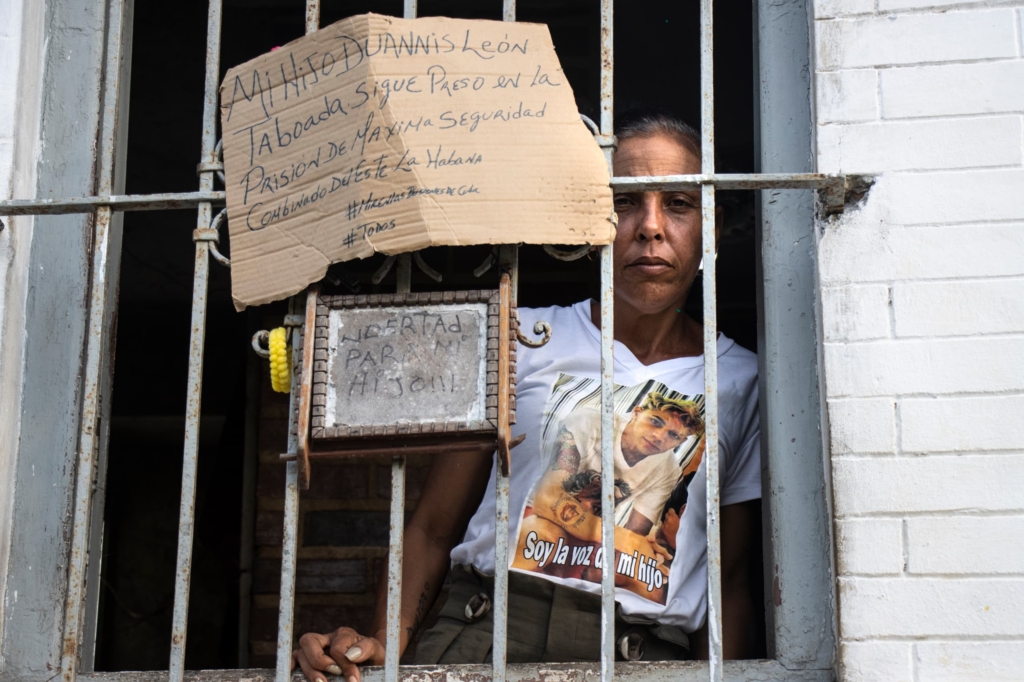
Activists are intercepted by police, who stop them from attending meetings or events, and face constant surveillance. The parents and relatives of political prisoners are often subjected to threats, unlawful restrictions on their movements and even police cordons around their homes.
These tactics make up just part of the broader strategy to disrupt the daily lives of human rights defenders and journalists and create a climate of fear.
Criminalization
Human rights organizations have repeatedly warned of the Cuban authorities’ misuse of the legal system to repress social activism and the exercise of human rights.
In 2022, a new Penal Code containing a slew of chilling provisions giving the authorities even greater powers to continue smothering freedom of expression and assembly, came into force. These include penalizing anyone who “endangers the constitutional order and the normal functioning” of the government, criminalizing receipt of finances deemed to “fund activities against the Cuban state”, and severely limiting freedom of expression online.
These legal changes indicated a clear strategy by the authorities to silence dissenters.
Tech-facilitated repression
The Cuban state has expanded its repressive tactics into the digital sphere, controlling the flow of information and monitoring dissent.
The authorities have implemented nationwide and targeted internet shutdowns to prevent people from organizing or sharing evidence of human rights abuses. These blackouts are a direct violation of the right to access information and free expression.
Security agents also engage in unlawful targeted digital surveillance to track the movements and communications of activists. The information that is gathered is routinely used as a basis for arrests or to blackmail activists into silence.


ACT NOW
Stand with women human rights defenders in Cuba
Cuban women who defend human rights not only fight for themselves: they fight for a country where raising their voices is not a reason for punishment. Their reports of state violence need our attention and solidarity to bring real change.
Prisoners of Conscience
Since the crackdown on protests in 2021, Amnesty International has named seven people as prisoners of conscience.
A prisoner of conscience is a person who is imprisoned, or otherwise detained, solely because of who they are or what they believe. While Amnesty International campaigns for everyone’s enjoyment of human rights and acknowledges there are many others in similar circumstances, these individuals were named prisoners of conscience because their cases are emblematic of the situation affecting many other unjustly imprisoned people in Cuba.

Donaida Perez Paseiro
Priest and leader of the Free Yorubas Association of Cuba, fighting for religious freedom and human rights. She was sentenced to eight years in prison.
Felix Navarro
Political dissident and founder of the “Pedro Luis Boitel” Party for Democracy. He was sentenced to nine years in prison. This is the third time he has been imprisoned for political reasons.
Loreto Hernandez Garcia

Priest and Vice President of the Free Yorubas Association of Cuba. Loreto has diabetes and hypertension, which are not being treated in prison. He was sentenced to seven years in prison.
Luis Manuel Otero Alcantara

Cuban artist and leader of the San Isidro Movement of artists against repression in Cuba. He led resistance against the censorship of artistic expression. He was sentenced to five years in prison.
Maykel ‘Osorbo’ Castillo Perez
Musician, activist and member of the San Isidro Movement of artists for human rights. He is a two-time Latin Grammy winner and co-author of the song ‘Patria y Vida’ which became a protest anthem. He was sentenced to nine years in prison.
Roberto Pérez Fonseca
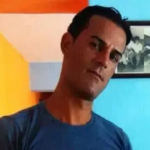
Activist and human rights defender. During the July 2021 protests, he was filmed tearing a photo of former Cuban leader Fidel Castro. He was sentenced to 10 years in prison.
Sayli Navarro

Activist and cofounder of the Ladies in White movement, a group of mothers, wives and daughters with family members who were arrested during the 2003 crackdown on activists. She was sentenced to eight years in prison.
ACT NOW
Stand with women human rights defenders in Cuba
Cuban women who defend human rights not only fight for themselves: they fight for a country where raising their voices is not a reason for punishment. Their reports of state violence need our attention and solidarity to bring real change.
Gender based state repression against women human rights defenders
Woman human rights defenders in Cuba face unique risks when they speak out against the government. In 2025, Amnesty International research revealed a pattern of state repression to silence women. These include forced nudity and invasive body searches, gendered, age-based and homophobic stigmatization, and the use of motherhood, caregiving roles and threats against relatives, to intimidate and control.
States have clear obligations in the Convention on the Elimination of All Forms of Discrimination Against Women to criminalize gender-based violence. Nevertheless, Cuba still does not have a national law on gender-based violence.
What is Amnesty International doing about this?
Amnesty International works to document human rights violations in Cuba and bring them to the attention of the global community. The organization’s researchers and campaigners collect testimony from Cuban activists, their families and everyday people, to ensure that their voices are heard on the global stage.
Dozens of urgent actions and global campaigns have been launched to end arbitrary detentions, protect individuals at risk, and call on the authorities to step up to their human rights obligations.
In 2025, a new campaign was launched to call on the Cuban government to stop the harassment of women human rights defenders and move towards a comprehensive law against gender-based violence.

ACT NOW
Stand with women human rights defenders in Cuba
Cuban women who defend human rights not only fight for themselves: they fight for a country where raising their voices is not a reason for punishment. Their reports of state violence need our attention and solidarity to bring real change.