

The increase in public debt and indebtedness in El Salvador over the last decade has not led to a proportional and sustainable improvement in access to economic and social rights, according to Amnesty International’s new report, “When the budget does not guarantee rights”.
The report analyses the evolution of the public budget between 2015 and 2025, documenting how the increasing debt burden, lack of transparency and a concentration of decision-making power within the executive branch have reduced the state’s capacity to mobilize the maximum of its available resources to uphold rights such as the right to health, to education and to social protection.
“The findings highlight an alarming contradiction: the Salvadoran state is spending more and increasing its indebtedness, but these available resources do not manifest as equivalent improvements for the population. When debt servicing accounts for a larger proportion of the budget than health or education, it is legitimate to question where the money is going and why,” said Ana Piquer, Americas director at Amnesty International.
The findings highlight an alarming contradiction: the Salvadoran state is spending more and increasing its indebtedness, but these available resources do not manifest as equivalent improvements for the population.”
Ana Piquer, Americas director at Amnesty International.
Debt displaces resources that are essential for human rights
Over the last ten years, public debt servicing has become the largest budget expenditure within the national budget. In 2025, two out of every ten dollars in the budget were allocated to debt interest payments and amortizations, an amount higher than planned spending on health and greater than combined spending on education, social protection and pensions.
Evidence shows that debt servicing has tripled in real terms over the last decade while the Salvadoran economy has grown by an average of just 2.5% per year, which means that the debt ratio exceeds the size of the economy. This gradually reduces the fiscal space available for funding basic public services and increases the risk of future adjustments that will negatively impact the Salvadoran population, particularly those already experiencing poverty, inequality or discrimination.
The report also highlights serious issues of transparency and accountability in the management of public resources. Among these are the difficulty in tracking execution of key budget lines, the limited availability of information on contracts and procurements, and the increasing centralization of public investment.
One of the most significant changes observed by Amnesty International is the replacement of the long-standing system of municipal transfers with mechanisms administered by the executive branch through the National Directorate of Municipal Works (DOM). This change has concentrated the selection and implementation of infrastructure projects, with no public prioritization criteria or robust mechanisms for citizen participation in defining priorities and holding the authorities to account.
“Transparency is not a secondary administrative requirement. It is an essential condition for the general public to understand how resources are used and demand accountability. With no accessible information or effective controls, the risk of arbitrary decision-making, corruption and inefficiency increases,” added Ana Piquer.
A larger budget has not led to an improvement in the protection of human rights
Although investments in infrastructure have registered one of the largest budgetary increases of the decade, the report concludes that this has not translated into commensurate results in terms of economic development or a reduction in inequality. Moreover, the report documents delays, budget underspending and difficulties in evaluating the real impact of many public works carried out.
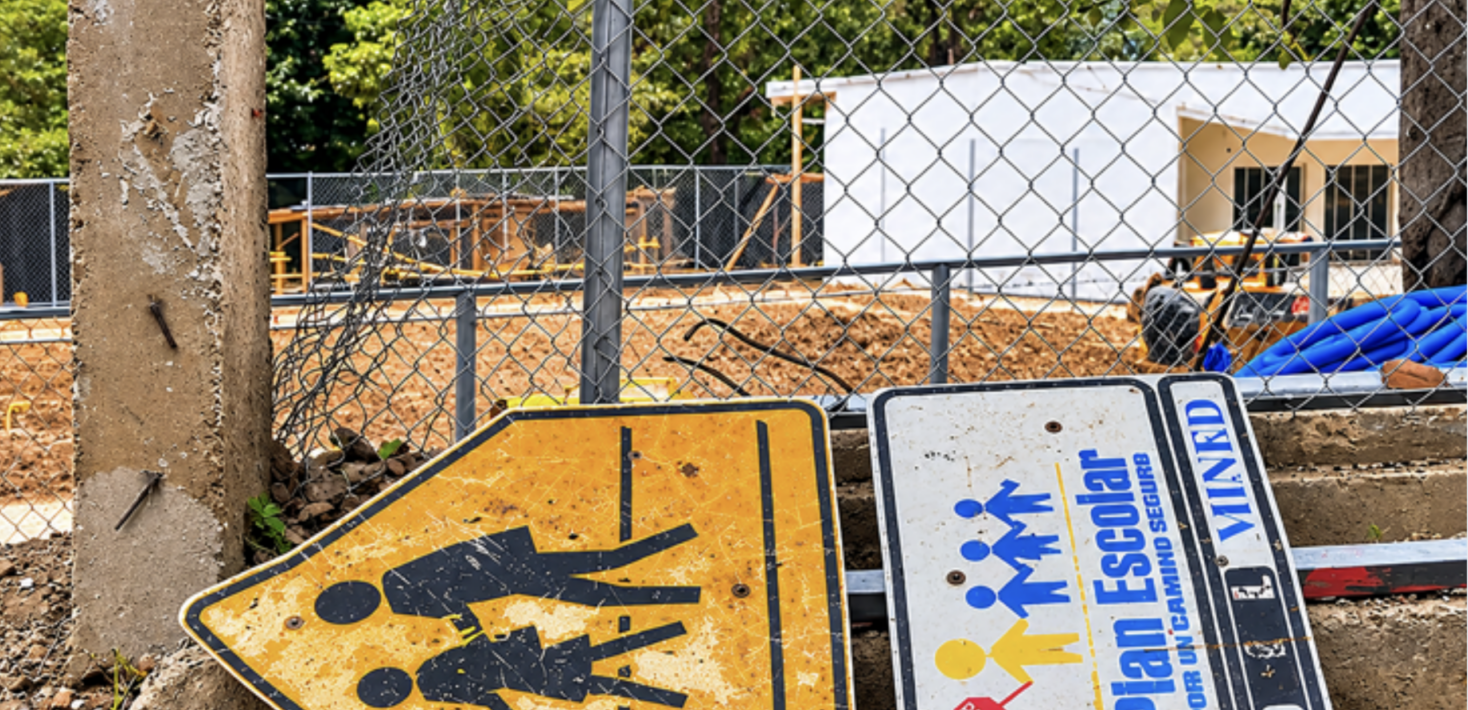
Amnesty International also analysed outcomes for education, health and poverty. In education, the My New School (Mi Nueva Escuela) programme pledged the renovation of 5,150 schools, but as of 2024, work had been reported in less than 10% of those targeted. In health, despite the budget increase, the number of doctors per capita decreased, while out-of-pocket spending for families continued to rise.
With regard to poverty, the report states that extreme poverty levels are still above those prior to the Covid-19 pandemic, while a number of programmes aimed specifically at combating poverty have suffered budget cuts.
“Human rights cannot be determined by propaganda or the visibility of certain projects. What matters is whether people have effective access to quality education, timely health care, adequate social protection, and decent living conditions. That is the true measure of success of a public policy aimed at protecting social rights,” stated Ana Piquer.
Human rights cannot be determined by propaganda or the visibility of certain projects.”
Ana Piquer, Americas director at Amnesty International.
Amnesty International calls on the Salvadoran authorities to strengthen budget transparency, ensure traceability of public spending, establish clear and verifiable criteria for public investment and adopt a fiscal strategy that is compatible with its international human rights obligations, in particular economic, social and cultural rights.
Amnesty International also calls on the International Monetary Fund and other international financial institutions to incorporate assessments on human rights impacts in its funding programmes and economic recommendations for El Salvador.
For further information or to arrange an interview, please contact [email protected]