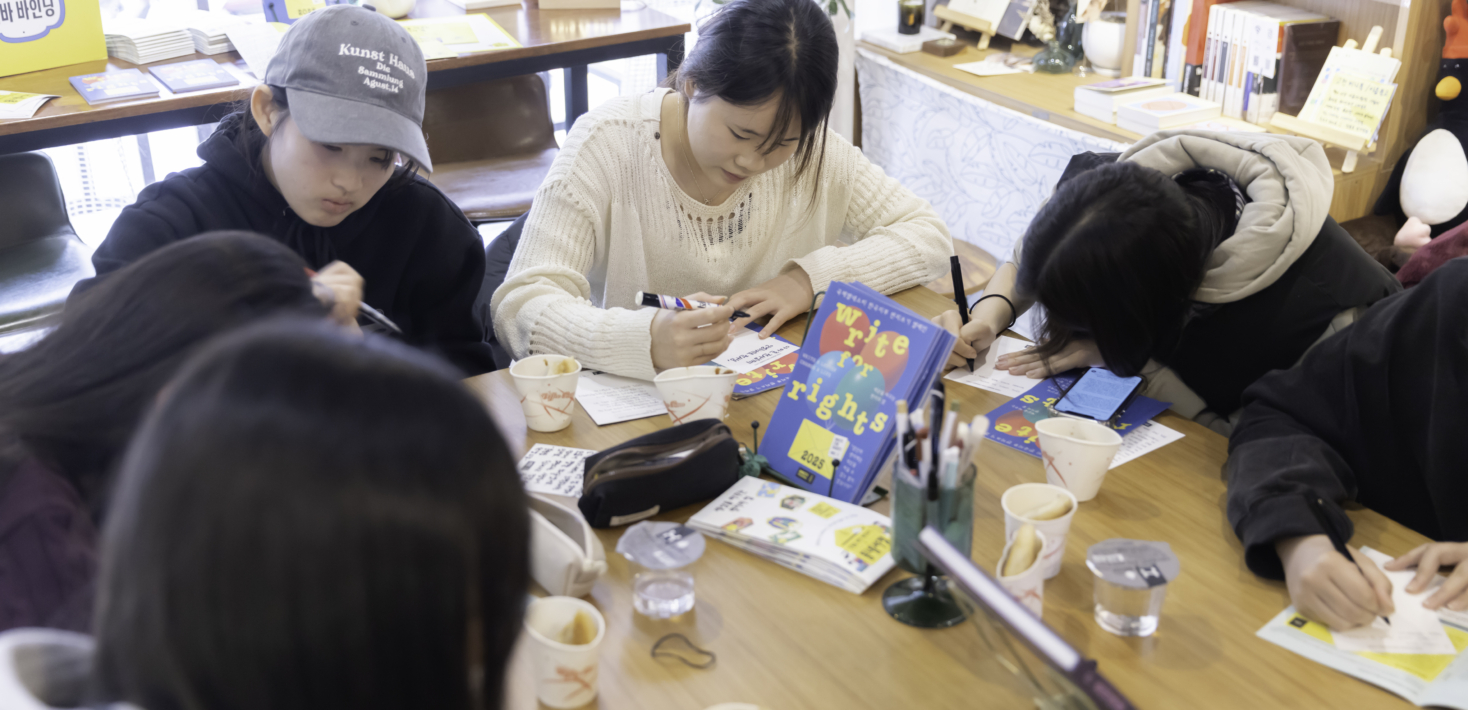


Every year around 10 December – Human Rights Day – Amnesty International’s Write for Rights campaign brings millions of people together to stand in solidarity with individuals and communities facing human rights violations.
Around the world, people write letters, sign petitions, create artwork, learn together, and take action to demand justice. Year after year, these collective actions have helped change lives, showing that borders are no barrier to solidarity and that words have the power to inspire hope and drive change.
Human rights education is a central part of that movement. Alongside taking action, people come together to understand the issues behind each Individual at Risk case, reflect on why human rights matter and explore how solidarity can help protect them.
About the human rights education resources
The Write for Rights 2026 Human Rights Education resources help teachers, educators and facilitators engage learners in meaningful learning about human rights and support them to take informed action.
The resources can be used in classrooms, community groups, youth groups, activist spaces, and other learning settings. They are designed to be flexible, allowing educators to adapt them to different audiences, lesson lengths, and teaching contexts.
Each resource follows a three-part modular structure, making it possible to deliver a complete 60-minute learning journey, use individual 20-minute modules as standalone activities, or combine modules to suit the time available. This flexibility makes it easier to adapt the resources to different settings while keeping learning and action connected.
As a facilitator, you are encouraged to adapt each activity to your group’s prior knowledge, age range, learning needs, available time and whether you are working in person or online.
What’s included this year?
This year’s Human Rights Education resources explore three interconnected human rights themes through real Write for Rights Individuals at Risk’s cases from around the world.
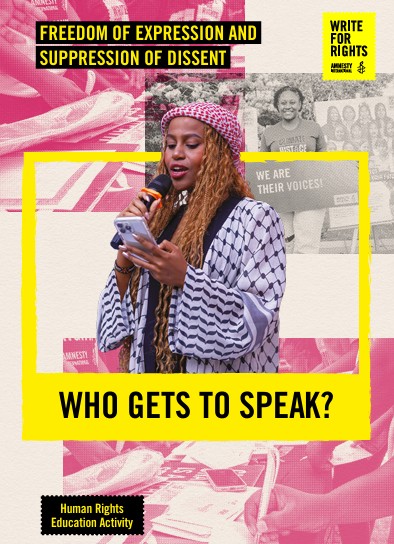
1. Freedom of Expression and Suppression of Dissent
Discover the stories of Rokiatou Doumbia (Mali), Ruth Eleonora López (El Salvador), Imaan Mazari and Hadi Ali Chattha (Pakistan), and Ayachi Hammami (Tunisia) to examine why speaking out, defending rights, and challenging injustice matter.
This theme explores how individuals are punished for speaking out, criticizing those in power, exposing information, or publicly defending human rights online or offline.
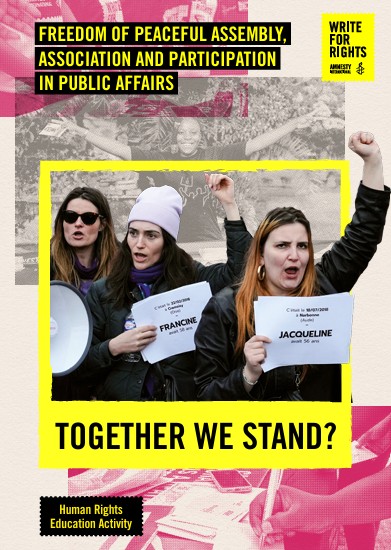
2. Freedom of Peaceful Assembly, Association and Participation in Public Affairs
Learn from the experiences of Owen Chow (Hong Kong), Daria Egereva (Russia), and Marwa Arafa (Egypt) to explore why people come together to organise, defend communities, celebrate identity, and participate in public life.
This theme explores restrictions on people’s ability to organise collectively, express their identity, defend their communities, and participate in civic and social movements.
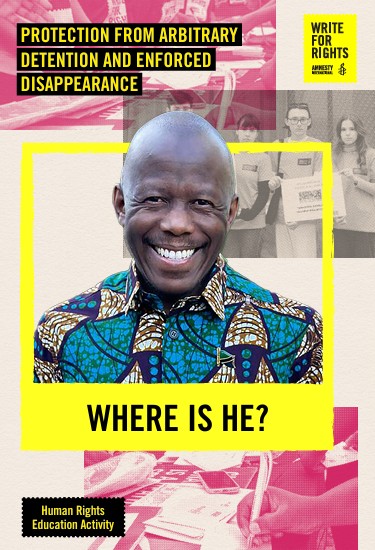
3. Protection from Arbitrary Detention and Enforced Disappearance
Explore the story of Humphrey Polepole (Tanzania) to understand why legal safeguards, fair treatment, and justice matter when people’s liberty is at risk. This theme explores what happens when legal systems fail to protect individuals. It focuses on rights that safeguard people from arbitrary detention, torture, enforced disappearance, and other serious abuses committed by state authorities.
Learning through participation
This approach helps learners to:
- develop critical thinking, communication, and collaboration skills.
- deepen their understanding of human rights through discussion and reflection.
- connect with real stories while respecting different experiences and perspectives.
- build empathy and recognise our shared humanity; and
- take informed, meaningful action in solidarity with people whose rights are under threat.
By bringing together learning, reflection and action, the Write for Rights Human Rights Education resources help learners understand not only what human rights are, but also why protecting them matters for everyone.