
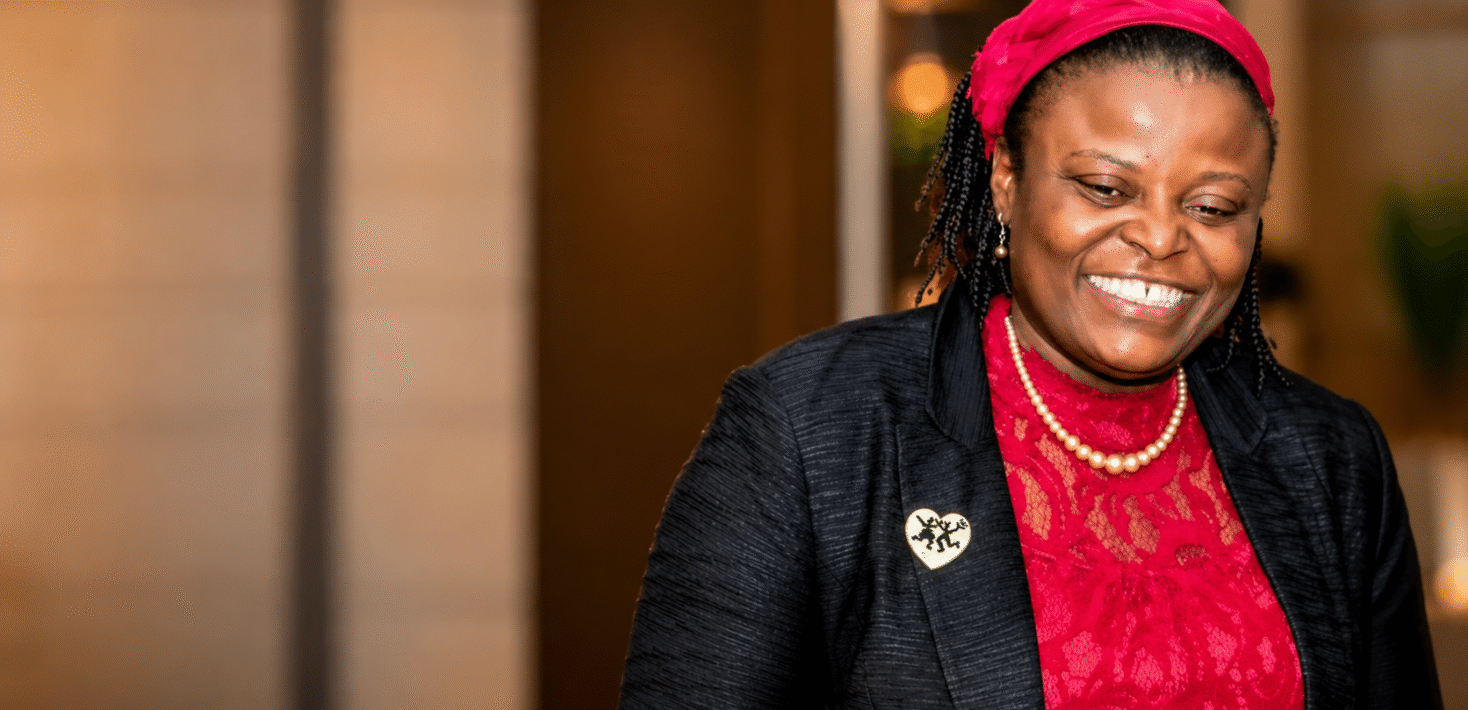


Interview with Tina Nadine Anilus, founder of REFKAD, by Paloma Meurinne, a volunteer with the Caribbean team at Amnesty International’s Regional Office for the Americas
For more than fifteen years, Tina Nadine Anilus has been building what the Haitian state has been unable—or unwilling—to guarantee: a safe, dignified and accessible space for women and girls.
Every 25 July, the International Day of Afro-Latin American, Afro-Caribbean and Diaspora Women reminds us that Black women do more than survive the crises surrounding them. They are also the ones sustaining life in the midst of them.
In Haiti, Tina Nadine Anilus has spent more than fifteen years doing exactly that. As the founder of REFKAD (Rezo Fanm Kapab d’Ayiti), she has created spaces offering protection, listening and support to women and girls in one of the most complex humanitarian contexts in the Americas.
In this conversation, she reflects on resistance, the leadership of Haitian women and what the world still fails to understand about Haiti.
When did you realize that Haitian women could no longer wait for the state?
After the 2010 earthquake, it became clear that women and girls needed much more than promises. They needed a safe place where they could feel protected, heard and supported.
That is why I founded REFKAD on 25 November that same year. What began as a personal commitment became a collective dream built together with the community. Today, we are a network of more than 30 organizations and have supported more than 30,000 people.
I never thought only about creating an organization. I thought about building a space where women would know they were not alone.
What does resistance look like for a Haitian woman today?
Many people imagine resistance as a major protest or a public speech. But in Haiti, resistance often means something much more ordinary.
It means opening the door to a woman who has nowhere to sleep. It means listening to a survivor when no one else is willing to. It means helping a girl return to school. It means holding a community together when institutions have disappeared.
“Haitian resilience is not a slogan. It is the price of the state’s absence, and proof of a nation that resists and continues to fight.”
— Tina Nadine Anilus
You often say that Haiti is not a failed country, but a betrayed country. Why?
Because behind every image of violence, there is a people who remain standing.
When the world talks about Haiti, it almost always talks about disasters, poverty or violence. It rarely talks about the people who keep this country alive every day.
“Haiti is not a failed country. Haiti is a betrayed country.”
— Tina Nadine Anilus
Haiti has been failed because it has been abandoned too many times.
What does the world still fail to understand about Haiti?
That people talk about Haiti without Haitian women.
Local organizations have sustained this country through every crisis. Yet international aid too often arrives without listening to us or trusting those who are already doing the work.
The greatest sign of respect would be to strengthen Haitian organizations and allow us to lead the response.
We are asking the world for consistency.
You have said that women’s bodies have become a territory of war. What does that mean?
It means that sexual violence is no longer merely a consequence of the conflict. It has become a tool of the conflict. Gangs use sexual violence to spread terror, displace communities and control territory.
When a woman’s body is turned into a message of power, the whole of society is harmed.
What happens when a woman arrives at REFKAD?
The first thing we do is listen to her.
Then we provide medical care, legal assistance, psychological support and, when necessary, a safe place to stay.
Our motto in Haitian Creole sums up everything we do:
N ap Tandew, Nou kwè w, An n Pale pou sa chanje.
“We hear you. We believe you. Let us talk so that things can change.”
Many women tell us it is the first time someone has believed them. Sometimes, that is the first step towards rebuilding a life.
You also decided to enter politics. What did you learn from that experience?
In 2015, I ran for a seat in parliament representing the commune of Carrefour, in Port-au-Prince. It was a campaign marked by violence. One of my supporters was attacked with a knife for putting up a photograph of me, and on election day, young people supporting my campaign were beaten and expelled from polling stations.
I could have given up.
Instead, it confirmed something I already knew: Black Haitian women have the right to occupy the spaces where decisions affecting our lives are made.
If you could sit across from the people making decisions about Haiti today, what would you tell them?
Stop thinking about Haiti only when it appears in the headlines.
Listen to local organizations before designing solutions for our country.
Trust Haitian women.
We are more than beneficiaries of humanitarian aid. We are the ones who have sustained this country for years.
How do you imagine the future you want to build?
I dream of a Women’s House.
A place where a survivor could find accommodation, medical care, legal assistance, psychological support, training and a safe space for her children—all under one roof.
But above all, I dream of a Haiti where women do not have to choose between fear and flight.
Where justice is not a privilege.
And where our voices are part of every decision that affects our lives.
Finally, what does the International Day of Afro-Latin American, Afro-Caribbean and Diaspora Women mean to you?
It is a reminder that Black women are more than people affected by crises. We are the ones sustaining life in the midst of them.
We organize.
We care.
We rebuild.
We remain.
I am still in Carrefour, doing what I have done for more than fifteen years: fighting so that other women can live with dignity.