Overview
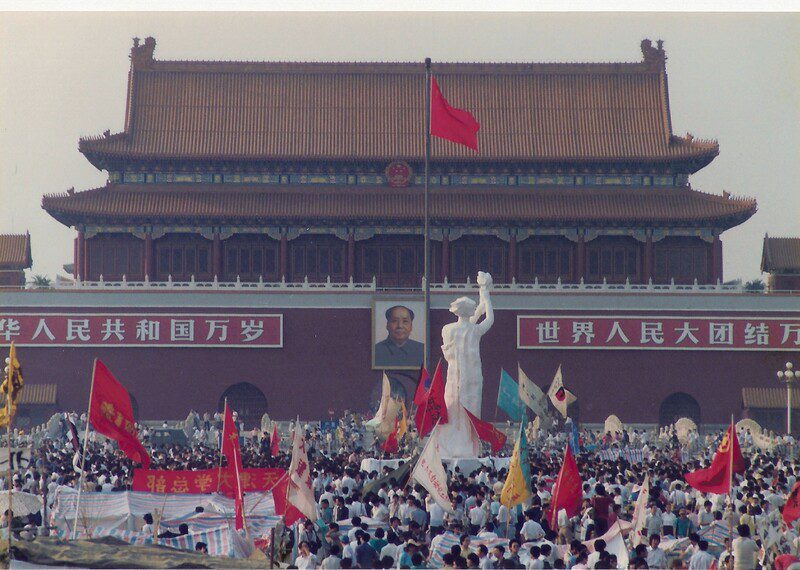
On 4 June 1989, Chinese troops opened fire on students, workers and others who had been peacefully protesting for political reform in and around Beijing’s Tiananmen Square. The demonstrations, which began in April, called for an end to corruption, greater political accountability, and respect for freedoms such as expression and assembly. Protesters gathered in large numbers, engaging in marches, sit-ins and hunger strikes, largely in a peaceful manner.
Soldiers advanced into the city using live ammunition and armoured vehicles, firing on unarmed crowds. Hundreds—possibly thousands—of people were killed, including students, workers, children and older persons. Many more were injured in the violence.
In the aftermath, authorities carried out a nationwide campaign of repression. Tens of thousands of people were arrested, detained or imprisoned, and many faced harsh sentences. In the decades since, the Chinese government has strictly censored public discussion of the events, seeking to erase them from collective memory. Despite this, commemorations and calls for truth, justice and accountability continue around the world.
In 2026, for the first time, authorities reportedly banned families of the June Fourth victims from visiting cemeteries to mourn their loved ones, underscoring an intensifying pattern of repression.
Join us in commemorating the crackdown, and show your solidarity to activists.
Read on for more information.
What were the protests about?
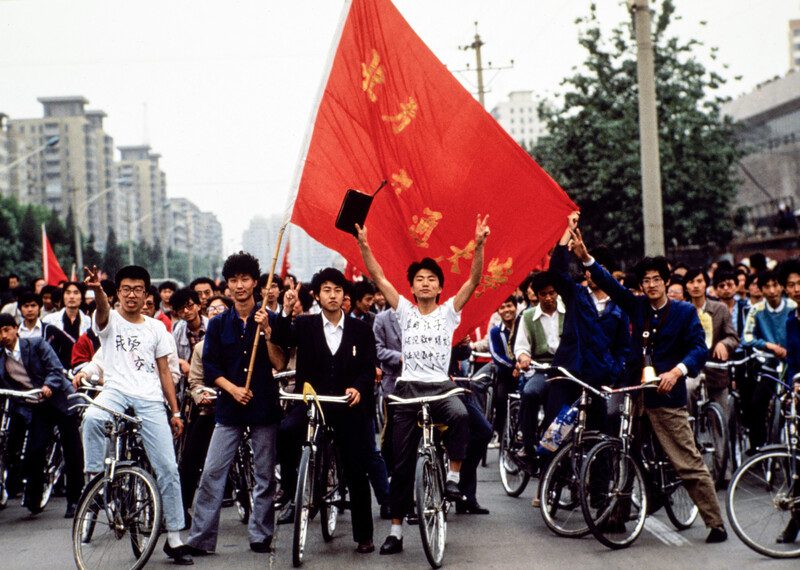
In April 1989, university students in Beijing gathered in Tiananmen Square to draw up a list of demands broadly centred on political and economic reforms, but also including calls for an end to corruption, censorship and limits on basic rights. In the weeks that followed, their demands drew wide public support, from pensioners to veterans to farmers. Millions joined peaceful demonstrations that took place across China.
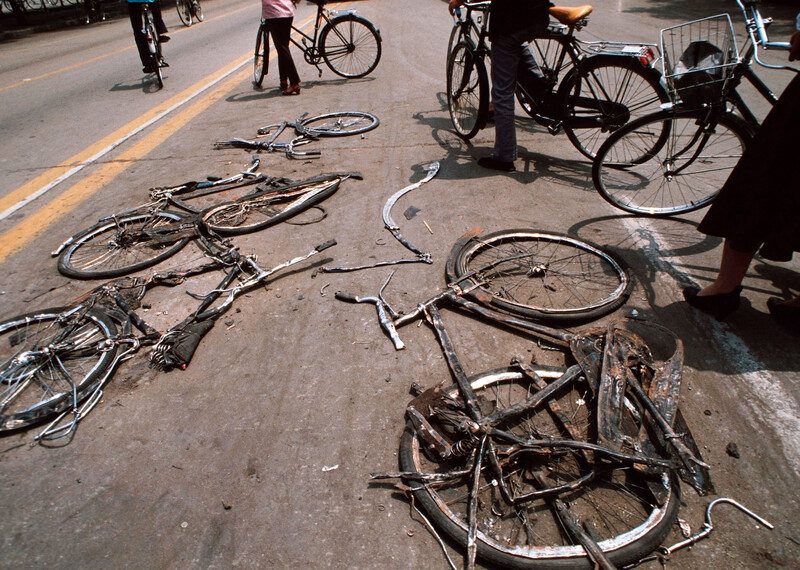
The demonstrators did not stop despite pressure by the Chinese authorities failed. As tensions escalated in Beijing, martial law was declared on 20 May 1989. On the night of 3 June 1989, heavily armed troops and hundreds of armoured vehicles moved into the city centre to ‘clear’ the pro-democracy demonstrators from Tiananmen Square.
How many people were killed?
An official report issued by the Chinese authorities at the end of June 1989 claimed that “more than 3,000 civilians were wounded and over 200, including 36 college students, died during the riot”. The report also stated that several dozen soldiers died. While the exact figures remain unknown, the official death toll is likely a serious under-reporting.
How has the Chinese government responded?
Immediately after the military crackdown, the authorities began to hunt down those involved in the demonstrations. Many participants were detained, tortured, or imprisoned after unfair trials. Many were charged with ‘counter-revolutionary’ crimes.
In the decades since, all discussion of the incident has been heavily censored in China, as authorities have effectively attempted to erase it from history. Public commemoration or mere mention, online or off, of the Tiananmen crackdown is banned.
Activists in mainland China, from 1989 until today, have been detained and charged with “subversion” or “picking quarrels” if they commemorate those who were killed, call for the release of prisoners or criticize government actions during the Tiananmen crackdown.
The government has never accepted responsibility for the human rights violations during and after the military crackdown or held any suspected perpetrator accountable. With each year that passes, justice becomes ever more elusive.
Who has tried to commemorate Tiananmen in China?
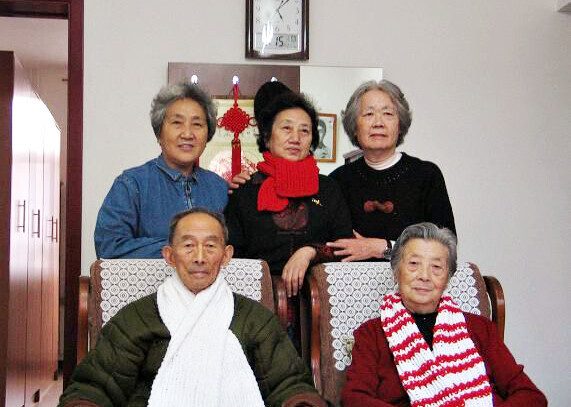
Commemorating the Tiananmen crackdown has long been forbidden in mainland China. Despite the risks, relatives of victims, survivors and human rights defenders have come together to remember this day.
Like the Mothers of the Plaza de Mayo in Argentina or the Saturday Mothers in Turkey, Tiananmen mothers and others have spent years collecting their own tally of fatalities, while seeking a full government account of the deaths, compensation according to the law and investigation of criminal responsibility. For this advocacy, they have regularly faced intimidation, harassment, house arrest and other measures aiming to silence them. As they age, their fight to remember risks fading.
Civil society groups and activists have also sought to document what happened in Tiananmen as part of public archive. For example, ahead of the 25th anniversary in 2014, Amnesty International documented a sweeping crackdown by the authorities in which at least 66 people were detained, placed under house arrest, forcibly relocated or disappeared in connection with commemoration activities. Authorities targeted activists, lawyers and even older members of the Tiananmen Mothers, demonstrating a willingness to ‘stop at nothing’ to prevent any form of remembrance.
Beyond individual testimonies, activists have sought to preserve memory in increasingly creative ways – from archiving materials and sharing information on online platform GitHub to selling Tiananmen “branded” liquor (baijiu, a near homophone for ba-jiu or “89”, the year of the crackdown). Yet most of these efforts are quickly quashed by authorities, whether through online censorship or the pursuit of groundless criminal cases.
What about commemorating Tiananmen in Hong Kong?
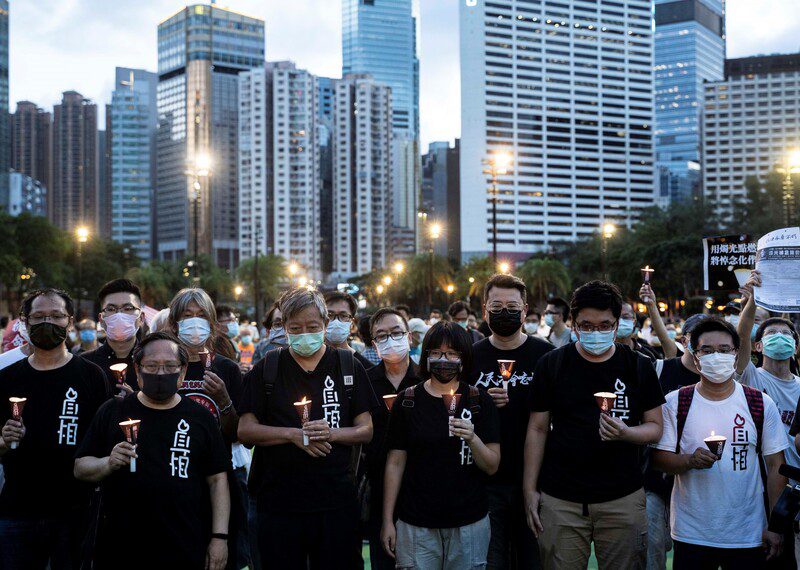
Every year on 4 June from 1990 to 2019, people joined a candlelight vigil in Hong Kong’s Victoria Park to remember those killed. Sometimes the crowds were in their hundreds of thousands. They called on the Chinese authorities to reveal the truth about what happened and accept accountability for the fatalities. These peaceful gatherings, allowed by the local authorities, were the only mass commemorations of Tiananmen on Chinese soil.
The Hong Kong vigil was banned in 2020 and 2021, ostensibly on Covid-19 grounds. Since then repressive new laws such as the 2020 National Security Law and “Article 23” legislation have effectively criminalized peaceful protest in the city. The Hong Kong Tiananmen vigil had been organized for 30 years by the Hong Kong Alliance in Support of Patriotic Democratic Movements of China (Hong Kong Alliance), a civil society group whose leadership was targeted under the National Security Law and stood trial in 2026.
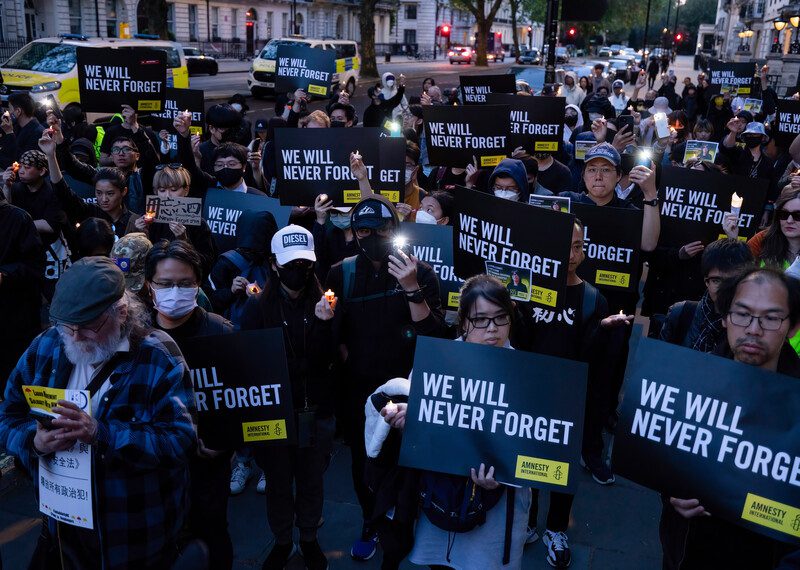
No formal vigils have taken place in Hong Kong since 2020, and activists attempting to do so face imprisonment. However, candles are still lit in many other cities around the globe, in remembrance of those killed in the 1989 Beijing crackdown and in solidarity with Hong Kong.
What is Amnesty doing?
Amnesty International has consistently demanded justice for those killed or unjustly jailed in the Tiananmen crackdown, and for those who have been targeted for commemorating it in the years since.
Amnesty International conducts research into the legal frameworks used to criminalize fundamental freedoms in mainland China and, increasingly, Hong Kong, and engages in advocacy with a wide range of stakeholders, including multilateral bodies and government officials. The ultimate goal of this work is to promote reforms of Chinese law and practice that would allow space for civil society groups and human rights defenders in the country – and working in the diaspora – to document human rights violations, support survivors and pursue accountability.
Despite the authorities’ suppression of any activism related to the crackdown, people in Hong Kong, in mainland China, and across the world continue to fight for the rights to freedom of peaceful assembly and expression in China. Every year on 4 June, Amnesty International stands with them to commemorate the anniversary and continue the search for truth and justice.
Case In Focus: Huang Qi
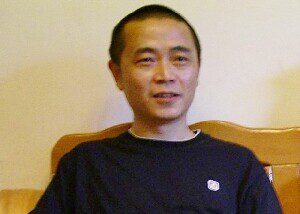
Huang Qi is the founder of 64 Tianwang, a crowd-sourced website in mainland China that documents the stories of people whose suffering would otherwise remain invisible; including the victims and survivors of the Tiananmen crackdown. He was sentenced in 2019 to 12 years in prison on “state secrets” charges.
During his detention, concerns have been raised about his deteriorating health, and his access to both his family and legal counsel has been highly restricted.
His mother, Pu Wenqing, is 93 years old and has long been suffering from serious illnesses, including cancer. She has also been placed under strict surveillance and is not permitted to have contact with the outside world. Despite this, she has persisted in seeking justice for Huang Qi.
“I want to leave this world, but I still want to see my son Huang Qi for the last time.”
Case In Focus: Chow Hang-Tung and Lee Cheuk-Yan
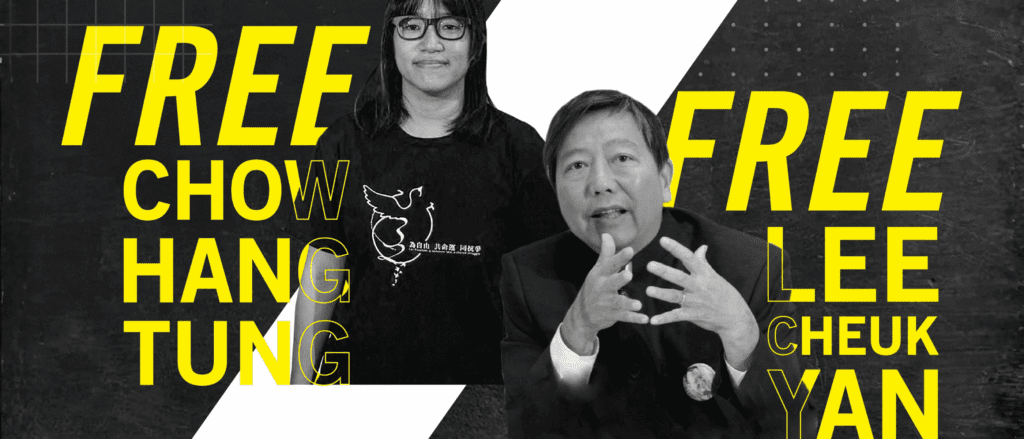
Since September 2021, authorities have detained Hong Kong Alliance Vice-Chairperson Chow Hang-tung and Chairperson Lee Cheuk-yan on charges of inciting subversion of state power. under the National Security Law. Their so-called crime: commemorating the Tiananmen crackdown. After over four years of detention without bail, they face up to 10 years’ imprisonment.
Chow, Lee and more than 20 other activists were prosecuted in 2020 simply because they insisted on lighting candles in Victoria Park despite the government prohibiting the vigil that year. In 2021, after the police banned the vigil once again, Chow was arrested on 4 June after encouraging people on social media to commemorate the crackdown by lighting candles.
Ultimately, Chow and Lee were charged with “inciting subversion” under the National Security Law for their roles in the Hong Kong Alliance. Their trial began in January 2026 and concluded in May 2026, with the verdict expected to be announced in July 2026.
To date, they have been unjustly detained for more than 1,700 days solely for exercising their rights to freedom of expression, association and peaceful assembly. Both Chow and Lee have consistently maintained their innocence in the trial. Their legitimate calls to Chinese authorities to disclose the truth about the Tiananmen crackdown – and their roles in the Hong Kong Alliance – should never have been used as grounds for prosecution.
keep the light of tiananmen alive
With public commemoration banned in China, it’s up to us – overseas, online, and united – to carry the memory forward.
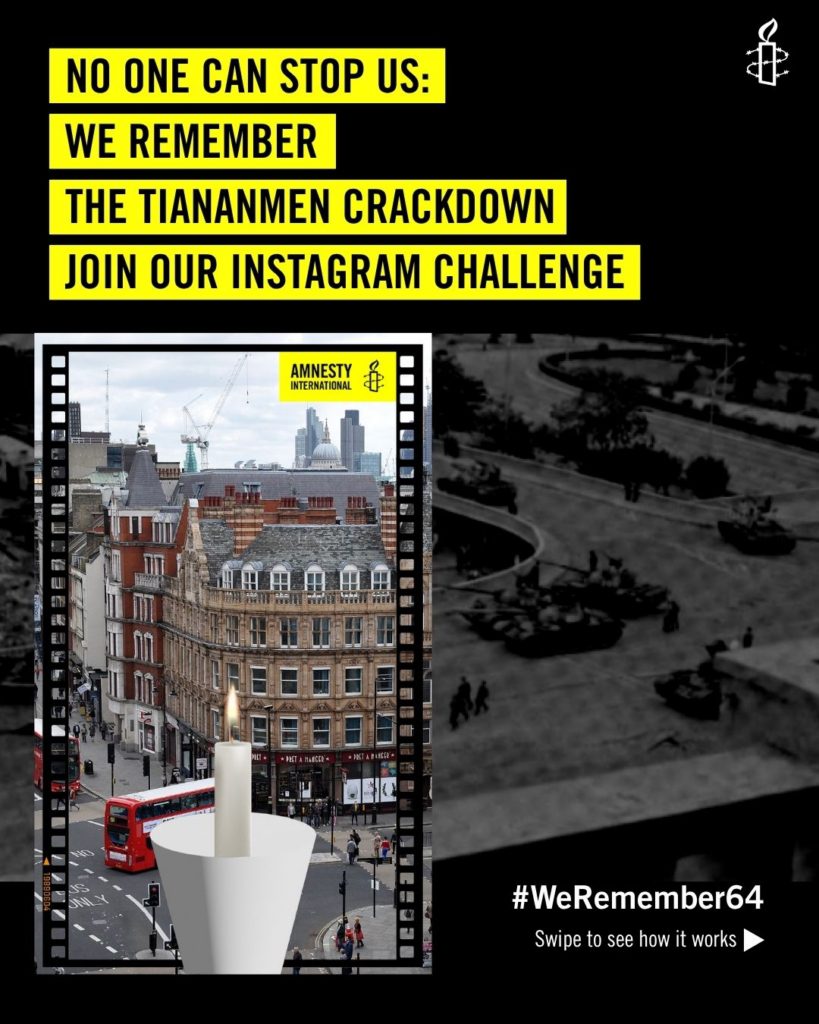
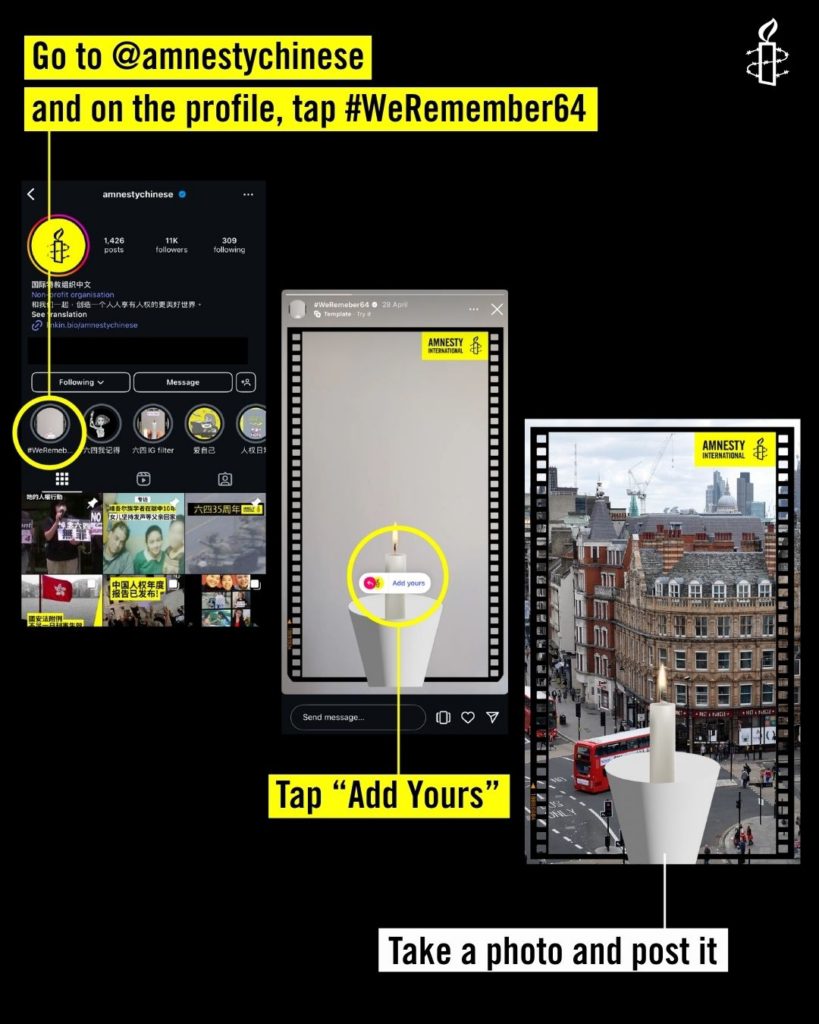
No one can stop us from remembering. Join our Instagram challenge by using our “Remembering Tiananmen Square” Instagram filter.
Let’s hear from the voices of resistance.