


Authorities across Gulf states have arrested more than 1,000 people in a sweeping, war-related crackdown on expression, including for sharing online content or expressing views related to the US-Israeli war with Iran and Iran’s attacks on the Gulf, Amnesty International said today. In Kuwait and Bahrain, authorities have also stripped citizens of their nationality, including in reprisal for expression.
After the war began, citing national security concerns, authorities across the Gulf Cooperation Council (GCC), including Kuwait, Bahrain, the United Arab Emirates (UAE), Qatar, Saudi Arabia and Oman, issued blanket warnings against sharing online content that spreads “rumours” or “false information” about the war or comes from “unknown sources.” Soon after, multiple Gulf states began announcing mass arrests.
“While Gulf states may take measures to address misinformation and protect national security, and may derogate from certain rights during armed conflict, any restriction on freedom of expression must meet strict international human rights standards. Derogations must be clearly and precisely provided by law, pursue a legitimate aim, and be strictly necessary and proportionate. Blanket restrictions and the sweeping criminalization of information-sharing fail to meet these requirements,” said Heba Morayef, Amnesty International’s Regional Director for the Middle East and North Africa.
“In a bid to protect their glossy image as safe havens, Gulf states have used their usual heavy-handed authoritarian approach to control information and weaponized vaguely worded and overly broad provisions of cybercrime, counter-terror and national security laws. This goes far beyond what is permitted under international law.”
Amnesty International spoke to 16 people, including a journalist, community activists, citizens and residents of the GCC, and family members of people detained, most of whom requested anonymity for fear of reprisals. The organization documented eight cases of expression-related arrests.
The organization also reviewed official statements by GCC authorities, including blanket warnings and announcements of hundreds of expression-related arrests, and reviewed cases reported by local media and foreign embassies and documented by local human rights groups.
A regional crackdown on war-related expression
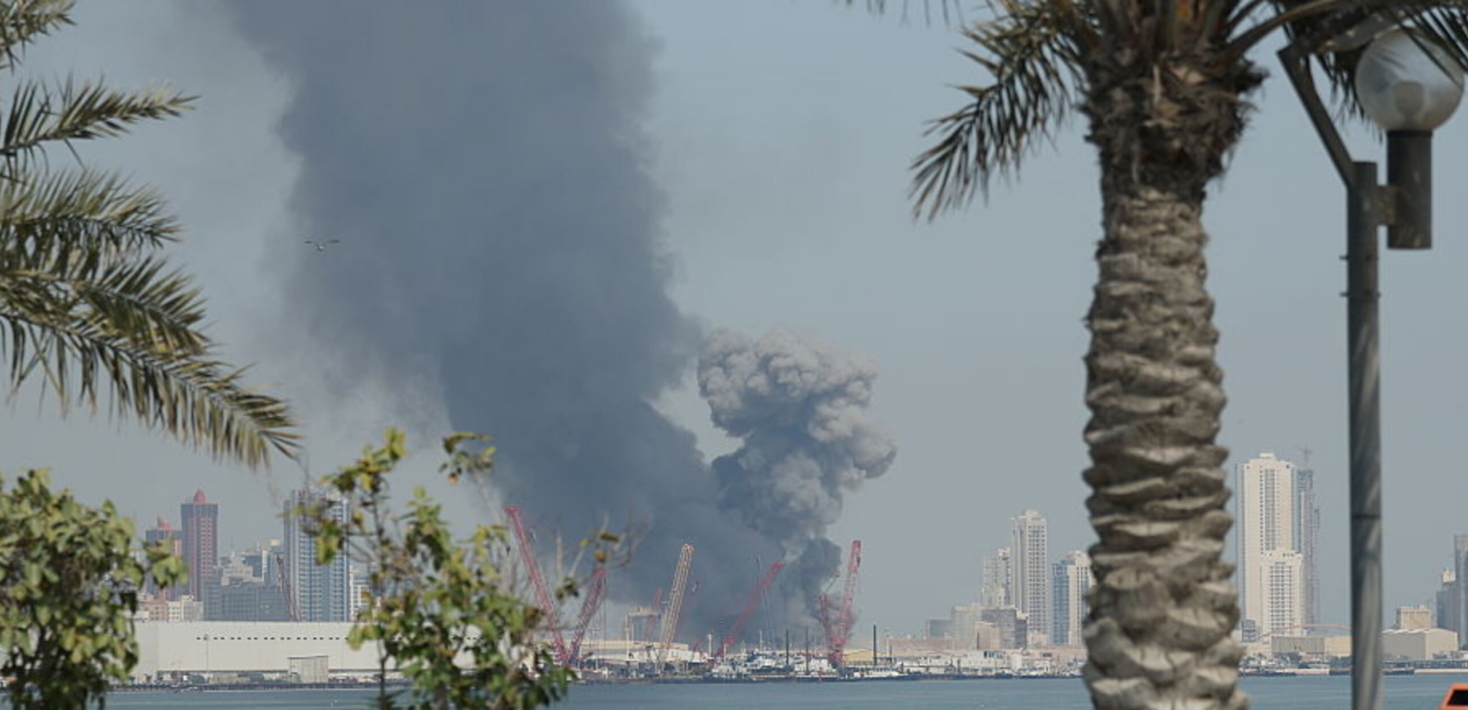
Authorities in Kuwait, Bahrain, the UAE and Qatar issued official statements announcing their arrests of hundreds of people for filming and sharing videos, circulating clips documenting the interception of missiles or posting footage of projectile damage.
In several cases, arrests have been made for “glorifying” a hostile state and its military leadership, which appears to refer to expressing sympathy with Iran, or reposting online content expressing solidarity with the Iranian people, or mourning late Iran’s supreme leader and commander-in-chief, Ali Khamenei.
Authorities in some GCC states have also investigated or prosecuted those accused of circulating “misleading information” or “false news, rumours or provocative propaganda,” including artificial intelligence content or footage falsely claiming incidents occurred.
Criminal courts in Kuwait and Bahrain have issued prison sentences ranging between three and 10 years against dozens of people after hastily scheduled trials for the posting or sharing of war-related content.
Gulf states have used their usual heavy-handed authoritarian approach to control information and weaponized vaguely worded and overly broad provisions of cybercrime, counter-terror and national security laws.
Heba Morayef, Amnesty International
After the war started, Omani authorities, like other GCC states, warned, on 3 March, that those responsible for publishing “rumours and unverified information” would be held legally accountable under the law. Authorities in Oman have not subsequently announced any expression-related arrests.
“Since the war began, the public information released by Gulf states has been extremely limited with states seeking to control the narrative about the impact of Iranian attacks on daily life in the GCC. This stranglehold on information, particularly in a time of war, added to a climate of confusion and made it hard for residents to obtain information they need. It will also make it more difficult to document the harm caused by Iranian strikes,” said Heba Morayef.
Kuwait
Between 1 and 30 March, the Kuwaiti government announced the arrest of 33 people, including at least three women and one foreign national. According to the Ministry of Interior, those arrested since the start of the war have included people accused of posting content sympathizing with “terrorist groups,” sharing videos deemed harmful to national security or “mocking security agencies,” “spreading false information,” or using drones to film without authorization.
The number of reported prosecutions in Kuwait is much higher than the number of reported arrests. On 23 April, 1 and 7 May, a first instance state security court, established in early April with exclusive jurisdiction over offences related to internal and external state security, issued rulings against 204 defendants in connection with charges of expressing sympathy with “the Iranian aggression,” “inciting sectarian strife,” and “disseminating false news,” according to local media.
The court suspended punishment for the majority, acquitted some, and sentenced 23 people to three years in prison, one person to five years in prison, and one person to 10 years in prison.
Among those arrested and tried was prominent journalist Ahmed Shihab-Eldin, who was detained by plain clothes officers on 3 March without a warrant, solely for re-posting images related to the war that had been published by international media organizations. He was held for 52 days, brought to trial on charges of spreading false information, harming national security, and misusing his mobile phone. He was acquitted by a court on 23 April of one charge and the court suspended punishment on two other charges.
Kuwaiti authorities arrested another man in early March after he posted content mourning Iran’s late supreme leader and commander-in-chief, Ali Khamenei. He was detained incommunicado for five days, during which he was held at the State Security Apparatus where agents questioned him without a lawyer present. Later, the prosecutor investigated him in connection with charges of “harming national interests,” “misuse of a mobile phone,” “inciting sectarian strife,” and “hindering national unity.”
Since the war began, Kuwait has introduced a series of sweeping legal and judicial measures that significantly expand the state’s powers in the name of “combating terrorism” and protecting national security. On 15 March, the Council of Ministers issued Law No. 47 of 2026 on Combating Terrorism, which uses a broad definition of “terrorist acts” to include acts aimed at “compelling a public authority to perform or refrain from performing any act,” which can involve politically-motivated actions aimed at influencing government’s decisions, and elevates life sentences to the death penalty. On the same day, authorities issued Law No. 13 of 2026, criminalizing publishing “false rumours” related to military entities with prison terms of up to 10 years.
On 13 April, Kuwait also passed amendments to the Kuwaiti Nationality Law, which permit the authorities to strip individuals of their nationality “if the supreme interests of the state or its external security so require” or if the authorities have “serious evidence that a person has promoted principles liable to undermine the country’s economic, social, or political system, or belongs to a foreign political organization”.
On 26 April, the authorities announced that they had stripped more than 1,200 people of their nationality via a decree issued by the Emir, which did not provide reasons. Two people living in Kuwait told Amnesty International that the denaturalization decisions have created a climate of fear and are deterring people from exercising their right to freedom of expression.
Kuwait had previously stripped some critics of their nationality in 2024.
On 7 May, the authorities stripped the father of Fawaz Al-Kathiri, a UK-based Kuwaiti critic of the government, along with anyone who acquired nationality through him, of their nationality. Prior to his father’s denaturalization, Fawaz Al-Kathiri had published videos critical of Kuwait’s response to the Iranian attacks and the arrests of individuals over social media posts related to the war, among other videos critical of the government. The decree issued by the Emir did not provide reasons for the revocation. In July 2025, the authorities had stripped Fawaz Al-Kathiri himself of nationality, along with his children, without providing reasons.
Bahrain
Bahraini authorities announced the arrest of 47 people between 1 and 14 March – including six foreign nationals – for online content related to Iranian attacks. On 1 March, authorities had warned people to refrain from publishing or circulating rumours, information or news “not issued by the Kingdom’s official authorities”
Documentation compiled by several Bahraini human rights defenders and organizations, including Al Amal Center for Human Rights and Justice and The Bahrain Institute for Rights and Democracy (BIRD), shared with Amnesty International indicates the numbers of those arrested in the war-related crackdown are much higher. According to this documentation, more than 303 people have been arrested in Bahrain as of 5 May, including following protests mourning Iran’s former Supreme Leader and commander-in-chief, Ali Khamenei. At least 38 were later released, according to the human rights groups and defenders.
A lawyer representing several detainees told Amnesty International that at least six were denied access to legal counsel during interrogations and that lawyers were barred from entering prosecution buildings.
Among those arrested was 26-year-old artist Mansour Yassin, detained for creating a graphic depicting the hand of Iran’s former Supreme Leader and commander-in-chief and accused along with five others of “expressing sympathy with” and “glorifying hostile acts” by Iran. He was held for around one month before being released.
On 28 April and 12 May, the Public Prosecution announced in two separate statements that a criminal court had sentenced 34 people, to fines and prison terms ranging from one to 10 years for supporting and endorsing “Iran’s terrorist attacks against the Kingdom,” “obtaining and disseminating prohibited sensitive data,” “photographing restricted locations,” and “spreading false news and rumours through social media.”
On 27 April, the authorities had announced they were stripping 69 people of nationality, along with their families, because they had expressed sympathy for and glorified “the criminal hostile acts of Iran” or “engaged in collusion with external parties.” On the following day, Bahrain’s parliament passed a royal decree introducing amendments to the law governing the judiciary, abolishing judicial review over citizenship matters and effectively barring individuals from challenging or appealing decisions to revoke nationality.
Amnesty International documented the case of one person whose nationality was stripped, along with that of a family member. Neither was formally charged with a crime. On 18 March, Ali was summoned to the Cybercrime Police Directorate, via a phone call. He was not told the reason for the summons. He went to the Cybercrime Office the same day, where officers questioned him about a video he had reposted on social media on 28 February showing an Iranian attack on a US base in Bahrain.
Ali said he informed the officers he had removed the video about three hours after reposting it and had then shared a Ministry of Interior statement warning against sharing videos of the attacks. The officers examined his mobile phone and confirmed his account. They later told him there had been a misunderstanding and since his criminal record was clean, he only needed to sign a pledge affirming his loyalty to Bahrain and promising not to publish content that could harm the country, which he did.
On 27 April, the Bahraini Immigration Authority summoned Ali and requested that he surrender both his and his family member’s national identity cards, informing him that their nationality had been revoked. He handed over the documents the following day. When he asked about the reasons for the decision, employees at the authority told him that these were “sovereign decisions” and they were “just following orders.”
On 9 May, Bahraini authorities removed Ali and his family member to another country after Bahrain authorities issued them one-year passports marked with the letter “R”, which may stand for “revoked”.
International human rights law strictly prohibits arbitrary deprivation of nationality, and states cannot strip individuals or their families of citizenship as punishment for peacefully expressing political views or alleged sympathies. Even where authorities claim involvement in hostile or violent acts, any revocation of nationality must be based on clear, individualized evidence; follow due process; and meet the tests of legality, legitimate purpose, and strict necessity and proportionality.
UAE
On 3 March, the UAE’s state security department issued directives prohibiting residents from photographing, publishing or circulating unconfirmed or fabricated content, citing security concerns. Between 3 March and 8 April, the Emirati authorities announced sweeping arrests and detentions of at least 375 individuals. According to official statements, they stand accused of committing acts such as publishing and circulating real or fabricated video or other visual content, which are not recognizable crimes under international law.
In one incident on 20 March, Abu Dhabi police announced the arrest of 109 people of different nationalities who “filmed sites and events and circulated false information via social media platforms” stating it could “incite public opinion and spread rumours.” Official statements also said they had arrested people for “publishing content glorifying a hostile state and its political and military leadership.”
Under international law, the filming of an area impacted by an air strike and the dissemination of videos, reporting or opinion related to a conflict are generally protected under the right to freedom of expression and cannot be grounds for arrest or criminal prosecution. Any arrest or prosecution for such activity must meet the requirements of legality, legitimate aim, necessity and proportionality.
By late March, there were reports of dozens of British nationals detained in the UAE for taking photos or videos of Iranian attacks, as well as police conducting door-to-door phone inspections in areas affected by drone strikes, and dozens of prominent media accounts becoming inaccessible to users in the UAE after sharing videos of attacks.
In March 2026, UAE authorities requested that Meta restrict access to 18 Facebook and Instagram accounts for “reporting on regional geo-political conflicts and security developments”. Meta said it found the content did not violate its Community Standards but nevertheless restricted access.
The UAE’s draconian Cybercrimes Law, Federal Law no. 34 of 2021, prohibits sharing information deemed “misleading” or harmful to the “state reputation.” This operates alongside the Penal Code and other national security laws that criminalize criticism of the authorities, dissemination of sensitive information, and expression deemed to undermine state institutions.
Qatar
On 28 February, Qatari authorities issued a blanket warning, telling the public to refrain from engaging with rumours or circulating unverified video clips or sharing sensitive content. Authorities later announced 313 arrests of people of different nationalities between 28 February and 9 March for filming and sharing videos and circulating “misleading information” and rumours that could “stir public opinion,” neither of which are recognizable offences under international law
Under Qatar’s 2014 cybercrimes law, authorities continue to criminalize the creation or dissemination of online content deemed harmful to “social values”, “public order,” and other overly broad and vaguely worded provisions that facilitate the authorities’ restriction on the right to expression, including peaceful dissent.
Saudi Arabia
On 2 March, the Saudi Ministry of Interior issued a blanket warning ordering the public to rely exclusively on official sources for information. Unlike other GCC states, authorities have not subsequently announced any expression-related arrests.
But Amnesty International found that at least three foreign nationals in Saudi Arabia were detained over their war-related online posts. Diplomatic sources in March reported the arrest of their nationals in two cases from Nepal and the Philippines, and Amnesty International documented one war-related expression arrest.
One individual was detained after sharing videos of air strikes, while another was detained for sharing videos and other content the authorities deemed “misleading” in relation to the war. A third individual was detained after expressing sympathy for other parties to the conflict.
According to Meta in April 2026, Saudi Arabia requested the platform restrict access to 144 social media accounts and pages over content related to “regional geopolitical conflicts, security developments, political satire” or “deemed to contravene religious sensitivities” citing the Anti-Cybercrime Law. Meta removed or restricted access.
Restrictions are fuelling a climate of fear. In one instance, after a strike on a petrochemical complex, a worker shared photos of the impact but deleted them almost immediately out of fear. As he left his dormitory, officials searched his phone and those of his colleagues to ensure no information had been shared.
A journalist based in Riyadh, speaking on condition of anonymity, told Amnesty International that restrictions significantly hindered their ability to identify witnesses and document incidents.
“No one speaks openly about what is happening or how they feel,” the journalist said. “You can’t know how people are coping with these restrictions, because of the immense climate of fear imposed on top of people’s fear of the strikes.”
Saudi authorities criminalize many forms of online and other expression, including that which is perceived as critical of the authorities’ policies and practices. This has created a highly restrictive information environment in which independent reporting is curtailed and official state-aligned news sources dominate.