

President Joseph Kabila, in power since 2001, was supposed to hand over power to his successor after his two term constitutional mandates in 2016. Presidential election was supposed to be held in November 2016 but the authorities failed to organize elections for over one year. Protests against the delays in organizing the elections are constantly met with brutal repression by the security forces.
On according to which the government was to organize elections by December 2017. In addition, the government was supposed to implement confidence building measures including the release of and re-opening of opposition leaning media houses. But DRC authorities failed to implement this agreement.
Since December 2017, the Lay Coordination Committee, a group affiliated to the Catholic Church, has carried out peaceful protests once a month, after Sunday mass to demand the implementation of the 31 December 2016 Agreement.

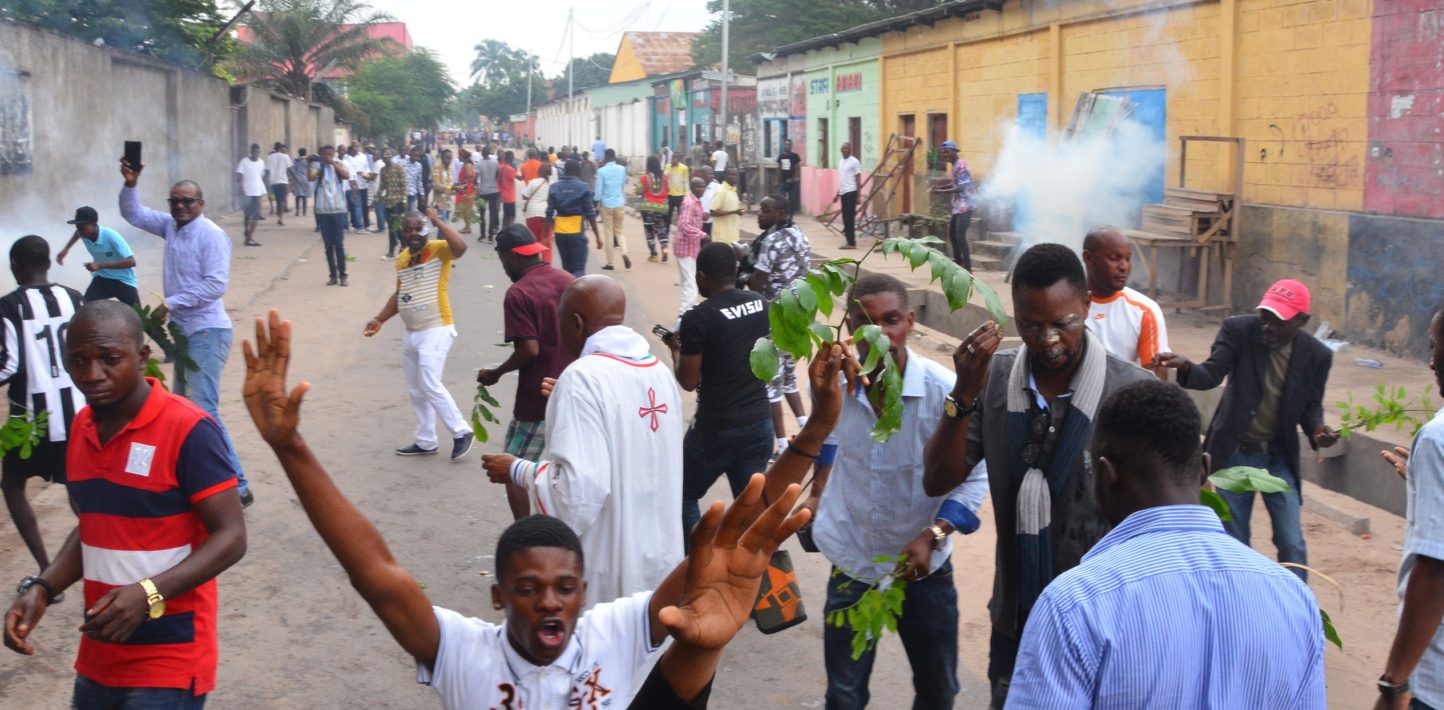
In November 2017, the Lay Coordination Committee (CLC) of the Catholic Church decided to organize peaceful protests to demand the implementation of the 31 December 2016 Agreement, a process meant to facilitate the presidential election. Protests were held on 31 December 2017, 21 January and 25 February 2018. These protests were met with brutal and systematic repression by the security forces. Fifteen people were killed, dozens were injured and many more arbitrarily arrested. ©REUTERS/Kenny Katombe

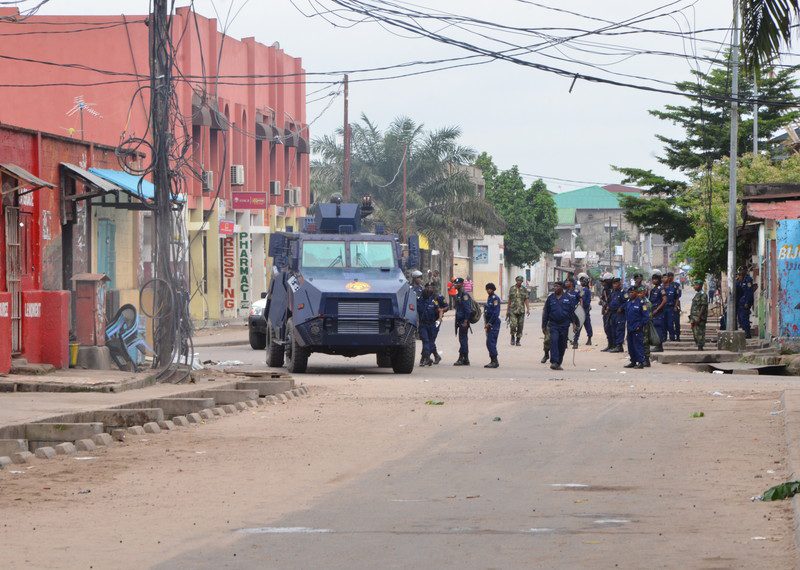
Security forces were deployed at parishes on the eve of the protests. In some instances, they blocked the parishioners’ access to the church.

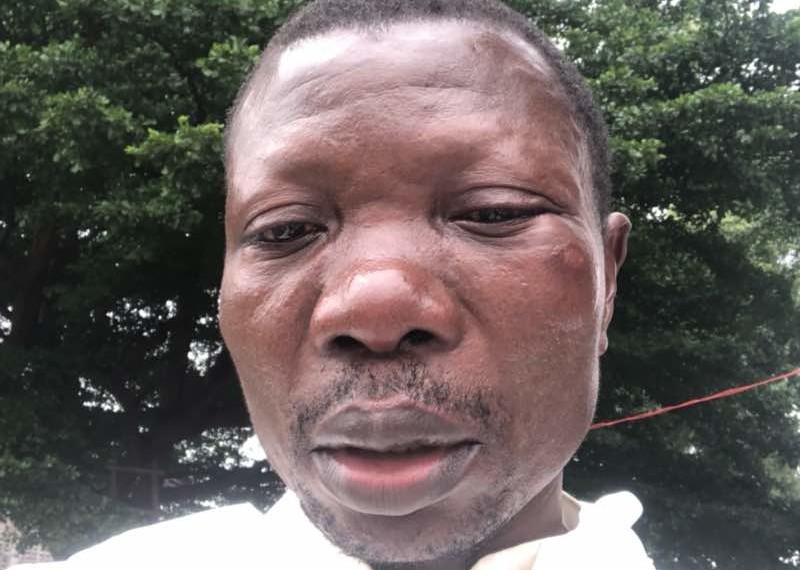
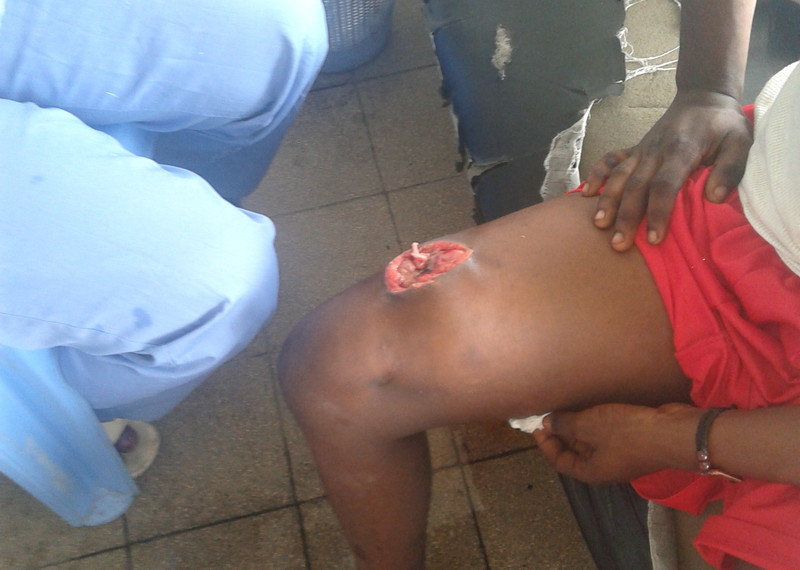
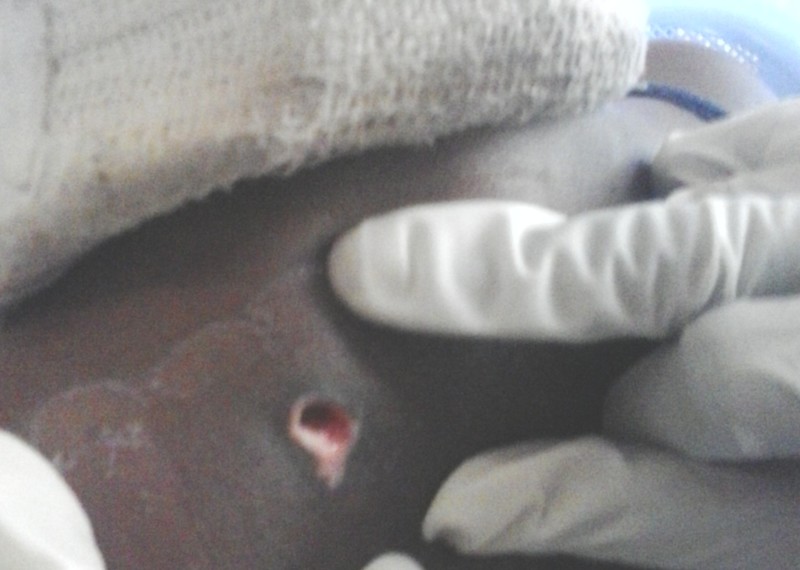
Security forces used teargas and live bullets against unarmed protesters. In many cases, the officers did not engage in any dialogue with the protesters to try to understand the reason for their assembly as required by the international standards in policing protests. The police also used rubber bullets and caused serious injuries.
Security forces used live bullets against peaceful protesters killing 15 individuals and wounding many more. At least until the time of interview by Amnesty International some of the survivors did not get medical assistance and still had bullets in their bodies.