

The Trump administration’s abrupt and sweeping suspension of US foreign aid is placing the lives and human rights of millions at risk. The cuts have ended critical programmes across the globe, including vital grassroots LGBTIQ+ organizations in Botswana which challenge entrenched homophobia and provide safety and support for LGBTIQ+ people.
Gagotheko (GG/Gybian) Mothai is a non-binary human rights advocate based in Maun, Botswana, and director of the Pink Triangle LGBTQ Support Group.
Below, GG shares the profound impact of grassroots organizations on LGBTIQ+ people’s lives and raises serious concerns about the welfare and safety of LGBTIQ+ people due to funding cuts.
Maun is a deeply traditional and conservative place, more so than Gaborone, the capital of Botswana, where people are more aware. Maun is smaller and harmful cultural values still dominate.
People here see LGBTIQ+ people as “un-African” or “possessed”. Homophobia is normalized, and being open about our identities puts us at constant risk of violence. We are rejected by our families, forced into unwanted marriages (especially LBQ women) and are cast out by our religious leaders. It feels harsher and more personal because it comes from people who are close to us: our families, chiefs and neighbours.
I was disowned by my family in 2020, amid the pandemic.
Activism here is survival work. It can feel powerful, we’ve seen real shifts: families starting to understand their queer children, churches slowly opening to dialogues on spirituality and sexuality, and queer people beginning to heal. But it’s also painful and emotionally draining. You may see progress on one side of town whilst violent incidents are increasing on the other.
This is my hometown. I keep doing this work here because I hope one day to have a hometown that is kind, understanding and accepting.
Grassroots organizations are a safe haven for LGBTIQ+ people
There is one safe haven for LGBTIQ+ people in Maun: the Pink Triangle Support Group. Since 2018, queer people have come here to share their experiences, find family, and heal.
We offer family interventions, SOGIE (Sexual Orientation, Gender Identity and Expression) education and Bible studies for people who have been excommunicated. We work with the police, teachers and healthcare providers to teach them to how be more sensitive to our needs. We opened a shelter this year, where 10 people are currently staying. It’s grassroots, deeply personal work.
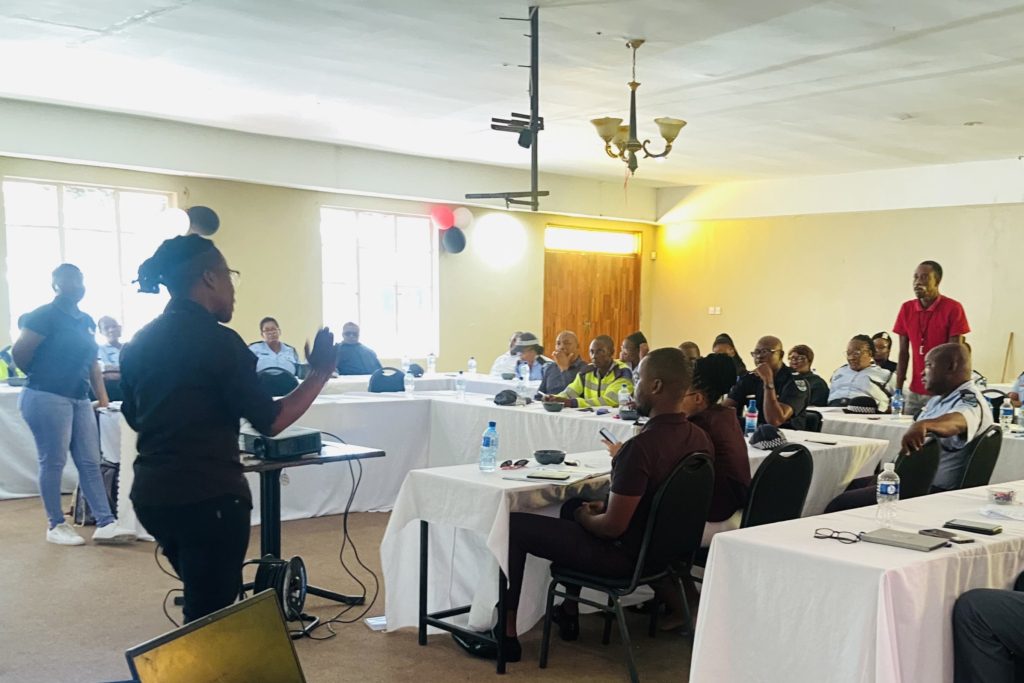
Before Pink Triangle’s work began, there was silence: no language, no space, no support. Since 2018, we’ve seen queer youth begin to understand themselves, families call us for mediation instead of disowning their children and even small shifts in some local churches. Our work made it possible for people to say, “I’m not alone”. But now that progress is under serious threat.
US aid cuts are damaging the progress we’ve made
Cuts to US aid under the Trump administration have directly impacted us. Grassroots organizations like LEGABIBO and Botswana Network on Ethics, Law and HIV/AIDS (BONELA) have had to close their offices in this region.
These centres are lifesaving. In a place where being queer can mean being homeless, abused, or religiously condemned, these spaces give people hope. They are the few places where we are not questioned, judged, or threatened. They give us access to mental health support, legal information, and sometimes just a shoulder to cry on. They remind us that we are human and that we have the right to life as well.
The trust, the healing, the small gains we had made are all being undone.
Programmes providing condoms and signposting for HIV treatment, psychosocial support and capacity-building have either scaled down or completely stopped. It’s devastating.
We’ve lost safe spaces, had to pause our group therapy sessions and we can no longer offer transport stipends for people to attend support group meetings or medical appointments. Some members have relapsed into depression and a few have gone back into unsafe homes because we can no longer support them. Health workers we had trained are now reverting to discriminatory behaviour due to lack of follow-up. We are back to square one.
We are vulnerable, afraid and our lives are at stake. The trust, the healing, the small gains we had made are all being undone.
People are saying, “See, even America is rejecting this lifestyle,” and using the aid cuts as a justification for renewed discrimination and violence. It’s not just about money. it’s about legitimacy. Losing this support means losing credibility in the eyes of our already hostile community.
Governments must not abandon queer people in rural places
If funding cuts continue, I fear we will be pushed even further into the shadows. Many of us will go silent again, back into hiding and back into unsafe homes. Some won’t survive. Organizing will become harder, riskier and lonelier.
You are not just cutting budgets, you are cutting lives, silencing voices, and endorsing violence.
But we won’t stop, we’ve lived through worse. Even if it’s just a few of us left, we will continue to create pockets of hope. We just wish the world would stand with us, not walk away.
We urge governments to remember that queer people in rural places like Maun rely on these funds for basic human dignity. When you withdraw support, you abandon your global commitment to human rights and justice. You are not just cutting budgets, you are cutting lives, silencing voices, and endorsing violence.
Development aid is not about politics, it’s about people.
Learn how you can take action for LGBTIQ+ rights
Equip yourself with knowledge, tools and attitudes to defend human rights in a world where LGBTIQ+ people suffer crimes and attacks on their rights and dignity.