


Two Black women on the movement reshaping Brazil
Despite historical discrimination, marginalization and huge inequities, Black women consistently place themselves on the front lines of activism, advocating for rights and better living conditions for communities in Brazil.
In this piece, two incredible female leaders share why Black women are the collective force that Brazil both needed and, in many ways, have been waiting for…
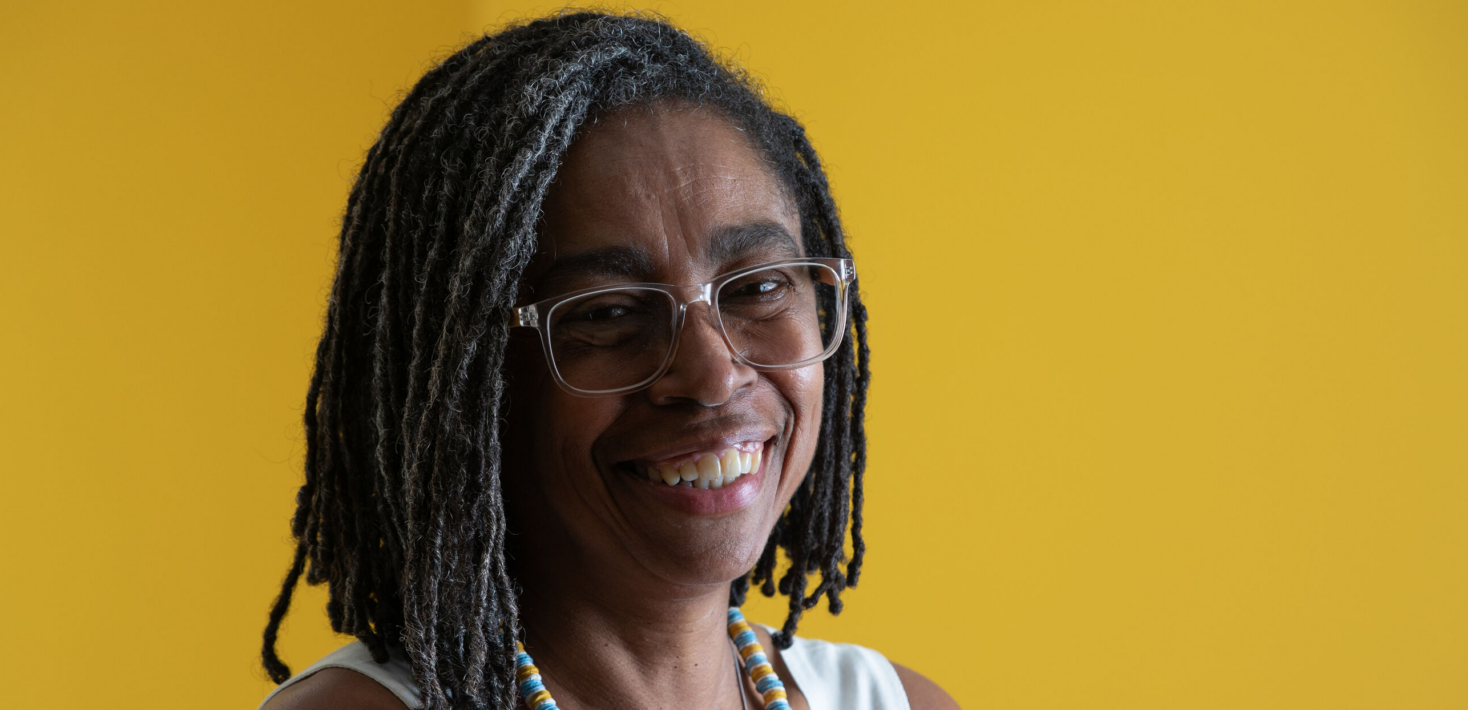
Jurema: “Black women live surrounded by risks”
Jurema Werneck is Executive Director of Amnesty International Brazil and was on the frontlines, campaigning for justice for murdered politician, Marielle Franco…
I was born in a favela in Rio de Janeiro, in Copacabana, exposed from an early age to stark contrasts and inequalities. I grew up during Brazil’s military dictatorship in a very large family that, through gatherings, celebrations, and everyday life, encouraged a critical understanding of our reality, racism, and injustice.
I believe activism is part of the way I learned to see the world and understand my responsibility to help transform what is wrong and unjust. I learned from other Black women, and they continue to inspire me to this day.
I have faced—and continue to face—the same kinds of barriers that Black and Indigenous women encounter throughout their lives. It is true that, since joining Amnesty International, some of the challenges associated with material hardship and the limited reach of my work have been temporarily eased. At this moment, I earn a good salary, and my voice has a platform—it is heard and can have a meaningful impact. But I am fully aware that this situation is not the reality for most women like me.
Black women and Indigenous women have always been on the front lines of the struggle for dignity, justice, and rights. It is not difficult to remember that colonial invasion, enslavement, super-exploitation, and the many forms of violence inflicted upon us throughout centuries of European colonization brought tragedy and genocide but also called us to resistance.
The legacy of this history and the iniquities remain with us today, keeping us mobilized, engaged, and active. In other words, our activism has very deep roots. In recent decades, the “new” forms of violence associated with globalized neoliberalism have compelled us to occupy public spaces in different ways, making ourselves and our demands more visible.
The marches led by Black women and the marches led by Indigenous women are powerful examples of this. But our activism did not begin with these mobilizations. It stretches much further back, grounded in generations of resistance, survival, and collective struggle.
We live surrounded by risks
Racism, and its intersection with patriarchy, sexism and heteronormativity, places Black women at its very centre. Poverty, exclusion, limited access to education, violence from all sides, and devaluation are part of our daily reality. One could say that the racist system is fundamentally stacked against us, employing different mechanisms of annihilation. We live surrounded by risks. As someone with a background in public health, I can say that Black women have historically died younger than both white women and white men.
Yet, in the face of such profound inequities, it is Black women who consistently place themselves on the front lines of activism, advocating for rights and better living conditions for our communities.
The risks are many, and they are intensified by the devaluation imposed on us by racism, making us targets of multiple forms of violence. Marielle Franco’s assassination must be understood through this lens. She was active within a political movement, and her killers calculated the consequences her death would generate. They reportedly considered targeting white men in her political circle, but abandoned that idea because they believed it would provoke a much stronger backlash. Instead, they chose to kill Marielle Franco, who, despite being a prominent activist and one of the most voted-for city council members in Rio de Janeiro, was a Black lesbian woman who came from a favela.
They believed her death would carry fewer consequences. Part of our work at Amnesty International Brazil was to prove them wrong. And we succeeded.
A collective force
In 2015, while serving as the leader of the Brazilian Black Women’s Organizations Network (Articulação de Organizações de Mulheres Negras Brasileiras), which launched and organized the first Black Women’s March, I came to understand that Black women are a collective force that Brazil both needed and, in many ways, had been waiting for. The march brought together 100,000 women in Brasília and, over two years of organizing, mobilized several million people across the country. It revealed the strength of a part of Brazil that represents a majority of the population—after all, Black women are the largest demographic group in the country.
More recently, in 2025, we multiplied the number of Black women mobilized for the Second Black Women’s March. Together, we advanced an agenda that calls for and seeks to build pathways toward reparations, justice, and bem viver—collective well-being, dignity, and the conditions for all people to thrive.
This is my hope—and, more than that, my activism: to help ensure that we can continue, in an engaged and coordinated way, to create the language, methods, and tools capable of planting the seeds for a different and better future.
Janira: “We marched so that Brazil would listen”
Janira Sodré is a professor and community educator in Brazil, supporting young people from marginalized communities.
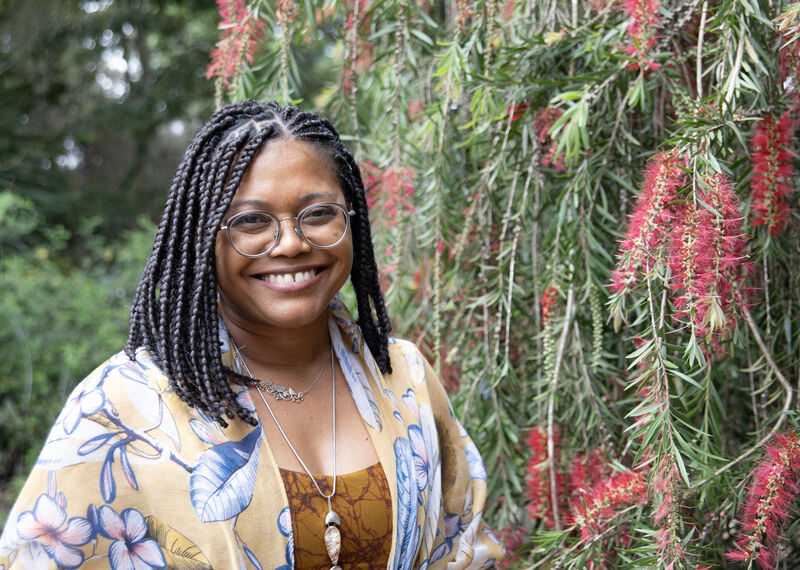
Women have faced so many challenges and inequalities historically in Brazil, many of which are still in place today.
Growing up, I lived in a community where there was a lack of autonomy over the traditional territories belonging to Indigenous and Quilombola people. For those living on the periphery of the cities, we didn’t have access to fundamental rights, nor did we have a say over what happened to our community. We couldn’t access proper healthcare or education.
So, I grew up knowing I wanted to make sure young girls and women could access education and ensure women – and Black women in particular – had the tools to overcome these inequalities. We deserve to take part in decision-making spaces, in institutional politics, and we deserve reparations for the inequalities we’ve faced and how we’ve been historically marginalized.
In Brazil, European colonialism imposed a system of exploitation, dispossession, enslavement and violence that affected Indigenous peoples, Africans, and their descendants. The legacies of colonialism and slavery can still be seen today in the discrimination and marginalization that these groups face.
Colonialism did not cease to exist; it continues to produce politics of hostility against our people, in both the countryside and the city. It continues to replicate itself in layers that range from plunder of the rare earths of Central Brazil where I live—and whose traditional communities inhabiting those lands are threatened in their ways of life—to the creation of content that is monetized by inciting hatred against Black women on social networks. The colony continues to be reenacted in the present time.
We can still feel the effects of it, as there’s still low representation of Black, Indigenous, and Quilombola people in spaces of power and decision-making. However, we need to live a life outside of the colonial project. Now we want to make our voices heard and seek the reparations we deserve.
I started organizing marches locally
Over ten years ago, I started organizing marches locally, engaging people and travelling through the territory, but it took a much longer time to mobilize people nationally.
In 2015, we marched to protest racism and gender-based violence. It had already become a catalyst for a lot of organizations and movements – it was historic because Brazil had never seen a national Black Women’s March on that scale. We were facing white supremacists in the streets, but it was an opportunity for Black movements to be stronger.
At our first march, we achieved national visibility. We were in all the major newspapers and television – everyone talked about it. It was an incredible moment.
And in 2025, we marched again. There was just as much excitement about the march, and it felt like there was a real movement between political and global connections. Young people got involved as well, which demonstrated the diversity of our movement.
It’s taken a long time to make our voices heard, as there’s been a strong pushback against women, and Black women in particular, when it comes to participating and engaging in political power.
We want Brazil to become an international capital for Black women, and the march felt like it could be a strategic win for us, which has the potential to catapult us into a new decade of power and participation, which will support and strengthen our movement.
In our series, Voices of Reparatory Justice, we speak with artists, activists and leaders who share their stories of repair and resilience in fighting against the negative impacts of historical injustices, slavery, and colonialism. Despite existential challenges, their journey to secure dignity and rights of racialised groups, restores hopes for our collective future, humanity must always prevail. This is one of those stories. Find out more about our work.