
Overview
How does Climate Change Impact Human Rights in Pakistan?
Unnatural disasters fueled by climate change are increasingly the norm in Pakistan. Floods, droughts and heatwaves – previously once-in-a-century events – have become a near-annual event. Temperatures in some parts of the country regularly reach 50˚C, making conditions unlivable for many.
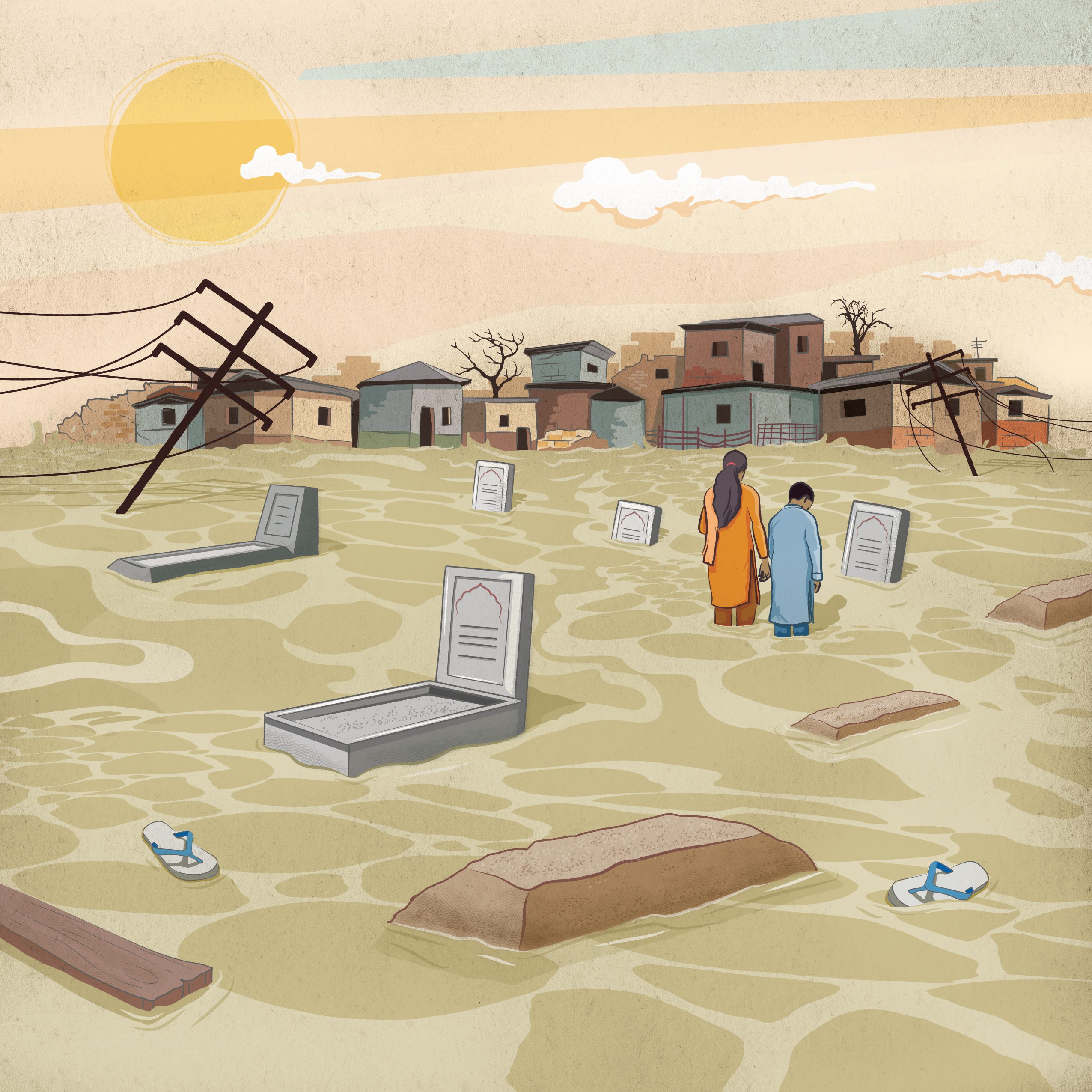
Abnormally hot weather causes greater monsoon rainfall, leading to flooding. In 2022, massive floods displaced 8 million people and directly impacted 30 million. Flooding in 2024 in the wake of another heatwaves, displaced 1.5 million.
Extreme weather is not limited to floods and heatwaves. Pakistan continues to experience frequent unnatural disasters, from hailstorms the size of golf balls to extremely poor air quality.
Pakistan is the fifth-most populous country in the world. When a climate disaster strikes, the lives and human rights of 240 million people are at risk.
People lose their income. Children cannot go to school. Many people die prematurely because of flood and heat-related diseases.
Climate change is not a problem for the future. It is happening now: everywhere, but especially in places like Pakistan, causing preventable deaths and despair.
TAKE ACTION NOW
DEMand accountability and transparency
A thorough and transparent assessment of climate disaster management is sorely needed, especially in early warning systems and budgetary allocations at all levels of government.
The human toll of climate change in Pakistan
In Pakistan, climate change impacts some more than others.
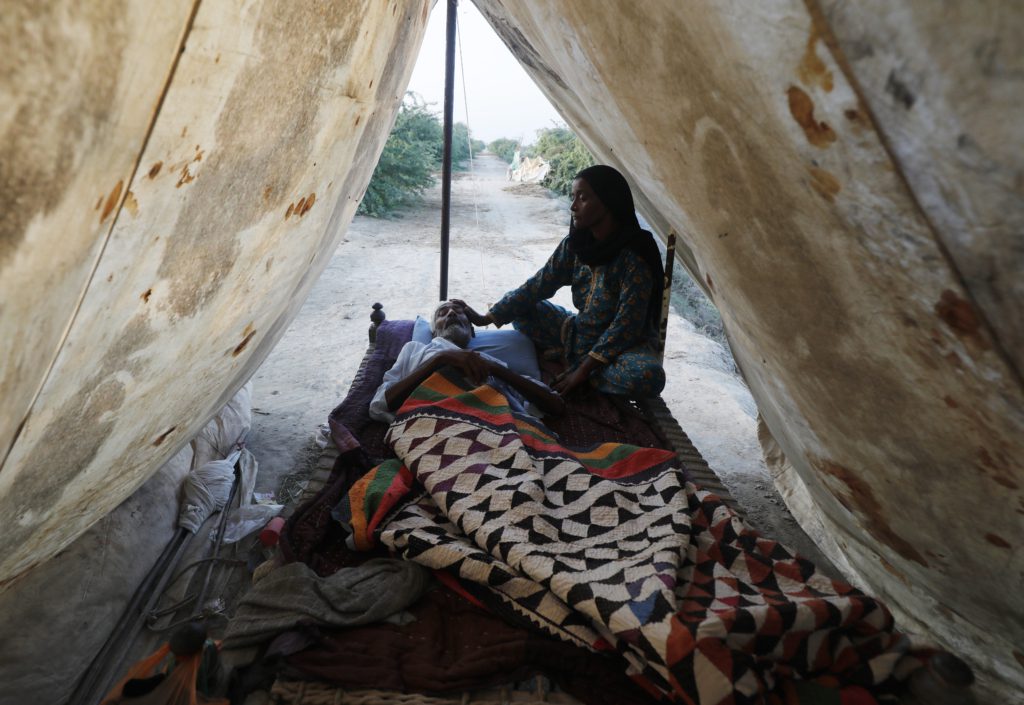
Very young children and older adults are more likely to have complications from diseases that spread after a flood. They are also less able to adapt to extreme heat, making heatstroke, extreme dehydration and death more likely.
Our analysis found that deaths among children and older people increased dramatically after the massive floods in 2022, mostly from disease-related causes.
These deaths remain invisible to the government of Pakistan, which only manages to register about 5% of all deaths. Without a robust information collection, the Pakistan government has no way of preparing its healthcare system or protecting children and older people from harm.
Another group facing enormous risks from climate change are informal labourers, who make up about 70% of Pakistan’s workforce. We have highlighted the stories of these labourers, many of whom have no choice but to work through brutal heatwaves, when temperatures sometimes reached 50˚C.
Pakistan does not have a universal pension system, and has minimal social protection if somebody cannot work due to illness, disability, or other reasons. Most labourers have no way of earning money if they do not work. This creates a dangerous choice between providing their families with enough to eat, and working in conditions that might kill them.
Pakistan’s medical professionals speak out
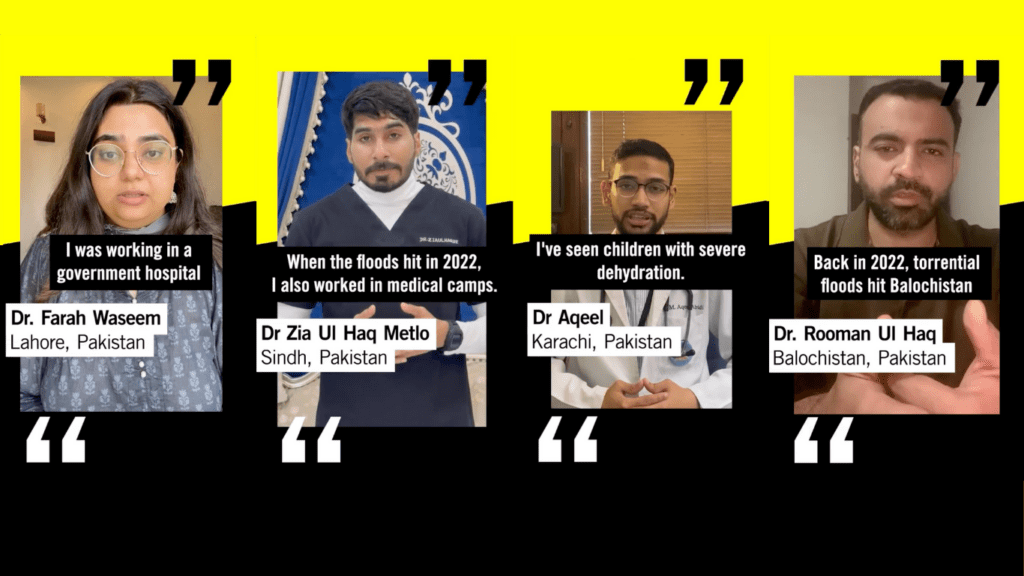
When a climate disaster strikes, Pakistan’s doctors and medical students are often the first to see the impact. Whether they are grappling with mosquito- or water-borne disease outbreaks after a flood, or treating a surge in heatstroke patients, healthcare professionals are often on the frontlines of the response.
Pakistan’s healthcare system is underfunded and overstretched at the best of times. But when floods, heatwaves, or air quality emergency hit, more patients than ever rush to the hospital, putting facilities – and doctors – under strain.
Doctors do not always have the equipment or staffing they need to respond to increasingly frequent unnatural disasters. During heatwaves, there are often not enough cooling centres, meaning that people have nowhere to cool down to prevent heatstroke. During floods, most hospitals – located primarily in larger urban centres – often don’t have staff or equipment to reach the rural communities most affected.
According to the World Health Organization, countries should spend about 5-6% of their GDP on healthcare to ensure universal coverage. Pakistan’s government spends only about 1% of its GDP on health. Around the world, countries like the United States are cutting back on international health spending, making it even more difficult to combat health issues related to climate change.
Doctors not prepared for the growing effects of climate change
We spoke with five young doctors who are frontline workers of the climate crisis. They told us about their experiences dealing with climate change-related issues in their regions.
Medical students in Pakistan also see the impacts of climate change firsthand. Amnesty International collected letters from medical students, which you can see below.
These students have witnessed things many of us hope to never see in a lifetime. Older people struggling for air amidst the smog. Young children dying unnecessarily from mosquito-borne diseases. People struggling with heatstroke in sweltering delivery rooms.
Because the Pakistan medical curriculum barely features climate change, they feel ill-equipped to meet these challenges.
28th April 2025
To Honorable Chief Minister
To Discuss the current climate issue in Sindh;
I am writing this letter to inquire about the worsening climate condition in Sindh. I am a concerned Medical student from JPMC who has seen patients in the worst conditions especially in the Sindh Government controlled OBS & Gynae ward where during one clinical rotation me and my colleagues experienced a C-section where the operation theatre did not have a single operational air conditioner, every single person being showered in sweat due to the overwhelming heat. The patient, lying on the bed, cut open, drawing in sweat, having her body down her waist unable to move, in severe pain, begging to bring her a fan or open an AC.
Witnessing this extreme scene, we were left to wonder what she had deserved to go through, more importantly, what the new life who was coming into this world had done! What if this patient was my wife giving birth to my son, or your mother giving birth to you?
Being one of the most influential and powerful people in Sindh, I would like to urge you to shed some attention on this issue in the JPMC OBS & GYNEA ward, and other hospital settings under the care of Sindh Government.
As guided by the WHO rules, as of a country’s budget, at least 5-6% should be allotted to medicine and healthcare, but unfortunately only 1.1% of Pakistan’s budget is spent on healthcare, most of which God knows even if it goes to health care or not. As a respected, trusted individual, you should try increasing the budget to 2% as a start for 2025, and ensuing the entire allotted budget goes where it is needed.
Furthermore, with the increased budget, it should also be made possible to provide cooling centres which are much needed in this time of extreme heat waves.
I look forward to your response and efforts to make good of this matter.
Yours Respectfully,
A concerned future Doctor.
28th April, 2025
Respected chief Minister Sindh,
I am writing to bring to your attention the plight of women in one gynaecology ward of the Jinnah Post Graduate Medical centre. In my 3 years of clinical experience/learning as a medical student, I have been posted in the gynaecology department for 3 months and each time I am taken aback by the state of the female patients as well as the other inhumane treatment they are subjected to. Imagine you are a woman, an already marginalized population, from one rural or underprivileged background and are currently in one most vulnerable state of your life – about to give birth / after giving birth. On top of this, you get treated like trash from the over worked & under paid staff. You have to have a single bed with two other women in the same painful & imitable state as you, your surroundings are unhygienic with literal stray cats roaming around in search of placentas to eat and you have no privacy at all. Cut to one operating table, you barely got enough anaesthesia & are treated like cattle about to give birth. There is no regard for your privacy or dignity with every person medical or non-medical staff, male or female is able to enter the operating theatre, look at you in your most vulnerable & undignified state & even man-handle you as they please.
After the whole ordeal of giving birth, you have to rights or authority over your own body. Even in critical conditions, one husbands decisions trumps the wife’s medical wellbeing. Such is the life of 52% of your population.
Therefore, I humbly request you to form a committee of women in health care who can work towards improving things for the women of our country, because women make up more than 50% of our population. We are one future.
Yours truly,
A concerned final year student.
Ministry of Health Services & Coordination, Government of Pakistan
Kohsar Block, 3rd floor, Constitution Avenue
PAK secretariat
Islamabad, 44000
To Honourable Health Minister Syed Mustafa Kamal, I am a 20 year old med student in one of the reputable institutes of Lahore.
In October smog started hitting Lahore, when put like this, it seems something like a fact of nature, something which can’t be averted. But if I say that the entire winter from October to February I have been struggling with serious upper respiratory tract infection: swollen lymph nodes, cough so dry feels as if would break apart my lungs, pain in eating & multiple bouts of flu. And this was the exam period.
I still have palpable nodes and this is April!
Respected sir, now it’s April, and I can’t walk through university without an umbrella and when I don’t have it, after the day I have severe headache!
Sir as a young person, it is so worrying that if I am getting so frequently sick, what of old people of hospitalised individuals! Of homeless! Of people and kids on streets!
Our hospitals are incapable of dealing with patient influx!
Please listen to our following demands
- Introduction of Climate Change awareness in medical curriculum.
- Equipping govt. hospitals & primary health spaces with cooling spots with fans & fresh water
- Using your influence to raise the issue of climate change on provincial & national level
- Increasing GDP on healthcare from 0.3%/year to at least 3%
A sick, frustrated future doctor
Ministry of Health Services & Coordination, Government of Pakistan
Koshar block, 3rd floor, Constitution Avenue,
PAK Secretariat,
Islamabad, 44000
To Honourable Health Minister, Syed Mustafa Kamal,
I am writing this letter to express my concern about climate change happening in Pakistan. As a medical student, I have experienced firsthand how people come with specific diseases in a specific season. It’s no good denying that climate change have health outcomes and it shows in the beds of our hospital filling up. We are overloaded with patients like many patients come with heatstroke in summer season as the weather heats up and with pneumonia in winter season.
I request you to take this matter into consideration. As many of these cases can be prevented by awareness, I request you to involve media and television awareness progress. Most of the population use television. If this spreads on television, it can make great impact. People can have awareness on what to do to prevent these cases and what they can do if they experience symptoms.
I look forward to hearing from you on this important matter.
Yours respectfully,
A medical student in Lahore
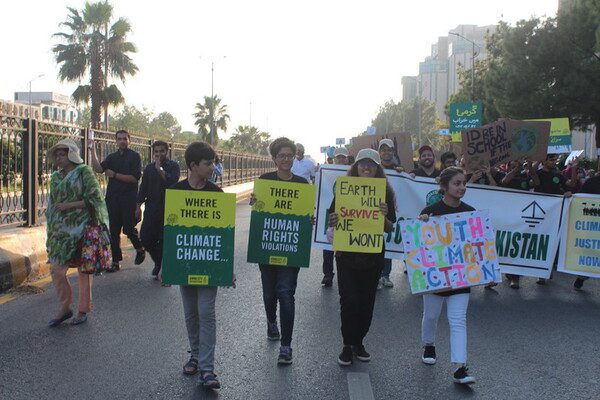
Dispatches from Pakistan: Young climate activists take on the streets
Climate activists across Pakistan are witnessing the climate crisis unfold in deeply personal ways. From the smog in Lahore to the dying water table in Quetta, activists are witnessing the impact on the most vulnerable communities in their cities.
We worked with five young climate activists from five cities in different provinces of Pakistan. Together, they crafted a powerful digital and street-level campaign to spotlight climate change impacts like floods, water shortages, heatwaves, and worsening air quality.
Activists gathered video testimonies about the changing climate from their communities. They also made posters emblematic of these changes that they pasted up around their cities in order to raise awareness about climate change and mobilize others to take action.
These activists found stories of children unable to go to school because of flood displacement; of older people collapsing from heatstroke in cities without shade or shelter; of families walking miles just to find clean drinking water.
Through their voices, they are creating awareness among the public about the right to a healthy environment and making a clear demand: that the state must fulfill its obligation to guarantee it.
What is Amnesty International doing to help?
Climate change impacts our human rights in profound ways. It threatens our right to life, our right to health, our right to education, and our right to an adequate income.
But it does not impact all of us equally. Countries like Pakistan have done little to contribute to climate change, while its population is among the most affected. Wealthy countries in North America or Europe, on the other hand, have done much more to cause climate change, but bear less severe impacts.
Our approach is currently two pronged:
At the national level in Pakistan, we are documenting the impacts of climate change on people’s human rights. In 2021, for example, we documented the devastating impact of extreme heat in Pakistan with this powerful visual essay. In 2025, we documented the severe health impacts of climate change, particularly on at-risk groups like children and older people, collecting data together with a Pakistan-based health provider, Indus Hospital & Health Network.
In addition to our research, we are elevating young Pakistani voices speaking out about climate change, from doctors and medical students to climate activists. Through these campaigns and our advocacy with government ministries, we are raising awareness about climate change impacts in the country, and pushing for the government to do more to protect those most affected.
At the international level, Amnesty is urging states – particularly wealthy, high-emitting countries – to transition away from fossil fuels as soon as possible. At international conferences like COP, we advocate for human rights to be put at the heart of all climate change decision making.
We demand that environmental defenders, including those attending events like COP, have the right to protest and have their voices heard. We have also sounded the call on the need to massively scale up funding for those countries most at risk from climate change, including Pakistan, through the loss and damage fund and other means.

TAKE ACTION NOW
DEMand accountability and transparency
A thorough and transparent assessment of climate disaster management is sorely needed, especially in early warning systems and budgetary allocations at all levels of government.