

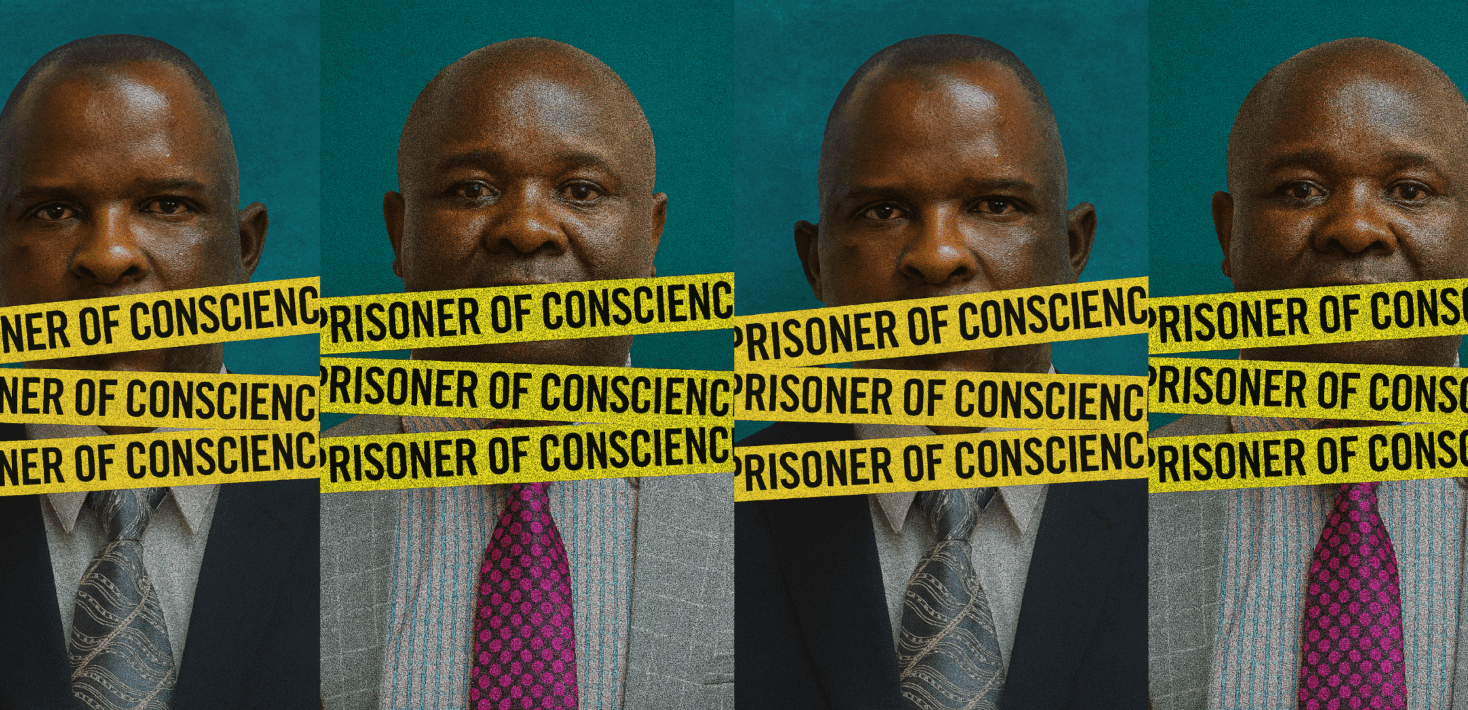
Eswatini: Free arbitrarily detained activists and former MPs Now!
Amnesty International has declared Bacede Mabuza and Mthandeni Dube Prisoners of Conscience. Demand their immediate and unconditional release now.
What’s the problem?
On 25 July 2021, Eswatini’s pro-democracy activists and former members of parliament Bacede Mabuza and Mthandeni Dube were arrested for speaking out against state repression and calling for constitutional reform. They were later sentenced to 85 and 58 years respectively under repressive anti-terrorism and sedition laws.
Their only “crime” was peacefully advocating for the people’s right to be heard. Their trial lacked due process and has become a symbol of how Eswatini authorities silence peaceful dissent through the misuse of law and weaponization of the justice system.
Their continued imprisonment is not only a travesty of justice, it has a broader chilling effect on the protection and promotion of human rights including the right to freedom of expression in the country.
What is Prisoner of Conscience?
Amnesty International considers a prisoner of conscience to be any person imprisoned solely because of their political, religious or other conscientiously held beliefs, their ethnic origin, sex, colour, language, national or social origin, socio-economic status, birth, sexual orientation, gender identity or expression, or other status, and who has not used violence or advocated violence or hatred in the circumstances leading to their detention.
Why your action matters?
By signing this petition, you will send a clear message to regional and global actors that political repression cannot go unchallenged. Your voice adds pressure to demand accountability from Eswatini authorities— and solidarity from institutions meant to uphold human rights and the rule of law.
What you can do to help?
By signing this petition, you will send a clear message to regional and global actors that political repression cannot go unchallenged. Your voice adds pressure to demand accountability from Eswatini authorities— and solidarity from institutions meant to uphold human rights and the rule of law.