


Amnesty International’s The State of the World’s Human Rights report delivers an assessment of human rights in 155 countries. 2023 saw escalating conflicts and the near breakdown of international law.
Powerful governments cast humanity into an era devoid of effective international rule of law, with civilians in conflicts paying the highest price, and rapid changes in artificial intelligence created fertile ground for discrimination, racism, and division.
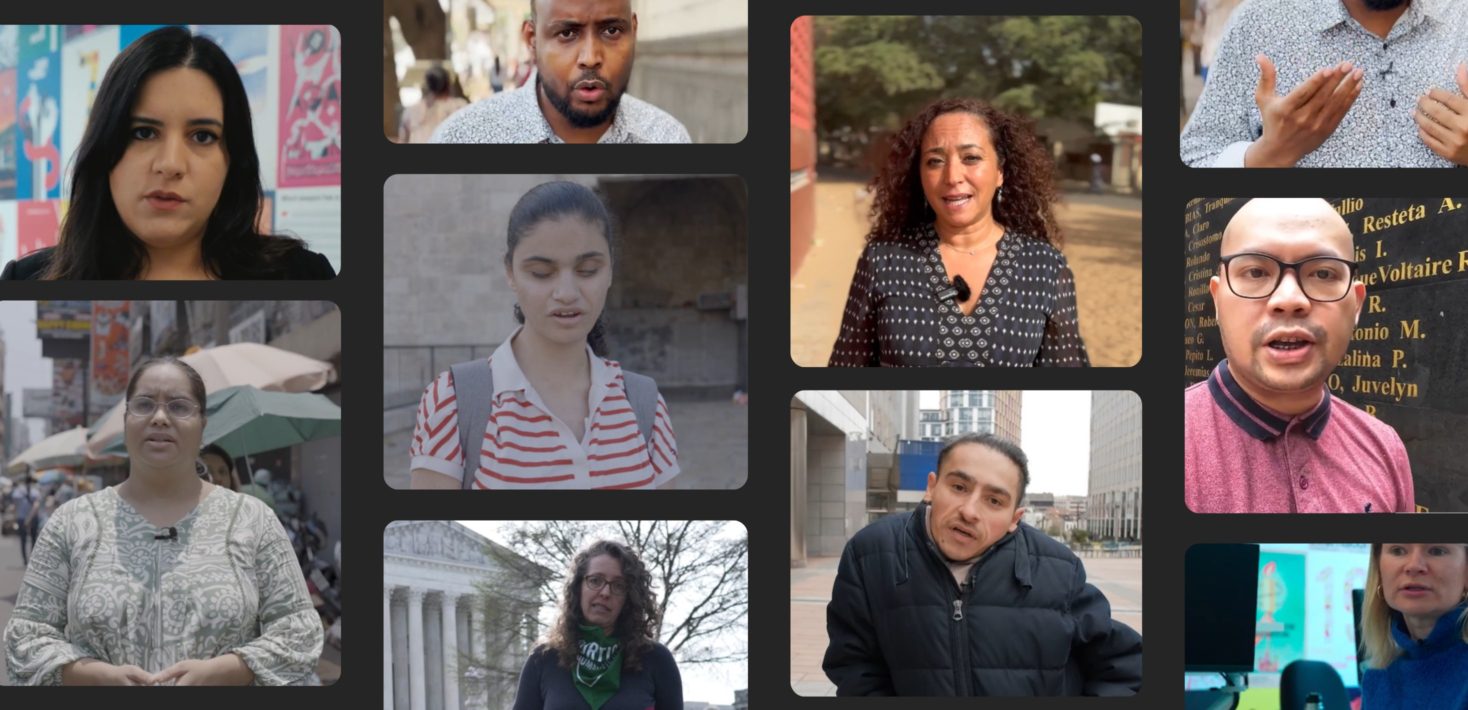
Meet some of the researchers working on the front lines of these pressing human rights issues.
Abdullahi Hassan
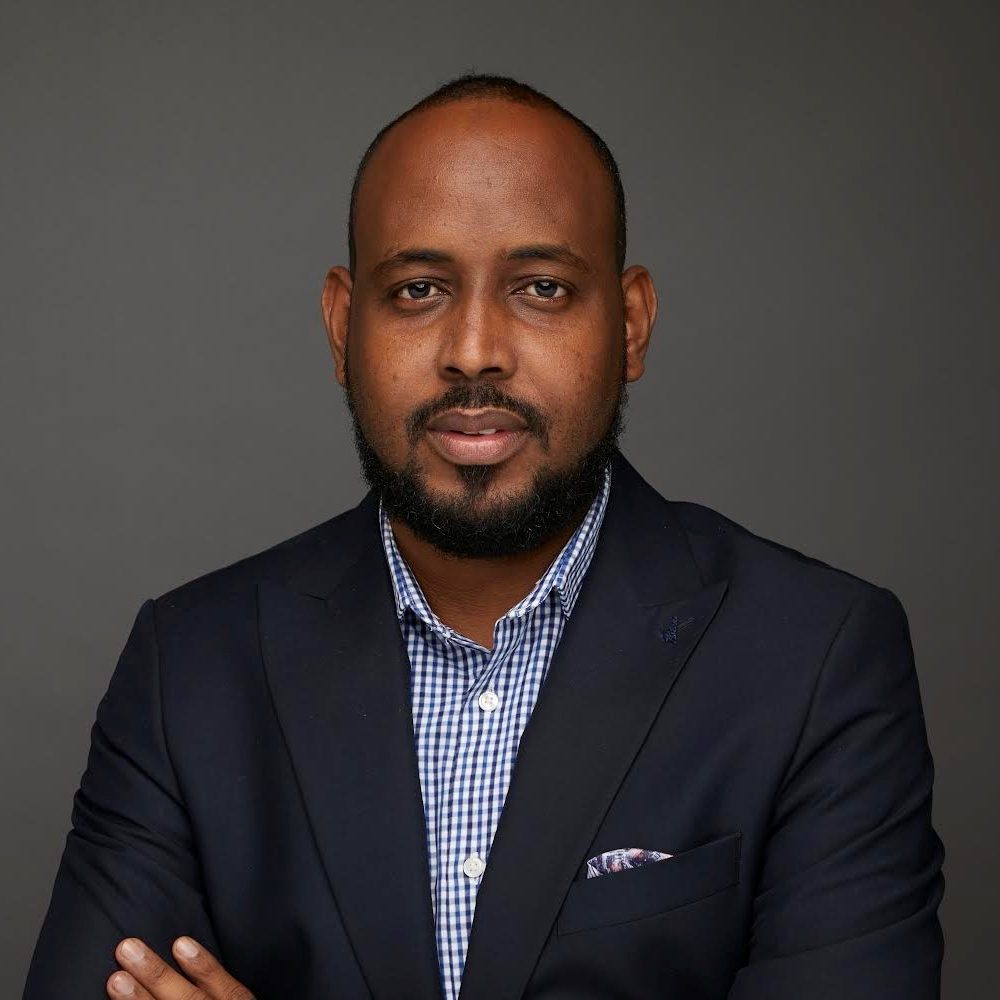
Researcher on Conflict in Somalia and Sudan, East and Southern Africa Regional Office
Abdullahi Hassan is a Kenyan lawyer and a human rights advocate. He has worked with Amnesty International since 2018 where he has carried out complex research into various human rights topics including war crimes in Sudan and Somalia, violations of freedom of expression as well as the impact of Covid-19 on Somalia’s healthcare system.
What was the most striking event in East and Southern Africa in 2023 and why?
There were many situations that were challenging, but the most striking one for me was the eruption of the large-scale conflict in Sudan.
This conflict has had a devastating impact on civilians: 12,000 people were killed in 2023 and more than 8 million displaced making Sudan the largest internal displacement crisis in the world.
As of March 2024, more than 2.9 million children in Sudan are acutely malnourished and 729,000 children under five are suffering from severe acute malnutrition. The whole country is now on the brink of collapse.
How did you feel working on it?
I feel completely heartbroken by the horrific events unfolding in Sudan. Hundreds of Sudanese I interviewed told me devastating stories on how their dreams were shattered.
It has been honestly exhausting to track all the violations and abuses that occurred in Sudan in 2023. The people of Sudan deserve better.
What does your work involve?
My work mostly involves investigating conflict-related and other human rights violations and abuses in Sudan and Somalia. I monitor, document and report on these abuses for Amnesty International.
I also advocate with various actors including governments, regional and international bodies such as the UN and the African Union.
Can you share a personal anecdote from a moment that moved you in 2023?
They were many. One moment that stuck with me is interviewing a woman from West Darfur in one of the refugee camps in eastern Chad. She told me that her husband and her four brothers-in-law were all shot and killed while she watched. She had a young baby in her lap. She was visibly weak and traumatized and kept sobbing throughout. She said her life was torn apart.
What are some of the other most pressing human rights issues in your region?
There are many human rights challenges in our region. These include suppression of civic space, inequalities, devastating impact of climate change and conflict-related human rights violations. Six countries in our region have either active or long running conflicts leading to massive civilian suffering and displacement crises.
Why should people continue to support Amnesty International and its work?
Amnesty International is an organization that takes injustice personally. Hundreds of its employees including myself work hard day and night to document and expose violations in very difficult circumstances. This evidence is then used to advocate for victims of abuses, influence policy makers, and encourage bad actors to change their ways.
In a world where we are increasingly witnessing unimaginable horrors resulting from man-made disasters with no accountability, it is more important than ever to support Amnesty International’s work.
What are your hopes for the future?
As an optimistic human rights advocate, I hope to see a world that is free from human rights violations. In places where there are ongoing conflicts, I hope to see justice for victims and survivors of violations and abuses and perpetrators held accountable.
Support researchers like Abdullahi, Budour and Mher to fight for human rights everywhere.
Donate to protect human rights
Budour Hassan

Researcher, Middle East and North Africa Regional Office
Budour Hassan is Amnesty International’s researcher on Israel and the Occupied Palestinian territories. Before joining Amnesty International, she worked as a legal researcher and advocacy officer at the Jerusalem Legal Aid Centre.
What was the most striking event in your region in 2023 and why?
It was a year of earthquakes in the region, starting in Syria and Turkey and later in Libya. But perhaps the biggest earthquake of all is what we have been witnessing in Gaza.
All over the Middle East and North Africa region, there have been crackdowns against freedom of expression, association and assembly. There have been hunger strikes by detainees. There has been a lot of torture.
How did you feel working on it?
Finding even glimmers of positivity is very difficult. It’s been mostly challenging, although as human rights defenders and as researchers, we try to find hope through whatever positivity our work can bring. At least the awareness, the fact that some of our evidence can be used to push for, say, an arms embargo and for accountability and justice is what gives worth to our work.
The most difficult part for me as a researcher has been to document the war crimes and atrocity crimes committed in Gaza. Speaking with people on the ground documenting Israeli air strikes and their aftermath, talking with victims and survivors.
What does your work involve?
As researchers, we interview witnesses, survivors and victims. And then we check these testimonies against the visual evidence and other types of evidence we have. We analyse satellite imagery of attacks, we review official accounts and official claims in full, from all sides, with the hope of concluding whether a violation of international law was committed.
We also work on documentation of forcible transfers (the forced relocation of civilian populations). This relies on interviewing victims for testimonies and collecting what the alleged perpetrators say: working on the ground and visiting displaced communities and communities at risk.
Can you share a personal anecdote from a moment that moved you in 2023?
I was on the phone with a father in Gaza who lost his entire family, and he was reciting the names of his children who were killed. He was so calm, so composed.
For me, it was striking to hear the lilt and the tone of his voice. And suddenly he heard a voice calling him and he apologized and said, “I’m sorry, I need to go. Because they told me that they found my little daughter’s stole.” This piece of clothing is the only thing that was left of her after her entire body was destroyed and torn apart by a bomb.
And to think that we as researchers have the responsibility to share the testimony of this father, of this grieving father. And that this father, despite everything, despite his grief, is taking the time to talk to us. Despite probably having almost no battery, despite having lost everything, it puts a huge responsibility on us to be true to these stories, to fight as hard as we can, to bring justice and accountability for them.
What are some of the other most pressing human rights issues in your region?
First and foremost, there are the issues of violations of international humanitarian law, unlawful killings, indiscriminate air strikes or indiscriminate attacks, arbitrary detention, torture and other ill treatment of detainees. Palestinians in Gaza are facing the risk of genocide.
All over the region there is the issue of systematic violations of freedom of expression, association and assembly, failure to respect people’s basic rights, including the right to due process and a fair trial. These, unfortunately, have been issues that have plagued all countries in the region.
Why should people continue to support Amnesty International and its work?
The reason why we document human rights violations is to use the documentation as evidence to achieve justice: to be used in a court of law, to put pressure on authorities to change their behaviour, to mobilize protesters, to mobilize the Amnesty International movement.
When we see that courts are citing Amnesty International in decisions, for example to halt arms sales, it just shows the importance of this work.
What are your hopes for the future?
Personally, the biggest hope is to one day live in a region where there are no people who are arbitrarily detained or arrested over the free and peaceful expression of their opinions. To have prisons empty of torture. To have prisons empty of people detained for politically motivated reasons, or for their opinions.
And of course, as we said so many times, justice for the victims. A victim-oriented approach where accountability is brought, where perpetrators are held accountable in fair trials. This is the hope that fuels our work.
Support researchers like Abdullahi, Budour and Mher to fight for human rights everywhere.
Donate to protect human rights
Mher Hakobyan
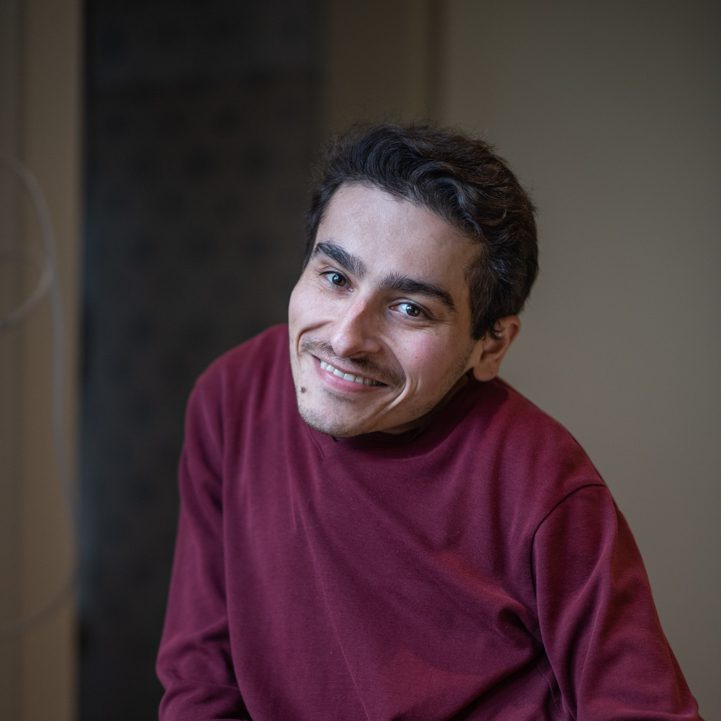
Advocacy Advisor on Artificial Intelligence Regulation, Amnesty Tech
Mher Hakobyan is an Advocacy Advisor on AI regulation within the Algorithmic Accountability Lab (AAL) of the Amnesty Tech Programme. He joined Amnesty International around one and a half years ago to advocate on the EU’s landmark Artificial Intelligence Regulation (AI Act). This is part of a civil society effort to ensure a human-rights-based AI regulation that would set a high bar for regulatory efforts around the world.
What was the most striking event in your field of work and why?
After years of negotiations between the European Union (EU) and EU member states, the European Parliament voted to adopt the EU’s artificial intelligence regulation, the so-called EU Act.
The Act is considered the world’s first comprehensive Artificial Intelligence legislation and will address development and deployment of technologies in a broad spectrum of domains, from education to housing, policing and migration control, among many others.
It will impact a lot of rights that are essential for people, including the rights of migrants, refugees and asylum seekers, and the right to non-discrimination, to privacy, to peaceful protest, to social protection, among many other rights.
How did you feel working on it?
The past three years of working on the EU Act has been somewhat of a rollercoaster of emotions. It started with frustrations regarding the insufficient human rights protections in the first draft of the law. Then we had a spark of hope in the European Parliament’s more ambitious position.
But it ended in great disappointment due to the very watered down, weak text in terms of human rights protections in the final Act text that was agreed between the member states and the EU. This was largely because of EU member states’ pressure to trade crucial protections for people in favour of allowing disproportionate discretion to tech companies and almost unchecked power for law enforcement and other state agencies.
So, it’s been quite a challenging year, but it’s also been greatly inspiring to work among the brilliant civil society coalition and with many dedicated people who are fighting for a better future in Europe and beyond.
What does your work involve?
As an Advocacy Advisor at Amnesty International, my role has been to communicate our policy positions to negotiators during this process and essentially convince them that human rights should be the absolute priority in the text of the law.
Can you share a personal anecdote from a moment that moved you in 2023?
I think one of my most striking but also worrying memories from the past years has been seeing some representatives of member states argue that the Act would constrain the ability of law enforcement agencies to fight crime. According to them, criminal actors using new technologies are not constrained by the text of the law. Whereas the crucial human rights safeguards in the artificial intelligence law would, in their view, constrain law enforcement ability.
This kind of dangerous thinking led to watering down the essential protections for human rights and giving unchecked power to law enforcement, national security and migration authorities in the Act.
What are some of the other most pressing human rights issues in area of work?
I think the challenge of the coming years will be to hold authorities and private companies to account while they continue to use artificial intelligence technologies, largely without public transparency and scrutiny.
Unfortunately, we know that the risks to human rights are higher than ever for migrants, refugees, asylum seekers, racialized people and other marginalized people, because artificial intelligence can exacerbate discrimination, exclusion and abuse at scale and of course, create new risks. Lack of transparency will make it very hard, if not impossible, to know where harms occur and to hold perpetrators accountable.
What are your hopes for the future?
My hope for the coming years will be that people support us in holding companies and public authorities to account.
And as for countries outside of the EU, I hope they will not repeat the mistakes of the EU, as they legislate on artificial intelligence. I hope they put people and our rights and interests at the forefront and do not succumb to the pressure of corporate lobbying and their own desire for power.